 By Matt Jabs
Our homemade dishwasher detergent (soap) and natural rinse agent work great, are simple, and are proven by homemakers all over the country!
Why do we make our own homemade products like homemade dishwasher detergent?
It all started with our first batch of homemade laundry detergent, since then we’ve been hooked! Now we’re on a mission to make as many household products as we can. It saves money and gives a sense of joy and accomplishment.
Up this week is homemade dishwasher detergent.
When you’re done making this check out these other related articles:
When we develop product recipes we focus on: 1) saving money, 2) simplicity, 3) and effectiveness.
Let’s see how easy this really is. Below you will find the written instructions, pictorial instructions, and tips to avoid clumping, cost savings breakdown, and borax safety.
Note: No time or desire to make your own dishwasher detergent? You can always purchase natural brands like these.
Homemade Dishwasher Detergent Recipe
Our homemade dishwasher detergent (soap) and natural rinse agent work great, are simple, and are proven by homemakers all over the country!
- Prep Time
- 5 minutes
- Active Time
- 5 minutes
- Total Time
- 10 minutes
- Servings
- 24 ounces
- Estimated Cost
- $2
Ingredients
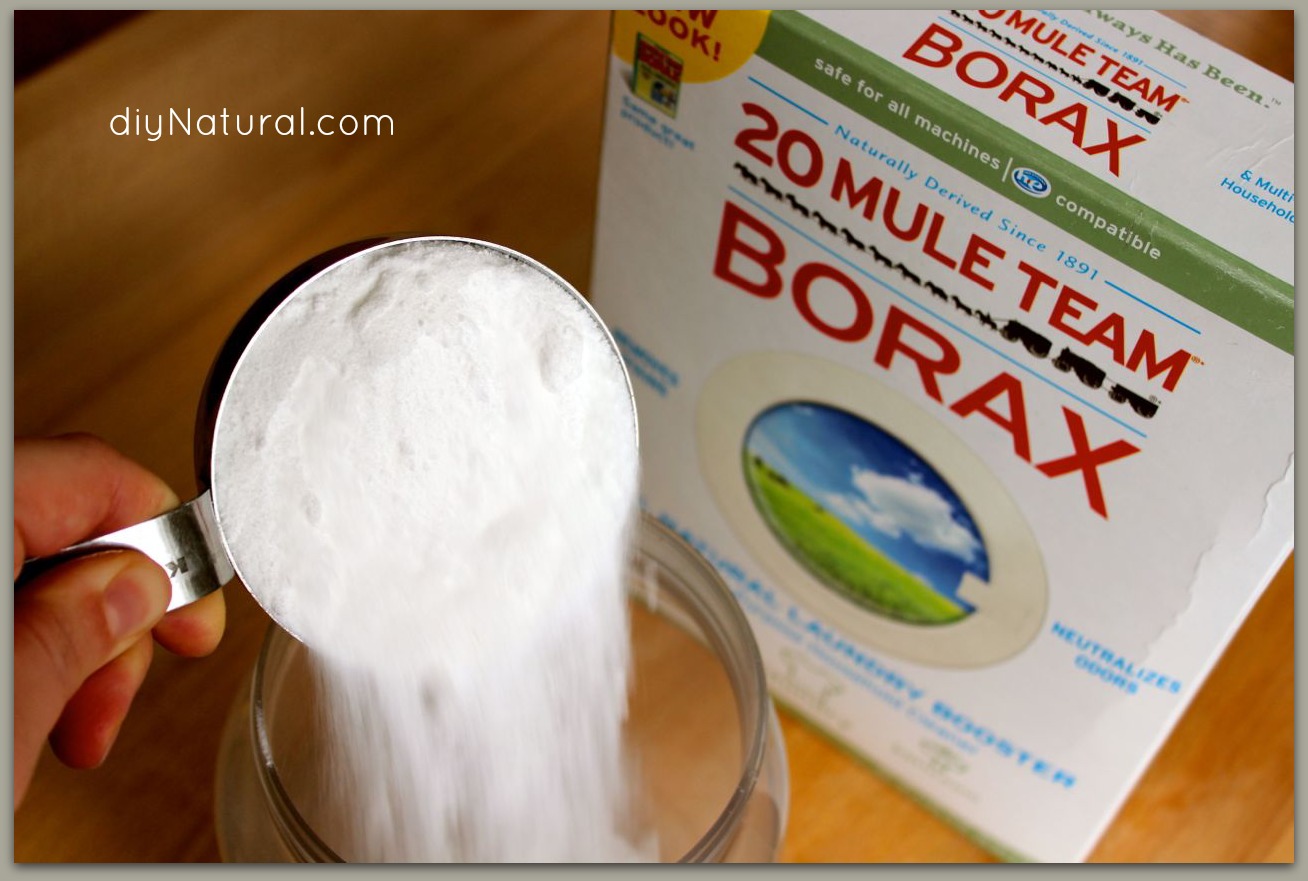
- 1 cup borax
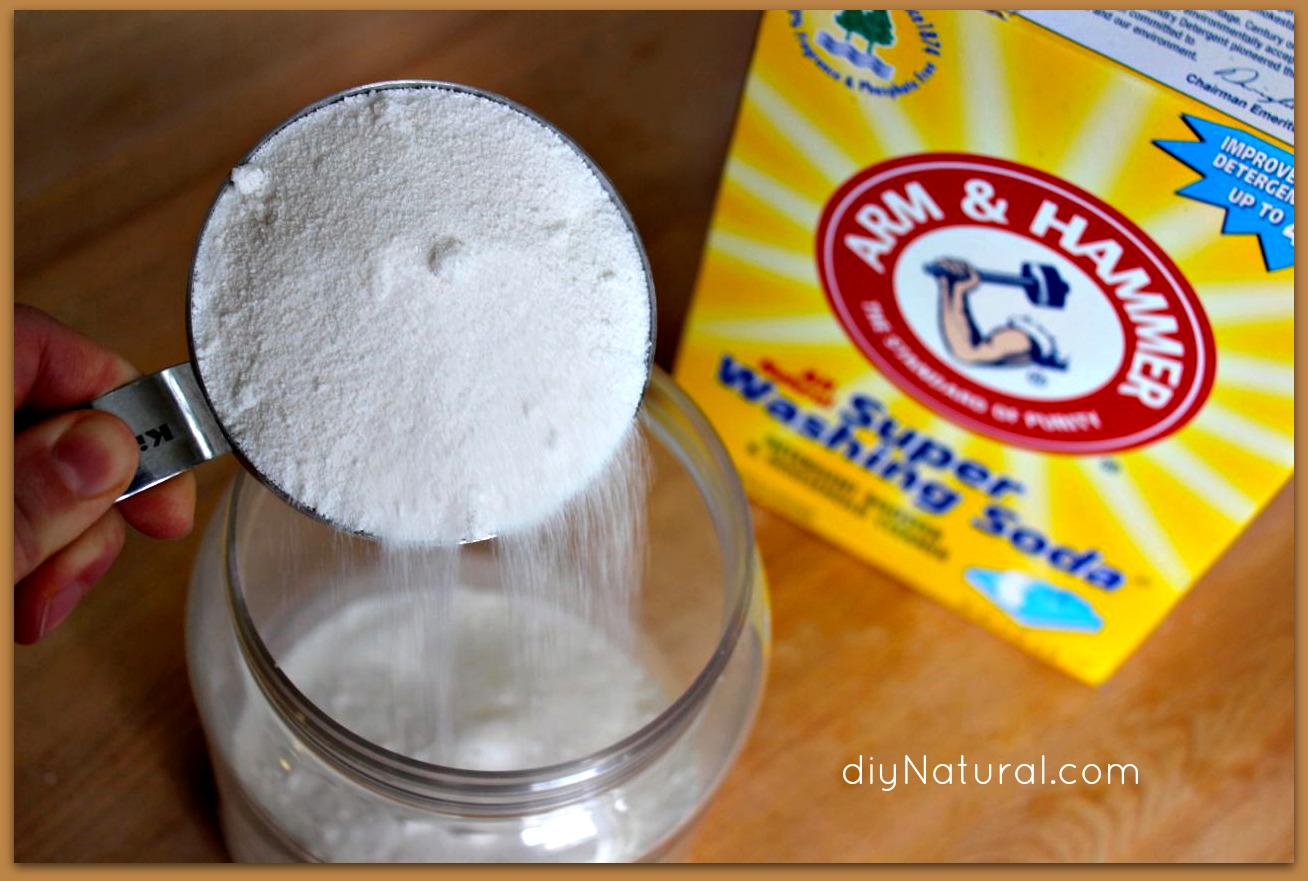
- 1 cup washing soda
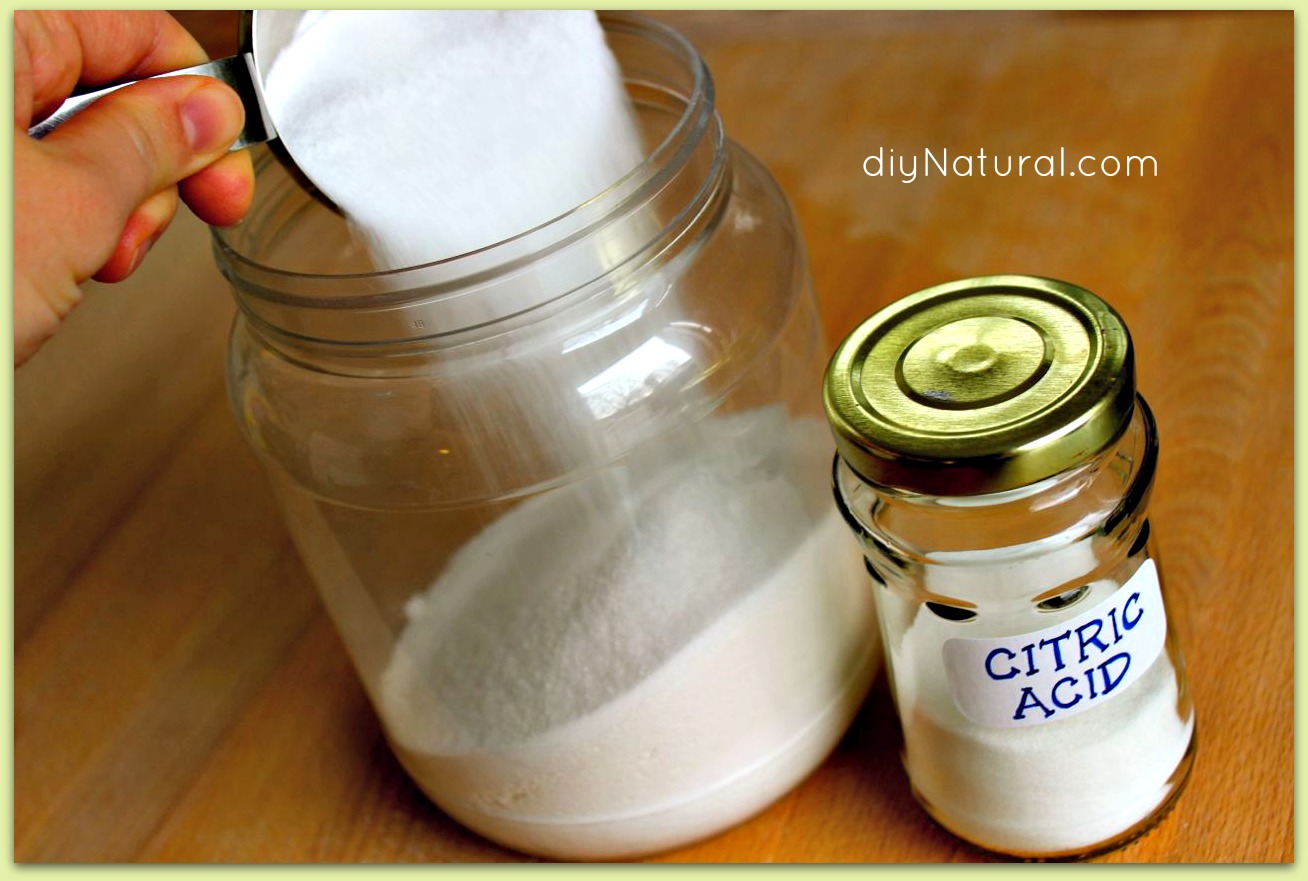
- ½ cup citric acid
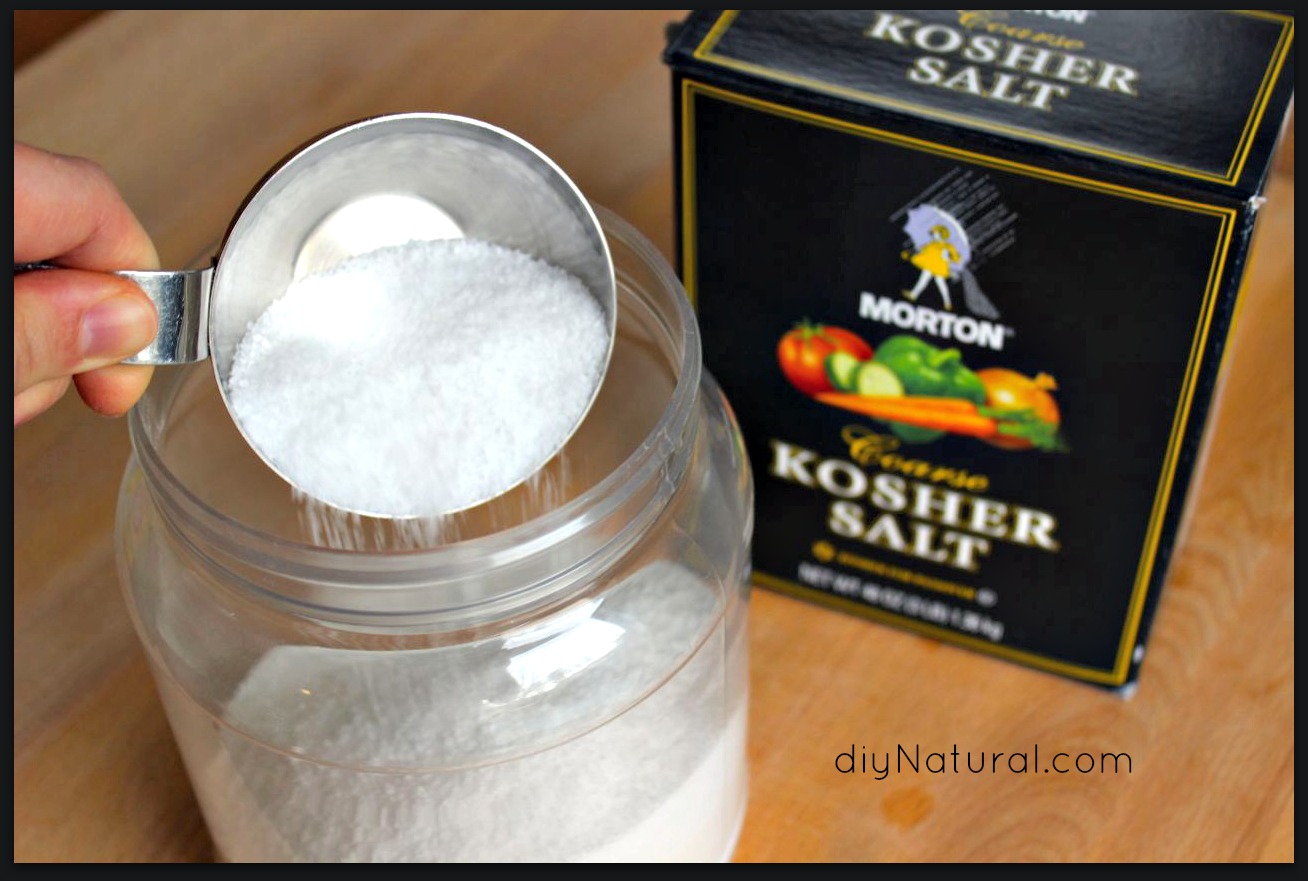
- ½ cup kosher salt (for scrubbing action)
Instructions
-
Mix all ingredients together.
-
Use 1 Tbsp per load (you can use a heaping tablespoon if you feel the need, but we do not).
-
Each batch yields 24 ounces of detergent. We recommend storing in a container you were going to dispose of anyway, like an old yogurt container or coffee can you can fit it under your kitchen sink. Feel free to double the batch, or multiply to create any amount you’d like.
-
For a DIY rinse agent, simply fill the compartment with white vinegar.
Recipe Video
Notes
To answer common questions we wrote a dishwasher detergent FAQ page to help you better succeed with this recipe.
Made this recipe?
Mention @diynatural or tag it #diynatural!
Detergent Ingredients and Cost
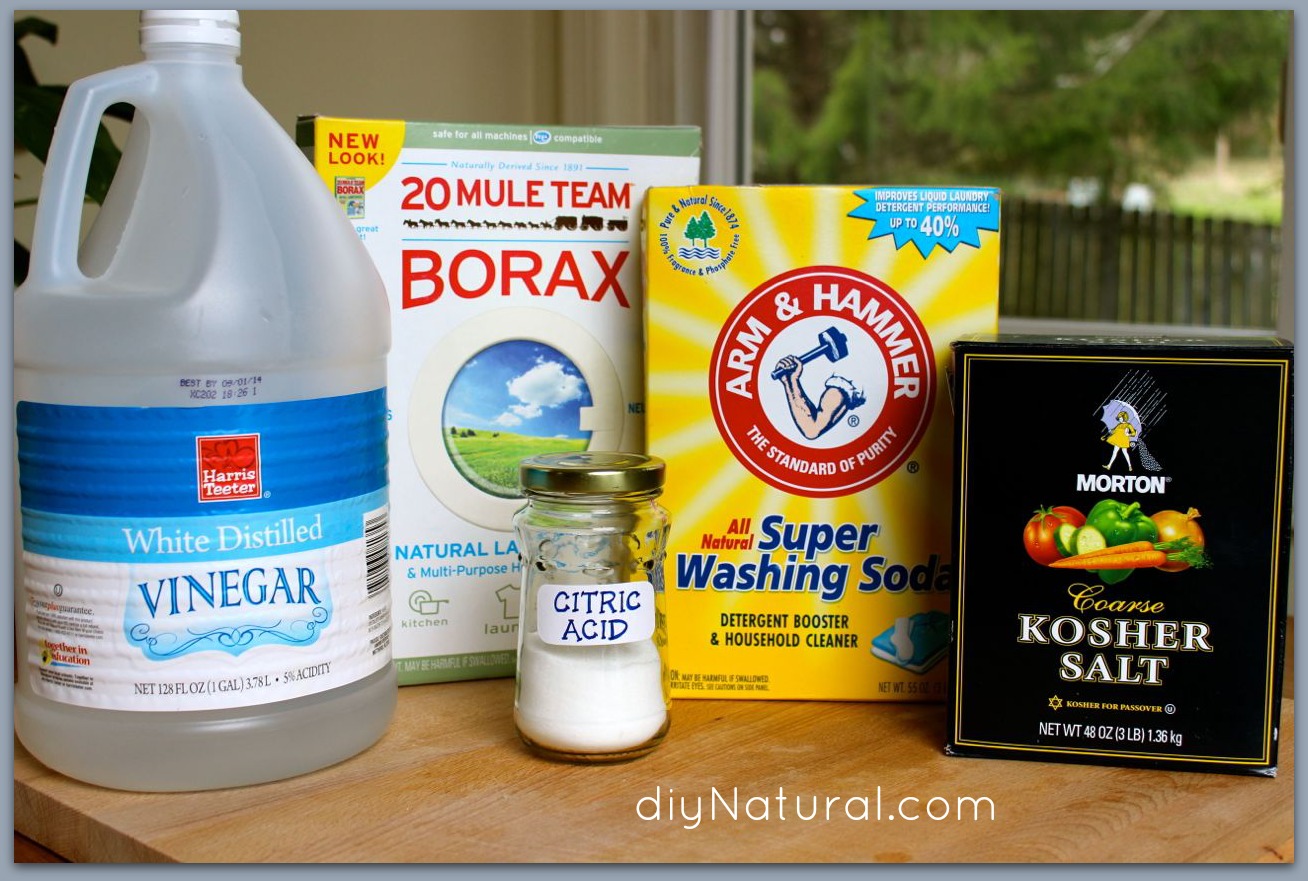
- A 55-ounce box of Arm & Hammer® Super Washing Soda = $2.19
- 1 – 76 ounce box of 20 Mule Team® Borax = $4.29
- A 48-ounce box of coarse Kosher Salt = $1.99
- 1 – 5 pound container of food-grade Citric Acid = $27.00 You can find this online, in the canning aisle of your local grocery store, or at your local brewery or specialty beer store. If you cannot find this you can substitute LemiShine. If you do not use some form of citric acid you may see a cloudy residue left as most “green” cleaners leave.
- 1 gallon of White Vinegar = $1.79
Continue reading for pictorial instructions, tips to avoid clumping, cost savings breakdown, and borax safety.
How to Make the Homemade Dishwasher Detergent
For visual learners, like myself, enjoy these pictorial instructions.
1. Start with these 5 ingredients:
2. Begin with 1 cup of borax:
3. Add 1 cup of washing soda:
4. Add 1/2 cup of citric acid (double for hard water):
5. Add 1/2 cup of kosher salt:
6. Put the lid on and shake it up good:
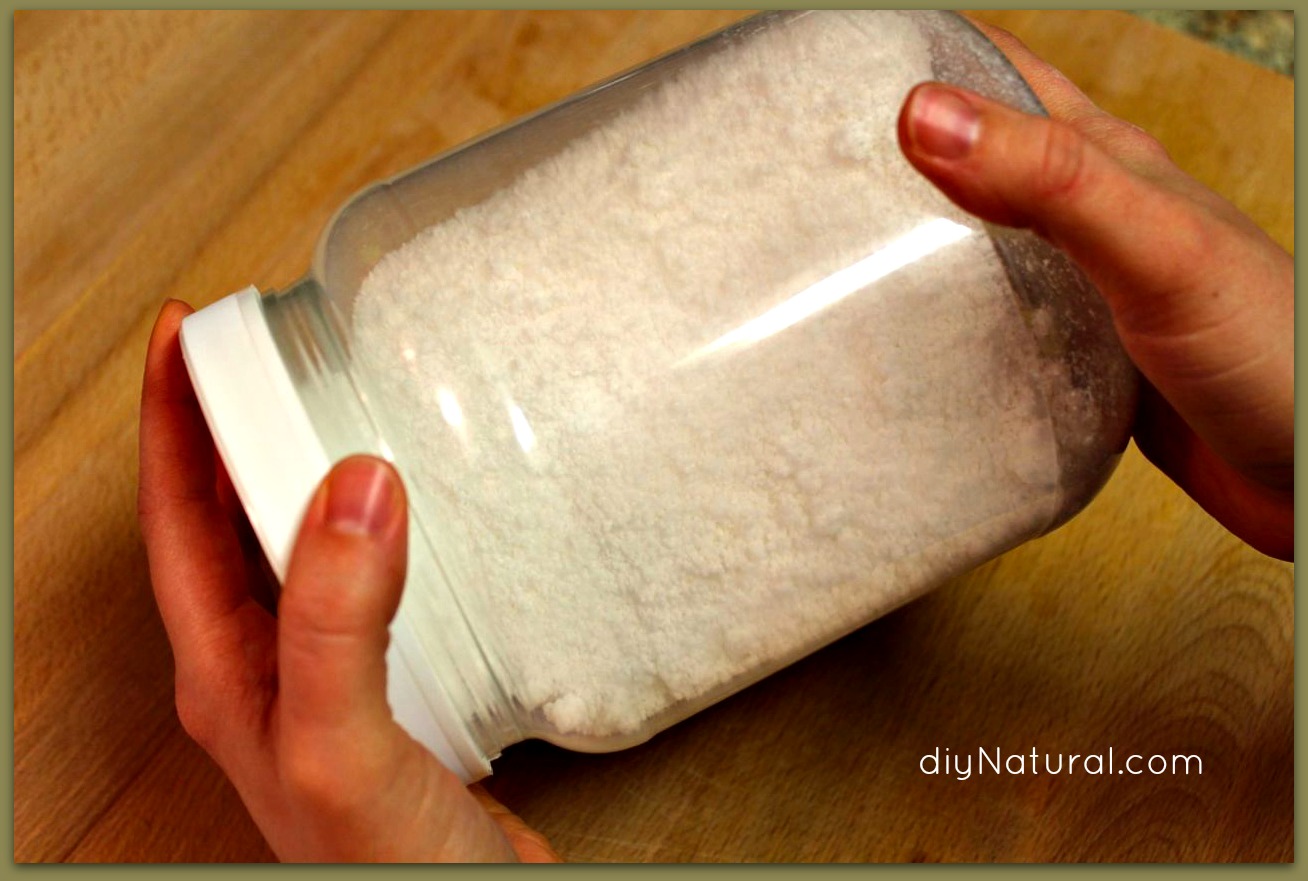
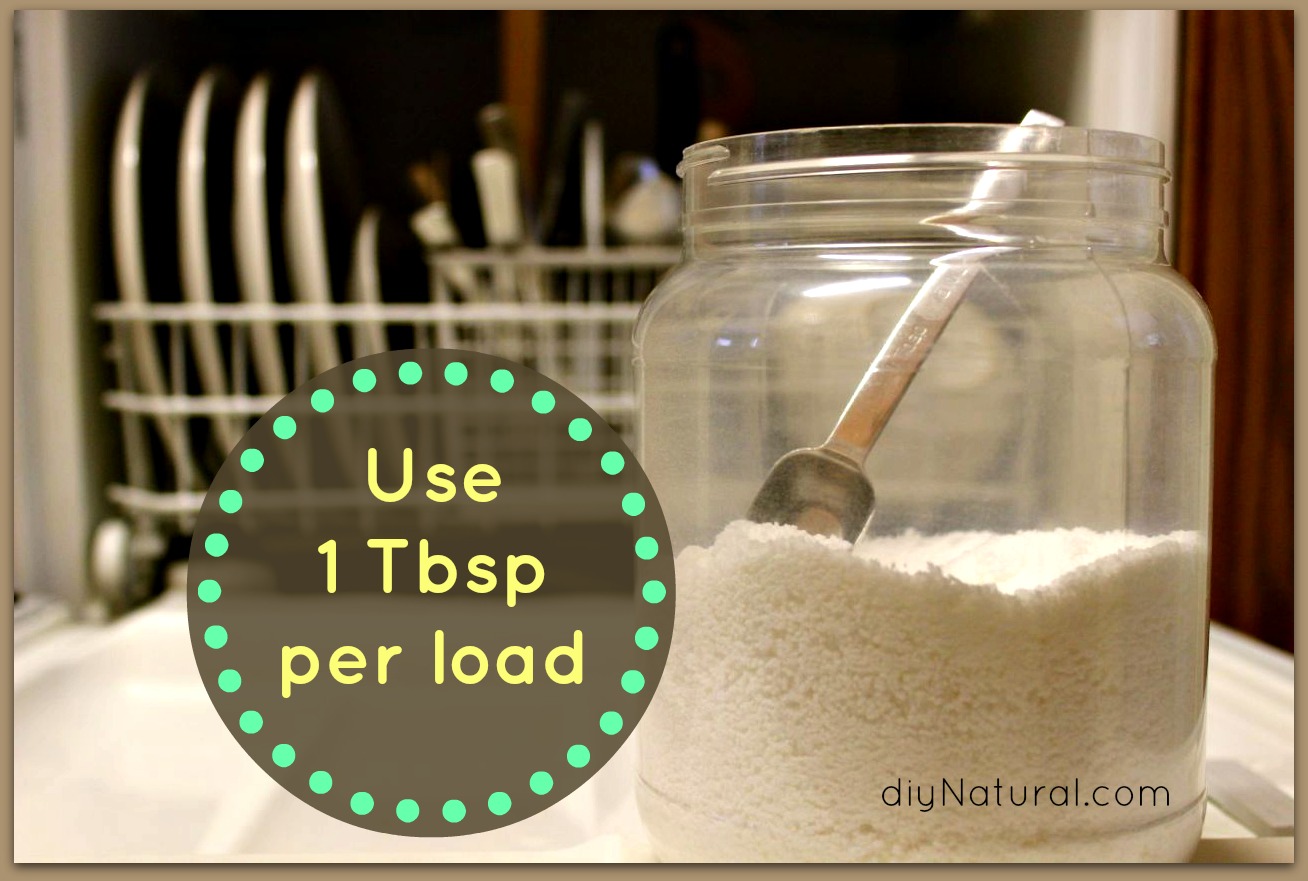
7. Use 1 Tablespoon per load:
8. Fill “Rinse Aid” compartment with white vinegar:
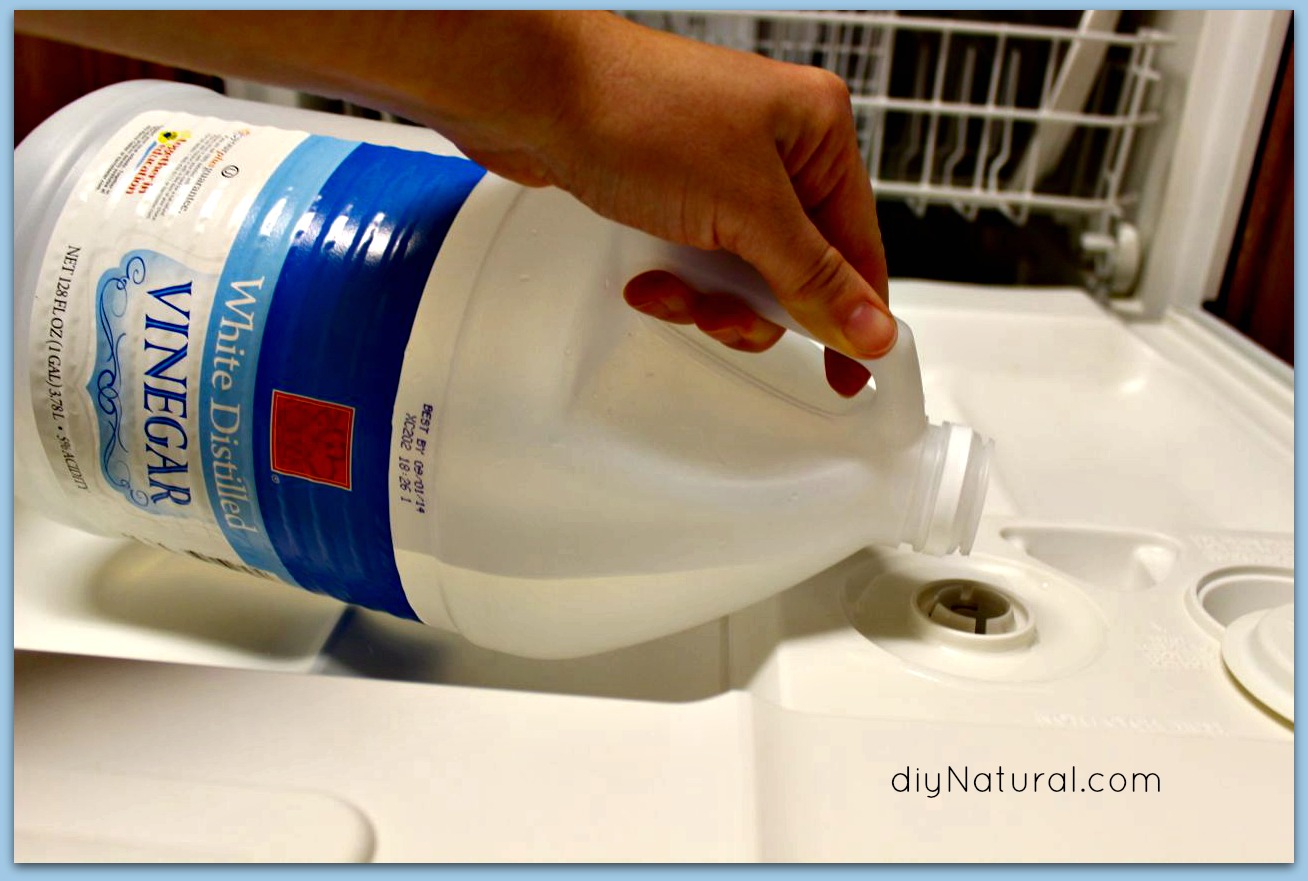
(You can also add lemon juice as a rinse agent)
Use 1 Tbsp per load (you can use a heaping tablespoon if you feel the need, but we do not).
Note: No time or desire to make your own dishwasher detergent? You can always purchase natural brands like these.
Continue reading for tips to avoid clumping, cost savings breakdown, and borax safety.
Tips to Avoid Homemade Dishwasher Detergent Clumping
This detergent will clump because of the citric acid. Here are a few ways to make it clump less.
- Add a teaspoon of rice to the detergent to help absorb moisture.
- After combining ingredients, leave the mixture out (without a lid) and stir several times each day for a day or two before storing it with a lid.
- Add ½ – 1 teaspoon citric acid separately to each dishwasher load rather than adding it to the detergent.
Some people have had success forming blocks of detergent by using ice cube trays. We have never tried this so we can offer no help here; if you want to try it look to the comments for help.
Note: To answer other common questions we wrote a dishwasher detergent FAQ page to help you have better success with this recipe.
Cost Savings Breakdown
Prior to making our own, we were using Palmolive eco+ liquid detergent. Here is the cost analysis of our homemade dishwasher detergent:
- borax | 76oz = 4.29 | 8oz=.45/batch
- washing soda | 55oz = 2.19 | 8oz=.32/batch
- citric acid | 80oz = 27.00 | 4oz=1.35/batch
- kosher salt | 48oz = 1.99 | 4oz = .16/batch
- total for 24 oz = $2.28/batch
- white vinegar (as rinse agent) | 1gal = 1.79 | 4oz=.06/fill
Use 1 rounded tablespoon of this homemade detergent per load. If you feel it necessary use a heaping tablespoon, but we do not.
- Palmolive® eco+ gel 75 ounce detergent – $3.79 – 28 loads = $0.14 per load
- Homemade powder 24 ounce detergent – $2.28 – 48 loads = $0.05 per load
Here are the cost savings for the homemade rinse agent that goes along with this homemade dishwasher detergent recipe:
- FINISH® JET-DRY® Rinse Agent 4.22 ounce solution – $3.99 – 1 fill = $3.99 per fill
- White Vinegar as a Rinse Agent 1 gallon solution – $1.79 – 1 fill = $0.06 per fill
That is a huge savings of 6650% on an effective rinse agent. Sounds too good to be true… but it is indeed true! The rinse agent costs just pennies and detergent only half as much.
Note: No time or desire to make your own dishwasher detergent? You can always purchase natural brands like these.
Is Borax Toxic?
After thorough research, I concluded borax is only as toxic as baking soda or table salt; if you ingest it in high quantities, it may make you sick. If you use it as described in this homemade dishwasher detergent recipe, it poses no toxic threat.
Just make sure you don’t confuse Borax with Boric Acid, the two are NOT the same. Use borax (I recommend 20 Mule Team brand), steer clear of boric acid.
For those of you who want more info on using borax in your homemade dishwasher detergent, read this excellent Crunchy Betty article where she expounds on the toxicity levels of borax; I couldn’t have said it better myself, thanks, Betty.
At the end of the day, decide for yourself to use it or not, and afford others the same courtesy.
There you have it folks… simple, easy, and effective homemade dishwasher detergent.
What are you waiting for? Go make some homemade dishwasher detergent!
*******
References and Resources
- Borax on Wikipedia
- Toxicity reports for Borax on PesticideInfo.org
- Washing Soda (a.k.a. Sodium Carbonate or Soda Ash) on Wikipedia
- International Chemical Safety Card for Sodium Carbonate at the Center for Disease Control
- Sodium Carbonate on the National Center for Biotechnology Information PubChem
- Citric acid on Wikipedia
- Citric acid in the Comparative Toxicogenomics Database at CTDbase.org
- Kosher Salt on Wikipedia


Hi I wondered if anyone has advice, i made my first batch around sept and it was great, it turned into a powder, i’ve since made the mixture a further four times with the same ingredients and quantities but it keeps coming out really watery, we live in the uk and it certainly getting colder and damp.
Any suggestions
Caroline
By watery, do you mean liquid or is it clumping? Even with the humidity in the UK I can’t imagine the dry ingredients turning to a liquid. Did you add a liquid to the dry ingredients? Perhaps the vinegar for the rinse aid?
I started playing with this recipe (we live in Kansas – hot and humid summers, and to save a little on the cost of heating in the winter we vent our dryer into the house so it is almost always HUMID in our home and thus this detergent is a bit clumpy – I am going to try keeping it in Mason jars and see how that works)…what I’ve found to work best for hard water stains (that chalky film on everything including the dishwasher) is to blend the recipe as given, then use maybe a 1/2 Tablespoon of straight citric acid in the pre-wash compartment – it works just like Lemi-shine at a fraction of the cost. A few things; 1. I don’t really care if Borax is “safe” – it can’t possibly be less “safe” than commercial detergent…and I’ve used it for better than a dozen years mixed with lemon juice to clean porcelain tubs (it works beautifully and better than anything on the market – don’t care what CLR or Clorox claim…they lie). 2. Citric acid is easy to find online, I purchased mine at bulkapothecary.com or in a pinch you can find it at your local grocery in the food preservation isle where you find pectin and canning jars/lids. 3. Generally, though I do hate to admit it, I buy my ingredients at the big bad Walmart…no one sells Borax or Washing Soda cheaper (those you find in the laundry isle). 4. Most Importantly….THANK YOU for inspiring me to start making my own everything, Laundry Detergent, Dishwasher Detergent, Deodorant, Body Soap, Fabric Softener…I’ll keep trying to replace more and more commercial items in my home until I can no longer find things to replace!
Trisha,
Great note! Save even more money by buying the .50/box baking soda a Wallmart, and convert it to washing soda yourself. Also, I have started using diatomaceous earth to avoid clumping. As little as 1/8th of a cup to a 3 cup batch works wonders!
Thanks for this recipe! It works great for us. We put scoop in the pre-wash compartment and 1 in the main wash. I linked to your recipe here: http://www.1plus1equals9.com/diy-homemade-dishwasher-detergent/
So…. I have been using this exact formula for quite a while now. This is despite the fact that it does not do well with hard-water. Has anyone else ever noticed that the bottom of their dishwasher is all brown-ish? Is this just really hard water? My dishwasher is new”er”. What is going on? What to do about it? I also use the vinegar for the rinse aid.
Can people please tell me where you are purchasing the ingredients? I do most of my shopping on Amazon and the prices are WAY higher. The washing soda (55 oz) is $10.17!! Talk about a price hike! Kosher salt (48 oz) is $9.99! Help, I am trying to save money! Thanks!!
Wal-Mart is usually the cheapest for me but I am also able to get the ingredients at Target, Cub Foods, and Walgreens. I live in Minnesota.
We have discussed this before, but here goes my findings:
baking soda at .55/pound from Walmart: Converts easily to washing soda.
Citric Acid 5lbs at $26.00 Buy less if you wan’t, still the best prices: http://www.dudadiesel.com/search.php?query=citric.
Borax also from Walmart.
I don’t know how widespread they are, but I always preferred Rural King. Not sure how the prices compare but I hate going to Walmart. Our local hardware store also has lost of these ingredients.
Hi Rosemary:
I just substitute an equal amount of Fruit Fresh for the citric acid (1/2 c per batch). I would say it is by far the most expensive ingredient in this formula. The little bottle (approximately 1 c) cost $3+ so I will probably order the citric acid online and see how it compares. I was just too impatient to try this out! I find it is a very effective substitute!
I had wonderful success with this formula (still on the first batch).
For citric acid I used Ball (the canning company) Fruit Fresh. I couldn’t find citric acid anywhere (and was too impatient to order online). Citric acid is the 3rd ingredient in this stuff. It also has a non-clumping agent which is probably why I
am not having clumping issues. I also am using white vinegar in the rinse agent
dispenser. My dishes are cleaner and less cloudy than using commercial packets.
I also have a water softener. BTW, also a huge fan of the laundry detergent. Clothes come out just as fresh and clean with only a TBSP! Amazing!
I am going to make my second batch. I have had mixed results. Cloudy glasses, silverware changing colors, dishes not completely clean and residue on dishes. Now I do have hard water and a water softener. I just read to use the high temp wash which I am trying right now. I will let you know how that works but I am trying to save money and I’m not sure how much it costs for that setting on the dishwasher. Any advise would be greatly appreciated.
I suggest adding more citric acid if the hot water cycle doesn’t clear up your issues.
My (portable) dishwasher started leaking when I added rinse aid after about three years of using vinegar for that. I suspected the vinegar might have been too acidic, but it is an old dishwasher too. Thanks for sharing your recipes. I love how simple the laundry one is! Trying it today :).
WOW! I am so impressed with this formula!. I made it up today and just used it for the first time. The dishes came out SHINY! I also added vinegar to the rinse agent compartment. The silverware had no spots! Neither did the glasses! Also noticed that the dishes were almost completely dry, usually have to finish drying them as I put them away. NOTE: I couldn’t find pure citric acid in the stores so I bought Ball Fruit-Fresh. It has other stuff, including an anti-clumping agent. I’ll let you know if it clumps. Thanks for the great $$ saving recipe. This works way better than the expensive packets I was buying.
Sheila
Thanks for the great idea to subsitute the citric acid with Ball Fruit-Fresh. How much of it do you use when making a batch of the dishwasher detergent?
Thanks again
Since everyone seems to have a problem with clumping, I was thinking I could use that as an advantage and maybe put it in an ice cube tray and make little detergent bricks, one for each load. Had anyone tried this?
Altough something is natural does not mean it is safe. Borax is not non toxic and should never be used with things that come in contact with food.
Also, Do not INHALE!
Noon: Show us the proof then. I refer you to this site:
http://crunchybetty.com/getting-to-the-bottom-of-borax-is-it-safe-or-not
Bottom line up fron: unless you are spoon feeding yourself high quantities of the detergent created here, it is highly unlikely that you would have any issues whatsoever. And the issues you would have by eating this detergent are no more severe than swallowing huge amounts of baking soda, or salt. Yes, you should not inhale it (duh!), and I don’t think swallowing huge amounts of this natural detergent would be good for your colon. But it works great on your dishes, and so far, leaves no appreciable residue. So, I don’t buy your argument.
PS: Noon, do you ever use talc? Yeah, don’t inhale that either, nor do I recommend consuming it in large quantities.
Yeah, I guess I was trying to be a bit rude. I get that way sometimes. Sorry, I am trying to be a better person. 😉
Dear Noon,
Thank you for your concern. There certainly has been much controversy surrounding borax recently. To be completely honestly I am more comfortable using this recipe than I am buying a box of detergent from the store. I have done a lot of research regarding borax. I feel borax is safe to use for my family. That’s my personal call for my family. I know it is well rinsed from the the dishes so I am not concerned.
Serena and Brett are correct that Noon’s argument cannot be supported via research and Brett hit the nail on the head when he likened the toxic levels of borax equal to that of table salt and baking soda.
I am sorry, something went wrong here, i ment to just copy a couple of links for the proof about borax not being safe.
Dont get me wrong, i am no advocate of telling people what they should do but stating borax is safe is just not wright.
In europe where i am from it was considerd safe till 2010. What you read in the above message is from wikipedia in german it will give you the links from E.U regulations.
You could translate if you wish
Hi Matt, I made this recipe but even with the vinegar rinse, my dishes come out filmy and cloudy. Any suggestions of what to try differently or add to the existent recipe so I don’t have to waste?? Thanks!
Hi Leah, try the suggestions here: https://www.diynatural.com/homemade-dishwasher-detergent-soap-faqs/
Blessings.
I halved this recipe and am almost finished with the first batch. Not all the time, but I’d say half of the time, there’s a chalky residue left mostly on the upper rack. Mostly on my drinking glasses. Am I using too much? Is it just that my food trap might be clogged? There’s no food left on the dishes just chalky soap. What should I do?
I am having this same problem. On the top rack and also on the silverware. If you can figure out a solution I would love to hear it! 🙂
Me, too! I have to run an extra rinse cycle with vinegar, which cuts in to the savings!
I’m still on my first batch, but am bothered by the fact that it’s increasingly becoming more and more hard and clumpy. To the point where I could barely break clumps apart with a fork. What can I do to prevent this? Otherwise, works great as long as everything is rinsed/scrubbed well and there is no food particles left when placing items in the dishwasher.
I make mine in smaller batches. Yes, this means I have to do it more frequently but it’s so easy I don’t mine. I also keep mine in a Mason jar. I highly recommend doing the same or another rubbered gasket sealed lid container. Hope this helps. Happy green cleaning!
Love this idea! I was wondering best way to store it. 🙂
I made some homemade dishwasher detergent with results that weren’t great. I didn’t find any citric acid, though, so that may have been the issue. As for storage, I started out with a ziploc freezer bag and it was horribly clumped. Then at Target I found a glass canister with a lid with a rubber seal and have less clumping. I use a coffee scoop to scoop it out. After a few cloudy washes (even with vinegar in the rinse agent container), I mixed it half and half with Cascade. We have really hard water in Texas, so sometimes I also have to run a rinse cycle with vinegar. With all the money I’ve spent on trying to get clean dishes (including an under-the-sink filter), I probably could have bought a water softener. :-/
I can never find citric acid either and I’m way too impatient to order order online and wait so I use Lemi Shine Original as the substitute. It’s usually quite easy to find at most retailers. I recommend trying the recipe again. If your water is really hard you can try adding more Lemi Shine to your mixture. I hope this helps. Good luck!
The best place to look for citric acid is in the canning section of any grocery store. It’s used as a preservative in jam and jelly. fyi a 5 oz jar is more than you need for 1 batch
With respect Jacqueline,
if you purchase citric acid from the grocery store it will be significantly more expensive per ounce then buying a larger quantity online.
I mentioned early so sorry to repeat myself, but in our dry climate I’ve noticed that as soon as I put a tight lid on mine, it begins to clump. I’m better off leaving it off. To my first batch I tried adding a few grains of rice with lid on, as mentioned earlier. That didn’t work. I inadvertantly left the lid off another batch and voilà! No sign of clumping. Folks in Florida would have a brick in short order, so it really depends on your climate. Maybe make cubes in an ice cube tray? It’s worth expirementing with. It’s good stuff!
As I posted earlier, I am experimenting using diatomaceous earth, and so far, it doesn’t appear to be to abbrasive for my glassware. It has totally prevented any clumping, but leaves a slight film. I will reduce the proportions to see if this helps. So far though, it is very promising. I use 1/4 of a cup for a three cup (plus the 1/4th cup) batch. I will decrease it to 1/8th of a cup and see if it still performs well.
diatomaceous earth is mostly silica, which is abrasive when used in a paste for things like counter tops where pressure is applied. Your idea got me thinking about trying something like Bon Ami, which won’t harm glass and doesn’t have the clay component that diatomaceous earth has, which might be the cause of the slight film. I’m going to try adding Bon Ami as a parallel test. Keep up the good work.
Hi all. Update to the use of the diatomaceous earth: I cut down on the amount. I now use about 1/8th of a cup for a 3 cup batch. So, here is my formula:
1 Cup Borax
1 Cup Sodium Carbonate
1/2 Cup Salt
1/2 Cup (maybe a little more if I am feeling frisky) Citric Acid
1/8 Cup Diatomaceous earth
So far, no clumping whatsoever! Hoorah!
Awesome Brett, thanks for the update! Blessings.
You mentioned a slight film problem, has cutting back on the diatomaceous earth cured that as well?
No more film with about 1/8th of a cup. It has been dryer here, so perhaps the lack of humidity is helping in the anti-clumping dept. But I think I will try less (may 1 Tbs) and see if it still produces good results.
That’s great news. Thanks for all your hard work.
I am so close to going out and getting all the items recommended but have a few questions, I see Borax and Washing Soda are both Laundry boosters. Why are both needed? Also, Borax, Washing Soda and Citric Acid are all to help in hard water areas. Why are all three needed? Lastly, Why even use Vinegar if Citric Acid helps eliminate water spots? Please help me to understand the role of each ingredient. I don’t have alot of money!
Love Your Site!!!
Some recipes call for no sugar added lemonade koolaid packets if you can not find citric acid. Some say that the lemonade can stain the dishwasher. Can an essential lemon oil be added to this recipe for a nice scent? What would you recommend?
I have recently heard that the acid in the vinegar can damage the rubber components in the rinse aid compartment. http://wholenewmom.com/whole-new-budget/natural-dishwasher-rinse-aid-important-update/ and http://www.ehow.com/facts_10006845_vinegar-ruin-rubber-seals-appliances.html
This has been brought up before. We’ve been using vinegar in the rinse compartment for four years with no problems.
I’m on my third batch. In our dry climate, I’ve found it’s best to leave the lid off and add nothing extra. Only way I can avoid clumping. Bread or rice makes it worse. The detergent simply absorbed the moisture from them. Obviously my idea would be a disaster in a humid climate.
All: I am trying diatomaceous earth as an anti-caking agent. So far it seems to have totally prevented the clumping. I will let you know if it affects the quality of the detergent.
Is diatomaceous earth abrasive enough that, over time, it might micro-abrade glass and fog it up?
Well, I am not sure yet. I found one web blog that included it as an ingredient in a “cleaning paste.” Specifically, they claimed that, “This paste is effective for most household cleaning chores and contains no harsh abrasives to harm surfaces. The paste resembles a gray putty, except that it is slightly softer and has a bubbled surface. The chalk or diatomaceous earth provides a fine sheen without scratching.” I will be sure to let you know. I used 1/4 of a cup in about a three cup batch. . .
Really good idea Brett, be sure to let us know how it works out. If you have success we’ll add it to the dishwasher detergent tips page.
hi i made the dishwashing detergent and it cleans better than any other product i have bought, totally impressed, i’m inspired and am trying other products
Awesome Caroline, so glad we could help inspire!
Can you substitute lemon juice concentrate instead of citric acid?
I am really getting into making my own cleaning supplies. How safe is this on our septic systems?
Hi I am really keen to be more envionmentally friendly, however i’m in the UK and struggling to find some of the ingredients, eg kosher salt is there any alternatives i could use
Sure Caroline, any bigger crystal salt (similar to the kosher size) will work. Or just omit the salt and give it a shot without, you should be fine. Cheers.
Can I use this without the borax?? Will it still work? I also have very hard water.
The recipe calls for borax so we can’t stand behind a recipe without it, but give it a shot and let us know how it goes. If you have hard water be sure to include the washing soda. Blessings.
I’ve been using this now for about 2 weeks. I was so happy at first with how clean my dish washer is but my dishes just aren’t coming clean. They are very cloudy and don’t feel clean and smooth. I’m using the kosher salt and vinegar, what am I doing wrong?????? Thanks
I’ve been using this recipe since January 2012 and occasionally have a problem with cloudy glassware, also, although the vast majority of loads come out sparkling clean and clear. My checklist is: Did I overload? Did I have something aluminum in the load? I’m not too sure about the aluminum, but someone cautioned me about it clouding glassware. Overloading most definitely is the biggest factor in how well my dishwasher works with any soap, but there does seem to be some factor I haven’t identified yet. Have you figured out anything?
oh!! can l use organic soap? ingredients are: sodium palmate..sodium cocoate..glycerin..sodium citrate..cinnamonum..zeylanicum..bark powder..eugenia caryophyllus (clove ) leaf oil..citrus aurantium dulcis orange peel oil..limonene..eugenol.
Is this ok to use,or can you recommend a cheaper version?
Just about to mix a batch of laundry wash powder, wish me luck.
try using another organic acid like tartaric acid or malic acid they also work and actually remove stains better, they are more expensive though, you can special order in the pharmacy of your choice
Just tried this the other day, and my dishes came out with a film on them. Any suggestions for this? Tweaking the recipe, perhaps? I always use vinegar directly in the bottom before starting, too. I would really love for this to work. I hate the strong smell that emits from my dishwasher when I use the commercial stuff.
Hi Cristy,
That’s what I figured was the problem. Do you know a solution to this? Should I use less/more of the citric acid? Do you know if the citric acid is necessary? I am using the lemon kool-aid packets and doubled the amount since I have hard water. Thanks for any tips or suggestions.
Cindy
Krystal, perhaps you’re ‘missing the point”. I’m trying to ‘fine tune’ my recipe and don’t even know how much citric acid I’ll need or if I even want to switch. Why would I buy FIVE POUNDS of citric acid I may never use or it might be enough for me for 20 years!?! If I want to buy two walmart kool aid packs for 12 cents a piece every 3 or 4 months, get over it already.
Well, Nan, you could recycle your kool aid packets into shoes and donate them to homeless children. and then you could feel sanctimonious too. 😉
Christy,
Tarnish on silverware is usually caused by sulfur compounds in the air or water, such as the rotten egg smell in some water. I haven’t tested this, but you may need to increase the amount of salt. Cindy is right about adjusting the amount of citric acid.
I do have a fairly easy way to remove tarnish from silverware that I’ve used. Take a glass baking dish like a cassarole dish, line it with aluminum foil and put the silverware on the foil, make a mixture of a quarter cup of baking soda per quart of water. Heat the water mix and pour it over the silverware, be ready it’ll foam a bit. After a couple of minutes the tarnish will be gone and you can wipe and rinse off the remaining tarnish.
Ladies, this comment form is for helpful comments only, please keep this in mind. We’re here to help each other, not tear each other down. Let’s stay positive.
I have read all of the comments on this page and decided to give it a try. I do have to say though those of you talking about using kool-aid are missing the point. You are suppose to be making this a cheaper/greener solution. As pointed out prior the packets are adding to our waste and the kool-aid is more exspensive. Ordering online or looking for a local store that carries the citric acid is not that difficult. Please reconsider the kool-aid option and try and help uour enviornment. Every little step helps. P.s.- I have used vinegar as my rinse aid for over 5 years now with no seal issues.
The local (Nashville, TN) International Markets have Ziyad brand citric acid (for cooking)–a 10 ounce jar for $2.99.
Matt,
According to the site I linked to, it is 200 degrees F. I have seen it as low as 140 Degrees F, and as high as 400 degrees F. The key according to one site is to get it above 140 degrees F. That is when it starts letting go of the of the CO2. The higher the temp, the faster the process.
That article is partially correct, the conversion of sodium bicarbonate to sodium carbonate begins at 212° F, but full conversion requires 392° F. Solid NaHCO3 begins to lose carbon dioxide and water around 100°C (212° F), but complete conversion to sodium carbonate does not happen until 392° F (200° C). If cooked at a lesser heat, full conversion will never happen.
Best solution is to put baking soda in a glass dish about 1/4″ deep and bake at 400° F (nice round number) for an hour.
I suppose I should write an article about it. 🙂
Good to know! I am not a chemist by any stretch of the imagination . . .I just try to do as much research as possible. Thanks for the site and your knowledge. 🙂
My pleasure Brett, I’ll be writing an article on the topic soon so we can have a thorough, go-to guide for people looking to make their own.
Could you please tell me where to find Washing Soda, it’s definately not $2.19 as stated at Amazon! Thanks!!!!
I found it at walmart near the dishwasher soap. I cannot find my receipt, and they don’t list it on their website, but I think around $4 for 55 oz.
I found it at Fred Meyer (a Kroger store) in the cleaning agents aisle. I think it was $3.50 for the 55oz box.
Make your own! Bake baking soda for 1 hour at 200 degrees and you are left with Sodium Carbonate (Soda Ash, Washing Soda)
http://chemistry.about.com/od/makechemicalsyourself/a/Sodium-Carbonate-From-Baking-Soda.htm
BTW, Brew Rite at $4 for 8 oz has one ingredient: Sodium Carbonate.
It’s 200 degrees Celsius, which is 392 Fahrenheit.
Tried it for the first time yesterday…seems to work great!
Anyone try adding an oxygen-cleaner (such as Oxiclean) to the mix? Reading the list of ingredients on our nearly empty box of 7th Generation powdered dish detergent includes sodium percarbonate, which is the main ingredient in Oxiclean. I think Oxiclean adds some suds-producing agents though, which is not what you want in a dishwasher. I have found another product called Oxyboost which claims (corroborated by my research online) to have a higher percentage of the active ingredient (sodium carbonate) and the only other ingredient is sodium carbonate (washing soda, already in the recipe), no sudsing agents. Just wondering if anyone has tried it and if so, how much you used. I’ll try my own experiments and post again if no one speaks up.
It may not be necessary to add more ingredients, it’s just we do a lot of dishes and home based cleaners don’t always do as good a job. We’ll see!
Sodium percarbonate is sodium carbonate (washing soda) + hydrogen peroxide. I think it sounds like a great idea, but I’m not really qualified to opine. Please let us know what happens!
I substituted a generic version of Oxiclean for the Borax (simply called Oxygenated cleaner), plus half the amount of baking soda. Here’s what I came up with so far. I also use vinegar as a rinse agent.
1 Kosher salt
2 Baking soda
2 Washing soda
2 Sodium percarb
2 Citric acid (lemi)
Is your calculation of cost correct? It doesn’t seem quite right.
Your recipe calls for one FLUID 8-oz cup of borax, and the calculation uses the 55 oz WEIGHT of borax, for example.
Anyway, I’ve been using this recipe and it’s working great! Clumped up but I just stabbed at it a little, and the clumps dissolve just fine in the dishwasher. Thank you!
I remade this today and weighed each item as I added it. Turns out your calculation was close enough! With your costs per box of ingredient, it worked out to a total of $2.25. Thanks again for this!
I thought I seen a detergent recipe on your site before for hand-washing dishes. If so, I can’t seem to find it again. Could you please let me know what it is if you do have one? Thanks! 🙂
P.S. Really enjoying your site and passing on to others!
I love your detergent, many thanks to you and your wife for sharing your recipe and experiences. The detergent It is fun and easy to make and I really appreciate your troubleshooting page. I live in MD and the well water here is REALLY hard so at first I was having problems with cloudiness & residue even after doubling the citric acid. However, after going back and following your suggestions to increase the amount of detergent (I use two rounded TBSP) and adding 1/2 cup of vinegar to the wash, it has virtually resolved the problem. In addition, I love the cost savings and peace of mind that comes with knowing exactly what it is my detergent. Again, thank you so very much!
I was wondering if I could add some Baking Soda to this as well, for a little extra cleaning? I have also heard of doing a pre-wash with Baking Soda in the first dispenser, and the detergent in the other.
I used vinegar for every load of dishes for three years because our water is so hard. Now the racks in our dishwasher are very rusty and falling apart. The seal is fine. (I used a commercial detergent just fyi; now I’m here looking for a homemade recipe so as avoid vinegar.) The bolts on our toilets are also rusty from using vinegar.
I’m not sure vinegar is the cause of the rust. I, also, have very hard water and the racks in my dishwasher are very rusty & falling apart. However, I have only used commercial detergent & commercial rinse aid.
Thanks for that, Stephanie! Very good to know. Wish I could find a non-corrosive softener now that the damage has been done.
The vinegar is not causing the rust. Vinegar will actually take the rust out. If you soak the parts in vinegar then scrub them with a soapless steel wool, the rust should come off. If the parts are too big to soak, soak paper towels in the vinegar and wrap it around all the rusty spots and leave it for a while, then come back and scrub it with the soapless steel wool. It works. I tried it on a rusty crock pot.
That doesn’t make sense! I have used vinegar in EVERY load of my now 4 year old front load washing machine. It isn’t going to cause the rubber to break down like bleach will.
We had an appliance repairman do some work on our dishwasher. He told us to never use vinegar in a dishwasher or front load washing machine because it can weaken the seal on the door of such machines. And, specifically he said that there are rubber seal peices on the inside of the dishwasher and around the motor that slowly errode from vinegar. I love using natural, but affordable vinegar in exchanged for expensive appliance just doesn’t weigh out to me. Anyone else heard this before?
We’ve been using vinegar in our dishwasher for over three years now with zero seal issues. You can use it with confidence.
This makes sense, but we’ve also been using it for well over a year with no problems. I need to make another batch of auto dishwashing powder; but I had such clumping problems with the citric acid, I want to try the unsweetened lemon Kool Aid – how many packets do I use??
2-3 packets.
With a bit of research, I found some excellent sources of ingredients at much better prices:
Batch
citric acid: 10 lbs $26.99 $2.70 /lbs 4 oz $.68
borax: 4lbs 12 oz $3.38 $.70/lbs 8 oz $.35
soda ash: 3 lbs $1.56 $.52/lbs 8 oz $.26
kosher salt: 4 oz $.16
_________
24 oz $1.45
Are you able/willing to share your sources…thanks so much!!! Dabs
Citric Acid from Dudadiesal: 10lbs food grade for $26.99 free shipping
http://www.dudadiesel.com/search.phpquery=citric
borax, 20 Mule Team – Walmart
Baking Soda – Walmart Brand $.50/lb (converted to Soda Ash through baking)
I’ve been using this for about a year and really like it. But the last batch I used, was with the citric acid. By the next day, the whole batch was so hard, I had to get DH to use his drill to break it up! I’ve been scraping off enough to use (make it in a gal size plastic jar), but I guess I’ll have to throw out the whole jar with the remaining quarter in the bottom…we cannot loosen it up anymore. We have extremely hard water, and I have to scrub everything before they go into the dishwaher, and pour 1-2 c of wh vinegar over everything at the beginning of the last rinse cycle or everything’s half-dirty and covered in lime. ew.
Add 1/4 cup of rice to your recipe. It won’t hurt your dishwasher, it will just wash down the drain.
Hi, I have hard water and have been using the homemade dishwasher detergent for about 1-1/2 to 2 months. The detergent cleans my dishes really good, and I’m very happy with it. However, it is turning my flatware dark. Some of my flatware is not shiny anymore and is turning black looking. Do you know what is causing this and is something I can do to fix it? Has anyone else had this problem? I really don’t want to stop using the detergent, however, I can’t have black looking flatware. Thanks
It’s the citric acid turning silverware black
If its the citric acid changing the silverware what can we do?
Well, that last comment of mine was supposed to be a reply to MSGran’s comment/ question about washing dishes before putting them in the dishwasher! lol
I made a batch and only ran one load so far. Mostly there was glass on top and bottom and mostly it came out sparkly clean but there were some discolorations (food stains) remaining on heavily dirty items. Also, one bowl that had been used with vegies sauteed in butter came out with light to medium greasy residue.
I think I’m going to add more citric acid; all of our faucets have lime/scale build up so the evidence suggests doing so would be helpful. My hubby says one role of the citric acid is to remove grease… I wouldn’t know that for sure- can anyone else confirm, please? Otherwise I think I’ll be researching chemicals to add to the mix for that purpose. 🙂
Not me! I was hoping someone had figured it out…
Love this recipe! Made it yesterday and used it on my first load of dishes last night. My dishes came out super clean. Better results than the other junk you buy in stores IMHO! One thing I did different was I used 10 packets of unsweetened lemonade since they are mainly citric acid. I used store brand at .12 each. Just came across this site yesterday and I am hooked! The homemade bug has bitten!
you can get 1 lb or approx 3 c of citrus acid powder from dharma trading for 4.25 + shipping…fyi. Theyre super nice and a great company too.
You can use the small Kool-Aid packet (no sugar) as the citric acid. They are mostly citric acid anyway.
I just ran a load of dishes and they are fabulously sparkly clean. I actually poured the white wine vinegar in the bottom of the dishwasher – a splash or two. If you can’t get your dishes clean perhaps try that? I didn’t measure the dry powder, I just filled the soap holder, closed it, then poured a splash or two of the vinegar. LOVE this. Love it.
I’ve just made my second batch of the dishwashing detergent and love it. Because of our hard water I followed the suggestion to use double the amount of citric acid. Our dishes are clean and there is no residue. It works great. Since it has been working so great, I thought I would try it in my shower to remove hard water stains, soap residue and grout stains. I started by sprinkling the detergent on the shower floor and spraying with a water bottle – I loved watching it foam up. After letting it sit for a few minutes I scrubbed it with a brush. I did the same thing with grout stains on the tile walls by making a thick paste of detergent and water letting it sit for a few minutes and scrubbing with an old tooth brush. Although it took a little of elbow grease the shower is sparkling clean and I didn’t have to suffer through inhaling all of the toxic fumes of the toxic cleaning agents I’ve used in the past. Thanks!
My mother warned me that using anything but commercial “dishwashing” soap” is horrible for your diswasher and will clog all the pipes…but I refuse to believe this. Is homemade dishwashing soap safe to use in my new dishwasher? We have an apartment and I don’t want to risk destroying it!
Ah but using citrus can also leave spots on silverware or other stainless products. I bought some good Odina Flatware and they said do NOT use anything with citrus it takes the finish off the flatware.
Same thing happened to me. I really wanted to continue to use this but who wants to wash the dishes before you put them in the dishwasher?
I just tried this a few times but I’ve noticed that I really need to scrub the dishes well before putting them into the dishwasher for this to actually work. The scrubbing power of the detergent itself doesn’t get food marks off my dishes. I tried washing them in hot water as well as adding some extra Kosher salt the load but neither worked. Has anyone else seen this happen? any tips? I really want to move away from the Cascade gels I currently use but they really do a great job getting food off the dishes. Thanks.
I have made dishwasher soap with just borax and baking soda. I think I will try this but would the citric acid just be to produce a nice smell? The borax and baking soda worked pretty well. Just trying to keep it simple but would love to know the reason that the citric acid was needed.
I dont use citric acid, I use lemonade koolaid, the unsweetened kind, 2 packs per container of soap I make.
Brooke, then you are using Citric Acid. But you are using a very expensive version, with a lot of waste (packets). Look around and buy the citric acid in bulk online:
check out http://www.dudadiesel.com/search.php?query=citric
The citric acid is just like using lemishine. Not just for the nice smell.
Also, a nice additive to your chicken kabobs or what not for a good citrus zing! Think lemon pepper (ever wonder why it clumps: Citric Acid)
Do you have hard or soft water? And, do you think it matters?
Lisa,
I have hard water in the winter and softer water in the spring and summer and yes it does matter. Hard water has higher concentrations of calcium and magnesium, which causes limescale and the white or tan powder. One of the key components to Matt’s detergent and commercial detergents is high sodium content which softens the water and prevents the calcium and magnesium carbonates from precipitating on the dishes. Commercial detergents are formulated for closer to mid-range hardness and as such don’t work as well when the water is harder than they are designed for. With the homemade detergent I can adjust the proportion of the ingredients to give me better results than commercial detergents. Hopefully this helps a bit.
Okay guys..I have made my own dishwasher soap and this time I am trying the ice cube tray method. I know to leave it in the trays for 1-2 days, however I am a little nervous on how I am to get them out of the trays??? Do I just try to loosen them and they fall right out, or is there a trick of some kind that may not know about???
HELP!!!!
Please explain the citric acid. The volume and the cost seem prohibitive to me. How big is a 5-lb bag? Like a bag of sugar? And why is the container in the photos so small? It’s hard to picture this working out to be cheaper than dishwasher detergent when the photo shows such a tiny bottle of citric acid.
A 5-lb bag will make about 20 batches or 960 loads, if my math is correct, which works out to about 2 cents per load. The bottle shown in the picture is 2 ounces, which will make about a half batch.
How about regular dish soap for the sink doing dishes by hand??? I cant wait to try all of these things!!! I am switching everything over to natural if I can I have even made my husband a believer on some things.
You can make your own washing soda-put the baking soda in a 400 degree oven-it will change to washing soda because of the oven heat, about half hour for 1/2 cup.
Ok….there’s no date on any of the posts or comments, so I have NO idea how late to the party I am here….the citric acid (seems to be a hot topic)….the container you show would hold nowhere NEAR 1/2 cup….so the literalist in me is confused. I bought a small container about the same size….I’d have to buy a few more to make 1/2 a cup….am I missing something?
The container is the large 32oz yogurt container. The contain of which you are thinking is only six ounces.
Where do you purchase citric acid?
Amazon.com sells it. I just saw a 5 lb. bag for $19.99.
You can find it at a wine makers shop. Some large liquor stores that sell wine making supplies also carry it. =)
I buy it on Amazon.com, 5 # at a time. Much cheaper than what I have found elsewhere and it’s free shipping.
I found it at the grocery store with the canning items.
I found it at walmart with the canning things by the mason jars. It is a 7.5 on plastic container like what spices and seasonings are in. It was only $2.98.
Large quantities at low price: http://www.dudadiesel.com/search.php?query=citric
I wanted to let you know that not only are my dishes shiny and clean – but my dishwasher has no residue and smells 100% better than when I was using commercial detergents.
THANK YOU!!!!
Renee
That seems to have worked. Thanks!
As far as clumping goes I use a piece of a plain bagel in the container. Seems to last longer and does not fall apart
I have been using this for about a week now, and I have noticed that my plastic stuff comes out with a film on it. It rinses off just fine and I have opted to just do an additional rinse, but that wastes water. We have softened water and without thinking about that fact I used a cup of citric acid, thinking about our hard water. Could this be the problem? Any suggestions? I do use vinegar as the rinse agent.
Try substituting baking soda instead of washing soda, since you already have soft water.
Love your home made cleaning products. Just started using the laundry detergent and I can’t wait to try the dishwasher detergent. I saw a few comments regarding locating citric acid. Sorry if my info is redundant I did not read every comment. I found a 5 lb bag of citric acid on amazon.com from Spicy world for $19.23. If you utilize amazon prime shipping is free.
Thanks, Matt: I am so pleased to be saving money on my detergents that I feel like a kid with a new toy! Now, do you have any suggestions for a substitute gasoline so I can save money on that as well? One good tip from the blog…the clean floor that resulted from the overflow…I can’t wait to try this detergent on my kitchen floor as well!
It’s addictive! In a good way. 🙂
“B” you keep saying a dishwasher is not a garbage disposal but the last 2 dishwashers I’ve owned both had garbage disposals in them.
Your dishwasher must be very old or very low end if it doesn’t have a garbage disposal.
I have heard that if you put some sticks of chalkboard chalk in the mix it will also absorb the moisture. I just tried this today so I will let you all know if it works for me.
Ahhh, great idea Jackie; definitely let us know how it turns out, and God bless.
I use the same recipe as posted here but with one difference…I add two drops of dawn dish washing soap to the detergent compartment along with vinegar in the rinse aid compartment and have had nothing but success with everything I have washed in my dishwasher. No film, no cloudiness, just sparkling clean dishes.
I am amazed at how simple this was to make and that it works. I have hard water (with a water softener) and am still adjusting the amount I need to use, some of my glasses didn’t get clean the last time I ran the dishwasher. My detergent also turned rock hard, here is what I did to combat that. I broke it up the best I could, put a slice of bread into my container and shook it around every so often. Worked like a charm! Thanks for the wonderful idea!
HI Not sure whats going wrong with your results. I have well water and thought maybe the lack of “treated ” water had something to do with it. So I put 2 table spoons of the powder mix in rather than one and all is very clean
I put in 2 tablespoons of the mix and have achieved excellent results. Thanks for taking the time to share your insights.
I followed the directions with great results and then the last two times a ran a load I had some poor results. The glasses were not as clean. Either lip stick or chap stick remained on edges. My everyday silverware also seemed liked it was not rinsed as well. To try and correct the matter I added an extra 1/2 teaspoon of citric acid to the 1 tablespoon of cleaner with no luck.
Please advise.
If you have a few dishes with spots I would just wash them by hand, or try adding more vinegar for rinsing.
I wash my dishes by hand – anyone know a recipe for this which would cut through grease but not leave any taste?
Baking soda and vinegar has worked wonders for me! Sprinkle baking soda on dishes, and scrub with scrub brush. For heavier messes, do baking soda step before, then spray diluted (or straight) white vinegar onto the dish and let it soak for 5-10 minutes and scrub off! This worked on my stove grease catchers!
Sorry forgot I lived in the land of the easily offended
Danny, prices on ebay change frequently, and shipping prices depend on where you live. The cheapest I can find on ebay for 5lbs of Citric Acid is $42.
Who ever priced citric acid at $27 bucks for 5 lbs clearly does not know how to shop. Ebay 5 lbs $14 bucks free shipping
Good find Danny, but please keep your comments constructive and without insults.
THANK YOU for putting the price breakdown!!! So very many bloggers are posting “homemade” cleaning products that may be better on the environment, are CRAZY expensive to actually make! KUDOS to you!
You’re welcome Crystal. We try to make all our recipes fit 3 criteria vs. their store bought counterparts: 1) cheaper 2) work just as good or better 3) made of natural ingredients.
HELP!!! I haven’t tried using my dishwasher soap yet (mostly because I was waiting on my store bought to run out), and I’m not sure I’ll be able to! I used borax, washing soda, kosher salt, and powdered LemiShine (as I couldn’t find citric acid). Well… I left the top off of the container and stirred it several times for a few days – I thought it was good to go, so I put the top back on and I went to grab the container just now and it’s one big block! I can’t even break it up. I don’t know what to do!!! I do not want my money to go to waste, so can someone please tell me what I can do to bring it back to it’s powder-form…?
Something that may have influenced it turning into a block so fast (I’m guessing) is that I had it sitting on my dryer… I have a bad feeling that the heat from the dryer did something to cause it to clump into one big block. Oooops!!! I have it in the refrigerator right now, hoping I can break it up after it cools, but I dunno…
Suggestions please!!!!!!!!!!!
Grind it up in a food processor or a blender, or dissolve it in water and use it as a liquid.
If I still have some rinse agent left in the dishwasher can I still go ahead and put in the vinegar?
Yeah, mixing the two won’t hurt anything… or you could just wait, either is fine.
I noiced everyone with comments are using baking soda and not the washing soda that is suggested…there is a difference. I also was wondering if this could be used for hand washing dishes, since I do not own a dishwasher. Thank you.
I occasionally use it to hand wash dishes. I just dissolve a bit in warm water and voila.
Some of the commercial dishwasher detergents, such as Finish, use both baking soda and washing soda. Some go the other way using lye and chlorine bleach etc., but almost all of the major brands use washing soda. Baking soda is a wonderful product with many uses.
Hi! I tried this recipe (using a portable dishwasher) and my kitchen floor is now covered with foam :S. Any thoughts on what I did wrong? Thanks for sharing these awesome recipes!
The recipe has no soap in it, so I have no idea what went wrong.
If you used baking soda and and vinegar it would foam.. the recipe suggests washing soda not baking soda..big difference. Just wondering.
Just a thought. Maybe there was a residual soap buildup in your dishwasher that caused the foam?
Thanks for the feedback. I did use washing soda, not baking soda. The dishwasher was second hand and it was the first time I had used it. I ran it once without any detergent after the foam incident (my floor is now sparkling clean, btw – lol) and have decreased the amount to a heaped teaspoon. The dishes are coming out just fine and no more super clean floors! So it could very well be that there was some buildup that needed to be eliminated (didn’t see anything but I sure did smell a lot of chemicals when the dishwasher came iinto the house) Thanks again for a great recipe 🙂
That happens to me if I accidentally leave detergent soap in my sink and don’t rinse it down! The pipes are shared, so whatever is in the sink pipe can get in your dishwasher 🙂
Just found citric acid in the canning section of Walmart. Just over $3 for 7.5 oz. thought I’d share 🙂
Canning section?
I used this recipe for the first time a few days ago! Citric acid around here is WAY too expensive, so I just bought packets of the Wal-Mart brand unsweetened lemonade mix. So far so good! My daughter loves the way the detergent fizzles when it combines with water. lol I see in other comments how the detergent becomes solid, and I am experiencing that as well. I see that you suggest adding rice into the container. My question is, do I add the rice directly to the detergent? Or, do I place the rice into something and then add it into the container?
I made this soap with citric acid and my dishes aren’t coming clean. I have to handwash before they go in, and if i don’t they need scrubbed after they come out. Please help!
Your dishwasher is not a garbage disposal. Treating it as such is going to necessarily require extra strong cleaning agents to completely dissolve your leftover food.
I don’t know about new dishwashers, but the last 2 that I purchased (both are +15 years old now), have garbage disposal units in the bottom and are designed to remove and liquefy small bits of food left on dishes.
I do not rinse my dishes unless I don’t plan to run the machine for a few hours. I do soak and rinse or scrub pots or baking pans that have burned on food stuck to them.
I use use the above recipe, with an added cup of oxygen cleaner (sodium percarbonate), and I use 1 tablespoon in each of the dispenser cups. I am pretty happy with the result. Using twice the amount and adding the oxygen cleaner do add to the price, but this is still much cheaper than the tablets I was using before and I know that no one in my family is sensitive to any of the ingredients.
Matt and Betsy, I tried the dishwasher soap and struggled like others with dishes not really getting cleaned. I bought your Household Cleaners book and made the dish soap recipe and used it in the dishwasher. Love it so far. I’m still playing a bit with on how much I “really” need to use but we are liking how it works so far.
Awesome Heather!
You should know that Lemi Shine make a rinse agent as well as a powder. The powder is what helps with the hard water film. I have a stainless interior in my dishwasher and we have a well with very hard water. Lemi Shine powder not only makes the dishes sparkle, but keeps the dishwasher interior free of hard water deposits, even the drying elements stay clean.
How much Lemi shine did you use and does it get mixed w/ the borax and the Arm & Hammer of does it go in the rinse agent compartment?
I need help! I just made my first batch, and when my washer was on the final (steam) cycle my kitchen filled with steam….. WAY more steam than it normally generates. I thought it was smoke at first. It has a funky almost metalic smell to it. I am pregnant, due in a few weeks, so I called posion cintrol to be safe. They said since Im not coughing or having trouble breathing I should be OK. My question is: has anyone else had this happen? I checked the recipie. My measurements were correct. Doee anyone know what could have caused this? I used Lemi Shine, not citric acid. I do have vinegar in the rinse aid spot. If anyone knows Id appreaciate it! Thanks all 🙂
Has anyone found unscented washing soda? I have tried Arm & Hammer and VIP brands, and they are both scented. Those are the only brands that I have found so far in my area, but if I knew the name of another one I could look online or have family in other areas look for it.
The main reason I want to make my own is so that I can make unscented products. We have several family members with serious sensitivities to scented product.
I actually found out that the bag of VIP washing soda that I bought had been accidently contaminated at the factory and VIP sent me a new, unscented bag by courier!
where did you find the VIP brand washing soda? I also have an EXTREME sensitivity to scented products (sets off my asthma). Also what bar soap do you use that is unscented?
I live in western Canada and VIP products are available in most grocery stores here. I don’t know if they are available other places. Their website might have more information about where you can find products. it is vipsoap.com
I use dove sensitive skin bar soap for the shower, but it wouldn’t work for making your own laundry products because it isn’t really soap. I had been using unscented high efficiency laundry detergents and adding borax and an unscented oxygen bleach powder until I realized that borax, oxygen bleach, and washing soda work much better. Those are all expensive here, so I was not saving money, but my clothes were clean and I wasn’t allergic to my clothes. I now use a powdered laundry detergent called Country Save that has the same ingredients, is unscented and is less expensive than making my own.
That is the only pre made cleaning product I use, everything else are my own variations of the DIY Natural recipes. I am sensitive to most essential oils, and allergic to a few of them, so I don’t use them in my recipes. I can use tea tree oil so I do use a few drops of that in a few cleaning recipes.
I am still looking for a shampoo and conditioner that work well for my very dry, curly hair, but have not found an unscented one that is satisfactory.
Glad to know the recipes are working for you Lorri. God bless!
You can also make your own washing soda by baking regular baking soda in the oven at 400 degrees. You’ll be able to tell when it’s done when it’s no longer clumpy.
I have used both receipes for the dishwasher and clothes washer and neither seem to get my dishes or clothes clean. Food is left on the dishes and heavily soiled pants(son and husband) don’t seem to get clean either. Any suggestions?
You’ll have to experiment with different types of soap and amounts of different ingredients, like citric acid.
Is the citric acid what gets the clothes/dishes cleaner? I didn’t use that in my receipe. I did however use a whole bar of Fels Naptha soap in mine.
There is no soap called for in this dishwasher recipe. Be sure to follow the recipes for each closely for best results. Also, be sure to tweak for best results with your water (all water sources are different).
I guess I should have been more clear…….I used the soap in the clothes washing receipe.
In the Laundrey Detergent I use Zote. It seems to get out more staines.
I use Zote and it seems to get out more stains.
Thanks….I’ll see if I can find that soap. Where did you buy yours?
I use Ivory soap for my laundry and a little bit of oxygenated cleaner helps get out extra tough stains 🙂
Dishwashers aren’t even meant to remove crusted on food. They sanitize your dishes. You aren’t going to have good success overall (with any detergent) running the dishwasher with a lot of food on your dishes since the hot water will tend to blast the food particles from the lower rack onto the dishes in the upper rack where it will form a hard crust.
I don’t think many people realize this and blame their dishwasher as a result. Your dishwasher is NOT a garbage disposal.
My husband comments all the time about the use of the laundry mixture, how our clothes seem cleaner and fresher. We use Fels in our mix. I use the bigger grate for ease, then put a big into my coffee grinder to make it smaller for a quick grind. Then mix it well and store in a half-gallon container. I noticed that some older clothes that had spots on them have slowly become more thoroughly cleaned. Just LOVE mix.
what about using soap nuts?
Have never tried so can’t say whether or not they work. Give it a shot and let us know.
I’ve just done a 1-month trial with soap nuts and am going back to making my own from this recipes, which I’ve used for the previous 6 months. With Matt’s recipe the dishes (and laundry) were always clean; with soap nuts everything slowly became more and more dingy and grimy. I really wanted them to work, but they’re just not as effective.
BTW: I put my finished dishwash mixture into ice cube trays and let them dry out for a day or two — they turn into hard little cubes that fit into the soap dispenser, just like the really expensive tablets from the store.
Thanks so much for sharing your experience with us Louise!
I like the laundry detergent a lot. I like that this is the only dishwasher soap that seems to be able to get dried milk out of glasses. However, I’ve been using the dishwasher soap for about 6 months and noticed that my dishwasher is beginning to get what looks like brown mold. I never had that problem before. Now I alternate it with store and homemade dishwasher soap. It makes me wonder.
By the way Jess, we found when we put the dishwasher soap in the door, it just clumps there and doesn’t come out, but if we pour the soap right onto the dishwasher door and then just run it, it does just fine.
Has anyone made this in liquid form? My dishwasher does not like powdered detergents, they just clump and don’t seem to clean my dishes. Thanks all!
We mix a Tbs of the powder plus 3 drops Dawn liquid soap and up to 1Tbs water in a small bowl to turn the powder to liquid form, then add it to the soap dispenser. If we don’t do this it clumps in the dispenser. But haven’t tried making it all liquid to start off with.
I’d love to use white vinegar in my dishwasher. Did you notice any difference using the white vinegar in terms of damage to the heating elements or anything like that? I’d love to try this, but it’s my aunt’s dishwasher and not mine…so I have to be careful about what I use. Greetings from the ocean shores of California, Heather 🙂
Nope, we’ve been using it for 3 years now with no problems and great results!
Im looking for a recipe that will be safe for silver plate silverware or china with gold trim. What do you think about this recipe?
Hi Ellen, we have never tried this recipe on either of those so I cannot give an experienced opinion.
My mom’s been running her gold trimmed china through the dishwasher for 40 years and hasn’t had any issues with it at all.
I wouldn’t suggest the silver plate though. I think it does tend to come off, based on a spoon we’ve washed.
Can’t speak from personal experience, but a friend of mine told a story once about not knowing that the dishes she was washing (for a friend) were gold rimmed, put them in the dishwasher and the whole pattern came off. SO GLAD that didn’t happen to your mom, Tami! 🙂
With silver items I was told to avoid soaps with lemon scent because of the acid in them. I’ve washed a silver (probably silver plated) spoon once with lemon scented detergent in the dishwasher and it had a chemical like reaction causing the metal to bubble up. So..I would avoid the citric acid with the silver plated stuff.
I recently just tried baking soda only in the soap dispenser, a little extra in the pre-wash slot, and vinegar in the rinse. Everything came out looking clean. Not sure how that would affect silver or gold trim. Question: Are the dishes really clean? lol
Yeah, they’re clean. The hot water sanitizes, the detergent helps clean, and as long as there are no chunks/film, you’re good.
Yes it does. It says to 4. Add 1/2 cup of citric acid (double for hard water). I understand that you only use a tbsp of the batch per load but my question was how much citric acid do you use per load if you add it seperate. You answered my question already but I asked because the only thing was adding the 1/2 cup of citric acid to the batch.
So, I just tried this recipe in my dishwasher last night. I went to put them away this morning and the “soap” had formed a clump in the soap dispenser. I used a paper towel to get it out. What did I do wrong? I did use vinegar in the rinse aid compartment.
Thanks!
Did you let it sit in the dispenser for a long time before running the load?
I did not let it sit before running. However, after trying it two more times, I use less detergent and the extra heat boost. That seems to do the trick! I’ll keep fussing with it until it works perfectly. Thanks!
Good to hear Anna. Tweaking until it works does the trick every time. 🙂
We just add it to the door itself rather than using it in the dispenser. We had the same problem. Just pouring it on the door works fine.
If you add the citric acid separate, do you just a Tbsp per load? The recipe calls for 1/2 a cup but I’m assuming you don’t use that much per load…. I tried the dishwasher soap that had you use lemonade and epsom salt and it doesn’t do the job for us. I’m hoping maybe this might?
This recipe doesn’t call for anywhere near a 1/2 cup, only 1 Tbsp. If you add the citric acid separate add approximately 1/2 tsp. (and 1/2 tsp less of the main detergent).
I had to go back up and double check this…. Matt, the recipe does call for 1/2 cup of citric acid….is this a typo??
Not per load Cindy, for the whole batch.
Got it!!! Thanks, Matt.
I’m on my fourth batch and love it!! I have to double the citric acid because we have hard water, but I get it at an Amish store for $2.40 a pound. I double the recipe and put it in a plastic bag. I’ve also put some rice in old pair of pantyhose and then tied the end…this keeps the clumps down. Using this and vinegar in the rinse, I’ve NEVER had a problem with dirty dishes. Thanks for the great recipes. Buying your book this week!! 😀
My son lives in town with very HARD water and must run CLR through it at least once a month, (tried white vinegar as a friend said but didn’t work), I was wondering, before purchasing all the ingredients would this help with that too!
It’s definitely worth trying Debbie, since hard water is usually what keeps people from having great success. Try it and let us know!
Matt, I had forgotten about this and the other day I was at my son’s house and ran his dishwasher using your Dishwasher Detergent that I had made up for him months ago. I had a plastic container that still had an oily residue on it in there and after the dishes were finished I checked it and no residue left on it and everything was clean & sparkling! I told him about it (he’s a bachelor and doesn’t think to check those kind of things, and he said he would never go back to the bought dishwasher soap! White vinegar in the rinse and things are running great (no CLR used in months)! YIPPEE!!! Thanks for all your ideas, I love your site!
That’s awesome Debbie! Converting folks one person at a time. 🙂
Look for the Citric acid in the canning asile.
I made a batch of this dish washing detergent and it doesn’t seam to do the trick. My plastics always have a powdery film on them. While my glass and plate sparkle beautifully. I also use vinegar as the rinse agent any suggestions? I hate the film on the plastics… (cups picnic plates etc)
Thanks
Norbina
I put about a half cup of vinegar in a wide mouthed glass in the upper rack when I load the dishwasher and vinegar as the rinse agent. Hopefully this helps.
Also try increasing citric acid.
http://www.amazon.com/gp/aw/d/B0039CZIOY/ref=aw_d_detail?pd=1
Is this something I could use? It is cheaper, but I am not sure if it will do the same thing.
You can also make your own washing soda if it’s hard to find in your area, or more expensive than baking soda. All you have to do is cook baking soda in a 400 degree oven and it will turn into washing soda. I found the explanation and the recipe here:
http://www.pennilessparenting.com/2011/01/homemade-washing-soda.html
I like liquid detergents, can this be mixed with water like the homemade laundry soap detergent
I made mine a little different but I added equal parts water and it works the same.
I used
1 cup borax
1 cup baking soda
1 cup water
I am trying it with the LemiShine to see how it works because I couldent find citric acid, and lemonaid is for drinking in my house =) Ill let y’all know how it works.
I found the Citric Acid in the canning section of my Wal-Mart. They do not have it year round just in the spring and summer months. I hope that helps!
Thanks! I’ll have to get some next time I go to Walmart!
I found a simpler concoction for dishwasher detergent To be: 1 cup washing soda, 1 cup borax and 2 packages of unsweetend lemonade mix. Use 2 tsp in main detergent hopper and 2 tsp in pre-wash hopper.
I love adding vinegar when I use anything with baking soda in it. I found powder vinegar online and added 1/8 cup to the recipe… it works great! When you add water it foams while it is reacting to the baking soda. Plus adding a handful of rice works to reduce clumping! Awesome recipe!
Where did you find powder vinegar?
I found that you really have to watch the amount you use. If i get to liberal with the powder it causes a film. really try to stick with the tablespoon amount. One for the pre wash and one for the reg wash dose it for me! and I use the vinegar in the rinse spot. Hope that helps!
I read somewhere that if you use a Silica packet it helps keep your dish detergent from clumping or getting hard (kinda the same idea as a clay disk for your brown sugar). Silica packets are what you find in a new purse, wallet, or pair of shoes….you know those tiny little bead filled pouches we chuck out after we purchase one of those items?? It helps keep the moisture out, and IT TOTALLY WORKS for me!!!!! Try it!
I’ve had the dishwasher detergent turn solid and I get the white film on everything. It would be nice if I had a fix for both issues. Would live to keep using this detergent but it is looking doubtful right now. Please Help!
Try keeping in the refrigerator.
This will not only prevent clumping, but will also make it more soluble when you put it in your dishwasher. Let me know what you think.
you could also try using silica packets. They are usually in vitamin bottles, and are great for absorbing excess moisture. Just put the packet in the mix (do not open the silica packs)!
I have been keeping it in the refrigerator for three days now and I’m clump free.
Thanks
Something in the ingredients caused my plastic glasses to come out of the wash with a white, powdery film…any idea why?
Ok. So I made this and it was getting a tiny bit clumpy so I added some uncooked organic basmati rice and now the whole thing is a giant block in my glass screw top canister. Help!!
is their a substitute for kosher salt as this variety is not easily available
thanks
You can use epsom salt.
1bx borax (76oz)
1 bx arm & hammer super washing soda (55oz)
24 pkg unsweetened lemonade drink mix OR citric acid (check canning aisle)
3 cups epsom salt
lemishine rinse aid OR vinegar (1 Tablespoon in bottom of dishwasher before each load start)
mix all and use 1 tablespoon per load
Is Kool aid or generic brand, the unsweetened lemonade drink mix you are talking about?
what size of lemonade packages are you using?
Any grocery store has Kosher salt in their baking aisle next to the regular table salt.
Does this work with stainless steel interior dishwashers?
Beautifully! Keeps them very clean, even if you have hard water.
I’m fairly new to the DIY world but have been experimenting with your recipe for dishwasher detergent with fairly good results considering I have a 14 yr. old dishwasher. Thought I’d share some comments from my sons: “Ah, Mom. You’d be the herbalist we have to visit on our computer game, Sky Rim!” “Mom, you remind us of Eazma on The Emperor’s New Groove when she’s in her secret lab making up potions. ‘It’s dinner time!’ (evil laughter)” “Guess we’d better keep an eye on her as she’s making dinner!”
Lol, way to go Ruth, keep working up your concoctions!
Just took the dishes out of the dishwasher and they are clean and sparkly!!!! Thank you soooooo much for sharing this! P.s. I left out the critic acid because I had dirty dishes that couldn’t wait for me! LOL The plates came out clean even after a 24hour sit in the dish washer….
In your recipe for making this, you give the ingredients in ounces, but in the photos you are using measuring cups. I can’t be sure if it was here or on another site that the amounts were previously given in volume measures (cups). I noticed there is a big difference in the weight per volume of the ingredients involved. Should I be weighing the ingredients?
Hi Sharon. They’re normal kitchen measuring cups so 8 ounces = 1 cup, etc.
Matt, 1 cup of washing soda weighs .6 pounds while 1 cup of borax weighs .376 pounds and 1/4 cup of citric acid weighs .110 pounds. Kitchen measuring cups measure in volume and ingredients differ greatly in mass. This is my confusion. The ratio of ingredients changes when you shift from volume to weight.
Not weight, measurement.
I made a batch following the directions and it has left a white residue on the dishes. I have well water so this may be a factor. Anyone have any suggestions?
Just found your recipe and I used 2 cups borax and 2 cups washing soda. It still needed something. So I’m Gonna add the salt, citric acid and the vinegar. Oh and I also use vinegar in a downy ball in the washer for my clothes! Thanks again! Ill let you know how it goes!!
How would I gel this for hand washing use? Trying to save money but all these recipes seem to be for the machine. Thanks for the wonderful recipes 😛
I saw in another comment that one person used aloe gel, bought from a dollar store. You might just use in powder form for dish washing, too. I use soap berries, as I repurpose my dish water in my garden but plan to make this recipe for my grandmother, who uses a dish washer.
Hi Matt and others…
I really really really want to get this to work. I am concerned b/c my non patterned dishes look bad after 1 pass w/ this w/ double the citric acid. I am also concerned about using things not recommended by the companies making the dishwashers…can I be doing damage here? I called GE and they said not to use anything organic – why? What are they talking about…anyone please???
please help me with the following querry.
what should i put in the salt compartment and what is kosher salt. pls also suggest an alternative to kosher salt.
thanks
ashwani
Ashwani,
The salt is mixed in with the other ingredients for the detergent. Kosher salt is a large grained pure salt (no additives). Any coarse grained pure salt will work. In a pinch, you can use a good table salt. One of the major benefits is to soften the water.
I hope this helps.
i was searching how to make dish soap and found this site. i’m gonna try this and see what happen, thanks for sharing!
i mixed up my batch last nite and spooned it into ice cube trays to make tabs. how long should it take for them to harden enuff to remove? it has been about 24 hrs, and while they are firm, they still crumble when i try to get them out. thanks!
Not sure Patti, I haven’t tried that system yet. Can someone who has weigh in?
Steve,
Thanks so much my husband was very angry when he found out I was trying this again and told me anything that had a film on it was getting thrown out lol. So I knew this was my last shot so I wanted to make it count. I am going to play with this a little now that I know it works ha ha. I did it and now i know he isnt going to kill me anymore for making a mess.
I filled one of my children’s kid cups with vinegar on the dishwasher top rack. Then I used equal parts of washing soda, baking soda, borax, and kosher salt using 2 tsp where i used to add commercial soap. Also I put vinegar mixed with blue dye so I could tell when I needed to add more to my rinse cycle. This worked great. I feel confident my dishes are clean with these ingredients Do I need citric acid and if so what is its purpose and why? Any thought on what I am using? am i over killing it even though it worked.
thanks again steve for all the help in helping me do this
Thank you. I’m glad it’s working for you! In my opinion, you’ve got a mix that does the job, so tweaking it isn’t necessary. If I was going to tweak the recipe, I might add a little sodium percarbonate (Oxi Clean or the generic equivalent, what I bought was simply called oxygenated cleaner, much cheaper than Oxi Clean).
steve,
so what ingredients are you combining. are you using just the 2 or all of them. thanks
Crystal,
I used Matt’s recipe:
1 part borax
1 part washing soda
1 part citric acid (I used Lemi Shine as my citric acid source)
1/2 part Kosher salt
1tbs/load
I put a wide mouthed glass upright in the top rack and added about 1/2 cup of vinegar to it. I also added vinegar for the rinse cycle. My reasoning was that the glass of vinegar would be added more slowly throughout the wash cycle and flush the dissolved calcium salts before they precipitate and the vinegar in the rinse cycle would take care of the rest of the calcium.
Let me know how this works for you. Try a small batch, a tsp=a part.
Thank you for your work. Article helped me a lot
please help i am getting fustrated and really wanting this to work. i mainly use plastic due to my kids. my water is not hard. i have not bought citric acid yet but have tried borax powder, washing soda and rinsing with vinger. i had a white film on my dishes. i tried the above again with kosher salt still white film. i tried again with lemonaide koolaide still a film. then orange juice still a white film. can someone please help my glasses are fine its all the plastic i use that is the problem. thanks so much
This might help. I had the same problem with the plastic lunch and storage containers, so when I loaded the dishwasher, I put about a half cup of vinegar in an upright glass in the top rack, before I started the wash. I also used vinegar as a rinse agent. Let me know if this helps.
I made the dishwasher detergent and didn’t understand completely about not adding the Citric Acid. I added it and now my container of detergent is hard as a rock!! I can hardly move it with an ice pick. What would be a solution for me??
Thank you
OK…here goes nothing!! I had all of the ingredients except the citric acid..but after reading about it’s purpose I remembered I had some packs of powdered something that goes to my coffee pot, (for descaling) and it turned out to be citric acid and aluminum sulfate. So I thought why not?? It is in the middle of the wash cycle right now…I’ll letcha know how it turns out! 🙂 Thanks for the help!
Matt
Any problem with turning this recipe into a liquid……adding water in the appropriate proportions?
I don’t see why not David, give it a shot and let us know.
Matt,
I think if you add water to the washing soda and citric acid it’ll foam the washing soda and won’t work as well?
Oh yes… Steve is correct. I’m surprised I didn’t think of this since I often wash out my water bottle by putting a tiny bit of the detergent in it, and adding some hot water. It fizzes quite a bit and I just shake it up.
OK so I tried the liquid. I started with a small batch, produced from the powder recipe you provide here on the site. I didn’t have any problem with foaming or other reactives. We did run it through 3 loads and it worked well….requiring a shake of course to stir up SOME undesolved particles….no problem. The real problem I saw with this was that it was completely water-like……no viscosity to it. SO…unless your detergent dispenser door gizmo has a gasket with a perfect seal on it….the liquid leaks out of that compartment before the machine gets to the secondary wash….and there isn’t soap left for that wash. This isn’t the problem with powders or commerically made gels.
NEXT…I need something to thicken or gel the watery liquid. After some research, and judging the tone of this panel I learned that normal GELATIN wouldn’t be warmly recieved and so I found an alternative gelling agent called Agar-Agar (made from seawead) to try to gel it up. I went all in with ALL my powder….and ended up with something that looked like it had been drained from my lawnmower after a rough season cutting the lower 40!.
Moral to the story….using a fresh made batch of powder….and my wie is happy it’s over (though I’m still quietly determined).
Any other thoughts on how to thicken the liquid, without needed chilling, that would work well with this mix would be welcome.
The reason for my fixation with the liquid as opposed to the powder is a powdery residue left on the inside of the machine itself. If someone has a means to get past this symptom….I’d be happier to stay with the powder.
Clean on!
D
Ha ha, I love it… a true DIY’er like myself who will stop at nothing until he gets what he’s looking for. Way to go David.
Can’t help w/the liquid but to reduce and/or eliminate the powdery residue try increasing the citric acid in the recipe.
I purchased a 12 oz bottle of Aloe Vera Gel from the Dollar General and used that to replace the water. It worked! It was a perfect gel detergent. I mixed it all up and stored it in the Aloe bottle, and squeeze it right into the machine when its time to wash.
I made the detergent tonight, added the vinegar to the rinse aid dispenser, dropped in my tablespoon of detergent- and I am highly impressed! Even the dish racks felt cleaner!
Thanks, guys. The URL is going up on my Pinterest board and my FB account.
I love your recipe! I haven’t been happy for some time with commercially available dishwasher detergent so I’ve been handwashing for nearly a year. I ran across your article and thought I’d give it a try. I didn’t have all the ingredients so I tried a slight variation. I’m thrilled!
See my testing of the recipe here http://poppyjuice-poppy.blogspot.com/2012/02/truly-amazing-homemade-dishwasher.html
Thanks so much!
Just wanted to report back and let you know that this recipe is still working great for us! No nasty film on our dishes and they are clean everytime! I am thoroughly impressed!
I didn’t have citric acid readily available so I squirted a little lemon juice in the detergent compartment after adding the detergent. It worked great!
I used this detergent today on my 24 hr old dishes and they came out even cleaner than with the Cascade tablets. Thank you for sharing this!
Ok everybody, how are you all storing your Borax and Washing Soda? Do most of you leave it in the original box with the punch out pourer or do you transfer to another container?
Lizz, I have been making laundry detergent and using these items for a few years and I have always left them in their cardboard boxes. I keep all cleaning agents (even the ‘safe’ ones) in a cabinet away from too much humidity, in my utility room (although we don’t use the air conditioner much in the summer and the room gets warm due to it’s small size and the washer and dryer running regularly). I haven’t had any issues with effectiveness or clumping (moisture in the air) or package deterioration (I’ll have a box for around 9 months before I use it all up). I hope this helps you…
SO where and what department do you find the citric acid. I also found a recipe on here calling for lemonade koolaid, Just wondering if Real Lemon lemon juice would help with cutting grease.
I have tried this receipe several times and am struggeling a bit. I don’t know if it’s my dishwasher or the soap. My dishes do not all come out clean. I still have food and residue on things. Please help with ideas.
What about yucca as a non ionic surfactant as opposed to vinegar in the rinse? Granted you would have to work out ratios but I’m wondering if yucca and borax together is some ratio would be a good rinse.
Any thoughts?
I made the recipe with 1 cup borax, 1 cup washing soda and 1 or 2 TBS of regular salt. I didnt have citric acid. I also added vinegar to the rinse compartment. I’ve used the recipe twice adding one tablespoon of the mix the first time and 2 TBS of the mix the second time. Both resulted in a dirty film on my plastic bowls and some glasses. I ended up washing half of the top rack the first time and then running it again on rinse only for the second attempt. I’m not sure if I’m doing something wrong or I need to clean my dishwasher??? I feel very uneasy about the left behind film. I’m not sure I want my kids to eat off dishes with potential chemical film. Even if it’s rinsed off. Any suggestions?? I’m pretty sure we have hard city water. Thanks!!
To check if my dishwasher needed cleaning, I put a couple of wide mouthed clean glasses in the top rack and ran the washer without adding any detergent. When the glasses came out filmy, it had to be either the water or my dishwasher needed cleaning. I ran it again empty adding washing soda, then repeated the process with with the glasses and they came out pretty clean. That told me it was mostly a gunk buildup in my dishwasher. Hopefully this helps. Maybe somebody else has a better suggestion.
I made this, but the longer I left it out open, stirring when I walked by, the more moisture it seemed to be absorbing. What am I doing wrong?
Keep the lid on and keep stirring occasionally, after a few days it will loosen up and you’ll be able to store it. It’s not moisture it’s the citric acid reacting w/the other ingredients.
Just emptied my dishwasher from using DIY dishwashing detergent….AWESOME job!! I found citric acid for $2.65 a pound at my local Amish store. I used an entire cup because we have hard water, and used vinegar in the rinse. No stains, no food residue, no white particles….just clean dishes!! Thanks so much!!
What can I use in my toilet tank, we have hard water. And the toilet never looks clean.
Use denture tablets and leave set for a few minutes.
To clean my toilet tank and bowl I used a mild muriatic acid solution. It worked very well, but is a bit hazardous. Denture tablets work and sodium percarbonate (Oxi Clean or the product I got simply called oxygenated cleaner) works and is less tricky to use than the muriatic acid.
please please please dont think you know all the chemical reactions when you DIY things like this….Vinegar in a 10 % solution will sterilize any hard surface with 10 minutes of contact…. so it is has phenolic capabilities. Just as peroxide does…. it would be the particles that dont get loose from the dishes that would still be there…. you can’t make it any quicker or stronger to make it happen sooner….10% 10 mins.
Not sure I understand what you are getting at with this comment. Please explain.
Distilled white vinegar in US grocery stores is 5%. I’m not worried about it’s safety, considering I mix it with olive oil and spices to put on my salad.
Amen. Don’t worry everyone, when you go against the grain there will always be doubters. Shrug it off and do what you know is right.
I kept waiting for him to answer Adrienne, but he didn’t. I looked at the First Aid Treatment section for Cascade and a couple of things really caught my attention, first was sodium hydroxide=lye, and second was Chlorox. Pass the salad dressing. Matt I agree with you 100%.
I made the mix; couldn’t find citric acid so I got Lemi shine, but I’m not sure how much to use. Please help! Note: I have harrrrrddddd water.
Try it in small batches. Normal water would call for the same amount of LemiShine as citric acid, if you have hard water you may have to increase the dose.
I washed a load last night and ended up having to use 2 tbsp of Lemi shine. It worked great! The best part is that I added vinegar to the rinse compartment and that got rid of that weird store bought dishwashing detergent smell that’s been lurking in the dishwasher.
what can I substitute the kosher salt with? it is impossible to get in Europe, let alone our lil’ ol’ Slovenia 🙂
Would regular coarse salt work just as well?
yes!
I have a recipe that calls for Epsom Salt in place of Kosher Salt,
Interesting!
is the white vinegar safe for stainless steel interiors?
yes
I made this last week and it is amazing!! I have well water and its a constant battle to get my dishes clean. When I ran out of the store bought tablets, I looked for recipes to make my own. I had everything your recipe called for on hand and gave it a shot. I pressed the powder into ice cube trays, turned them out and dried them overnight. They are perfect! No more powder residue and with the vinegar rince aid, no more spots!!
Hi Stacey – I also pressed the detergent into ice cube trays but after 5 days, the detergent still had not hardened. How did you get it to harden? I wrote about it on my blog – http://www.mymerrymessylife.com/2012/02/homemade-dishwashing-detergent.html
Something that might help with the film problem would be to run the dishwasher empty only adding washing soda. It’ll remove any calcium and magnesium buildup on the heating element and remove any residual soap scum, which should make the dishwasher more efficient and help with the film problem. I use a tbs in my coffee maker to clean it, because it works better than vinegar.
Is this OK to use in the dishwasher straight? I had talked w/ GE about filming issues and they said to use citric acid w/ the machine empty. Thanks!
Most companies and service repairmen will recommend citric acid to clean the elements. It works great. I use it often for this purpose. BTW, it is used industrially to clean out the inside of pipes.
Adrienne and L,
There shouldn’t be a problem if you don’t overdose the dishwasher. I just used a couple of tbs and ran a couple of empty loads, about the same amount as you’d use for citric acid, until the discharge water ran clear. Washing soda, as soda ash, is also used industrially to clean pipes and boilers. Both work, but I’m not sure what the criteria is for chosing one over the other. To get rid of the film, I think it’s vital to remove the buildup on the heating element and inside the washer.
I am not sure if my issue is film. There are also glasses not getting clean. Sometimes I have to wash 1/3 to 1/2 of the top rack after a load is done. If I use the Finish tabs I don’t have that problem. I’ve tried the citric acid in the mix and tried doubling it, but it seemed to etch my dishes when I doubled it. I haven’t tried lemishine yet. My water is just borderline hard. I had it tested and the honest salesman said he didn’t think it was worth my buying a softener. I have whole house filtration and sediment removal and we are on city water. I appreciate any input you have. Thanks!
I looked up the chemical formula for Finish and it’s mainly baking soda, washing soda and sodium percarbonate (mixed with water this becomes hydrogen peroxide and washing soda). Also, before using lemishine look at the cautions about using it with painted glassware, aluminum and non-stick cookware.
Try this mix. I haven’t completely tested it, but so far it seems to do work.
2 parts baking soda
2 parts Super washing soda
2 parts oxygenated cleaner(that’s the name of the product I bought, an equivalent Oxo Brite is sold at Wal Mart)
1 part citric acid (I used 1 individual packet of unsweetened Crystal Light)
Let me know how it works.
1 part Kosher salt (optional scrubbing agent)
Use 1 rounded tablespoon per load.
We have salt water and was wondering if this works with that. Everything else leaves spots. Thanks for any help.
Someone may have asked this already and I missed the answer.Could you substitute lemon juice for the citric acid?
Anyone else having problems with the off-gassing when the vinegar and washing soda combine? Mine exploded out of the container even though I added it slowly 🙁
Are you adding the vinegar directly into the soap compartment? I put the vinegar in the rinse aid compartment…by the time it empties into the dishwasher, the baking soda is pretty much gone, I think. Just a thought.
Ref Borax toxicity…keep it away from your pets and children…if ingested it is harmful. Some people use Borax water to help remove the flesh from bones of wildlife when making displays for nature/education centers, etc. Our cat got into some poured off water from that scenario, (he was after the fleshy material) and ended up with ulcers all over the insides his mouth from the Borax. He needed veterinarian attention to get well.
Borax is also used in ant killers, like Tarro, ant a homemade ant killer solution using Borax and sugar water.
Like most things, if properly stored or disposed of, you remove some element of risk.
What Jackie is thinking of or panicking about is boric acid. This is different from borax which is sodium tetraborate. Take a look at earth clinic. com in the borax section if you want to learn more about how incredible borax is. Like Matt said elsewhere in the comments borax is as safe (safer) than table salt.
I have gnarly psoriasis…I’m going to try this to see if it helps! I am allergic to so many fragrances, this may be a great answer both to being more self reliant and to healing my skin.
I buy citric acid every year in 5 oz. containers, Mrs. Wages, when I can tomatoes. It is easy to find in our area in the grocery stores…no need to check with brewery as suggested in the instructions.
I’ve heard and read how toxic Borax is. There is other concoctions that do as well without using the Borax. 11/2 C Baking Soda Wash, 11/2 C Lemi-Shine, 1/2 C Baking soda, 1/2 C Kosher Salt. Use White Vineager as rinse agent. Works ok and I have really hard water
Borax has the same toxicity level as table salt – ingest too much and you’ll get sick, but it’s not toxic to use in detergent like this.
I’m not sure where to get citric acid where I live. Can I substitute Vitamin C (ascorbic acid) or is it better to use Fruit Fresh or something like that?
Get it online (link in the article) or at your local brewery supply store. You can try ascorbic acid but I never have.
I altered your recipe slightly, due to the availability of citric acid. I used
1 package of lemonlime kool-aid (about 1 tbsp);
1 tbsp salt;
2 tbsp borax;
2 tbsp washing soda.
This combination works great. I was greatly surprised at it’s cleaning power. The citric acid in the kool-aid really keeps my glass and plastic from getting a residue on it. Thanks for your recipe!
I came up with the same recipe using unsweetened kool-aid and adding a little vinegar in the rinse cycle. I use a little more salt because the water here is very hard. Commercial dishwashing detergents and laundry detergents don’t work well where the water is hard.
This recipe that Jessica has sounds great!
1 package of lemonlime kool-aid (about 1 tbsp);
1 tbsp salt;
2 tbsp borax;
2 tbsp washing soda.
The question I have is the measurements above for one load?
Thank you
I have searched and cannot find the purpose of salt in the dish washer detergent. Can you explain it’s use in the recipe? I was trying to find out if it is an absolutely necessary component. Thanks!
Not absolutely necessary. It provides extra scouring action.
and salt softens hard water, helping prevent hard water stains on glassware…
I have been concerned about using salt if it’s not necessary. The vinegar in the rinse aid compartment would seem to take care of spotting. Has anyone tried it without the salt? I will in my next batch. It seems that the salt would dissolve and not be large enough particles to be effective as an abrasive. Other than wondering about the salt, I’ve been using the recipe for over a month and have been dazzled. Cleans as well as or better than ANY of the commercially made stuff without etching glassware.
I haven’t made the dishwasher detergent yet but I am very excited about it as I really like my homemade laundry soap. I was a bit surprised to find salt in the recipe. Has anyone tried it with and without salt, what is the role of the salt?
Thanks in advance?
I can’t get this to clean very well. First I tried another recipe with kool aid instead of citric acid, it left white all over the dishes. Then I tried this one exactly with citric acid…no white residue but it just doesn’t clean as well as the Finish tabs. The dishes still are dirty. About 1/4 of the dishes (mostly the plates and pots) need to be redone every time. I have vinegar in the rinse aid receptacle. What can I do to fix this?
You’ve really got to play with the recipe a bit, depending on your water quality, age of washer, how well the dishes are “rinsed” before loading into the dishwasher, etc. I have hard well water and have found that doubling the citric acid is what works for me. I also make sure to make sure that there are no stuck on food particles left before putting them in the dishwasher. Some may say that seems redundant, but even with my brand new washer and expensive detergent, it still doesn’t remove food completely if it’s baked on. Also, using too much detergent can cause bad results. Again, you have to play with the recipe to find what works for you. 😉
Thanks. I also read some information on natural cleaners and some of them used oxygen bleach (oxy) in them. Gonna try to throw a few scoops that in. I think I’d go broke doubling the citric acid though! That stuff isn’t cheap! Also, If I prewash the dishes any more than I already do, I think I might as well hand wash them.
My dishwasher isn’t that old. I’m sure it’s not top of the line since we rent though.
Also, I have started avoiding throwing the detergent right on the door because of the vinegar in the rinse receptacle, I can already hear it fizzling up before I start the wash! I guess it has a little left over vinegar from the rinse on the door or something.
I found citric acid at my health food store in bulk for SO much cheaper. It was $6 for 2 pounds. Just an FYI 🙂
I am not understanding some of these comments about saving very little… I do at least 1 load each day, plus some handwashing, and with my math, I personally would be saving at least $35 a year changing to this… May be others live alone and only wash once a week or something. Great website, thanks for all the reads!
I found a few other recipes online that were similiar except they did not have the salt. Can you tell me the role of the salt.
Thanks for the earlier laundry detergent recipe. I love it!
Also sorry, if this has already been commented on. –Judy
My question is: does all this kill germs/bacteria?
I’m a big germa-phob when it comes to doing my dishes. I figured the vinegar would help kill the bacteria, does anyone have any idea?
I buy chicken in bulk, freeze it and let it thaw on a plate and all that germy-mess goes in my dishwasher.
Vinegar on its own is not a disinfectant. Per the FDA, vinegar inhibits bacteria and mold growth (works great to keep shower mold to a minimum), but doesn’t eliminate germs to the level of being considered a disinfectant like chlorine, per se. I’ve come across some recipes that add tea tree essential oil to the mix since that has natural antibacterial properties.
However, I’ve read somewhere that if you mix vinegar with hydrogen peroxide, then you get a very effective disinfecting cleaner but I haven’t tried it myself and would be reluctant to try it on something I eat from.
Vinegar is recognized in regulations for use in restaurants as a disinfectant. Also, if you use vinegar and peroxide, it makes the other even more effective, that is, unless you mix the two. If you do this, it makes both less effective. You would have to spray the one, wipe, spray the other, wipe clean, then rinse.
You will find if you research it that the borax a disinfectant when mixed with water. Salt disinfects too.
Another note…if you put too much citric acid in your dishwasher, you can etch the finish and pattern off of Corelle dishes, but this does take a lot to do. My nephew/niece did this not too long ago.
So the same recipe applies to those of us without dishwashers?
Hi There-love the idea of doing this! (No way I’m going to read ALL the responses)
How much of the citric acid do you add to the other ingredients if you decide to pre-mix everything else and add the acid later?
I don’t want to use too much and therefore waste the money I’m trying to save. 😉
Thanks!
Per the instructions it would be 1/2 tsp to each load.
Great! Thanks so much!
I was told by the guy who just installed a new dishwasher to not put vinegar in as a rinse agent as it would break down the seals. Anyone have any issues with this?
Also, do you know if you use something homemade and natural if it voids a warranty of the dishwasher? I am renting and the homeowner is worried about it.
Matt and Betsy,
Thank you so much for the Homemade washing machine and dishwasher recipes. I’m a mother of 4 grown daughters with 5 grandchildren . and I hear them complain that cleaning supplies are so expensive. So this is going to be one of their Christmas presents,making your recipes and storing it in nice air tight containers. Not only helping them but helping the environment. Lookinf foward to your other recipies. May God Bless and have a Merry Christmas.
karen B
Love your recipes!
I found your website over a year ago when looking for a better alternative for laundry soap. We have a graywater tank and a septic tank and have to be careful what goes into them. I love the laundry soap, it has improved the ‘health’ of my tanks tremendously. I use the dishwasher soap with the change of 3/4 c citric acid and my rinse agent is 50/50 white vinegar and lemon juice.
I currently use store-bought household cleaners with paper towels so they don’t go down my drain. But I’m running low and it’s time to try those also. Can’t wait! Thank you for sharing your passion!
unfortunately, this recipe didn’t work for me. i don’t pre-wash my dishes and i found that lots tiny bits of food would be stuck to other items (a glass, for example)…i don’t have time to read through all 500 comments to see if this is a common problem! just wanted to note it in case someone else is not a pre-washer…
Hi there. I’ve tried the detergent recipe several times now, w/ the vinegar, but it is not working. Actually, the first time it worked pretty well, but I had to still wash out about 3-4 mugs by hand and my glasses weren’t sparkly at all and some needed a bit of rinsing. The next time, I doubled the citric acid and it seems like this may have ruined my dishes. They look like they have lost some of their lustre and it doesn’t appear to be coming back. I went back to the original recipe last night and same result. Dishes and silverware, OK, but about 2 glasses and 3 mugs needed to be washed out and my plates look ruined still. Any thoughts or help please? We do not have horribly hard water. Just borderline and we have a whole house filter and sediment filter too.
And are you for sure that the borax is safe for the dishwasher?
I saw another recipe on another site that had no borax, but had baking soda. Seems counter intuitive to me to put in baking soda to clean if the citric acid boosts cleaning power (she had Lemi Shine and baking soda and a few other things). What do you think about that?
Looking forward to your reply. Thanks in advance.
Borax will leave a film. My recipe is as follows have been using this for over a year with no problems:
1 box washing soda
1/2 box of Borax
1/2 box of salt
1/2 small box of baking soda
I use cider vinegar as the rinse agent only because I don’t like the smell of white vinegar and my water is very hot. I use just under a tablespoon for a full load. Everyones water is different so it takes some time to get it right, keep trying it is worth it:)
Hi Adrienne. Like Kelly said, all water is different so you have to experiment to find what works. The base recipe works for most, but some have to tweak it, don’t give up. Sounds like you have too much food residue in your dishwasher so do three things. 1) Empty it and clean any food traps if you have them, and/or remove any visible food chunks. 2) Run it through once empty using straight citric acid to clean it. 3) From here forward rinse all food off dishes before putting in dishwasher – do NOT put dishes w/dried on food in and expect them clean. Let us know of your results. PS… we have heard LemiShine works better with hard water than citric acid.
Matt, I actually do rinse all of my dishes, just not so that they are clean. Are you saying that they need to be completely clean? I’ve always felt that that defeats the purpose. The most difficult things were mugs that had had coffee substitute in them. They still had a film on them from it. Then glasses that didn’t seem to be very clean at all.
Our dishwasher is quite new so I don’t know if it is needing to be cleaned w/ citric acid already. And if my water is just middle of the road, you still think I would need the Lemishine?
I am wondering why you thought that I had too much residue on my plates. Thanks in advance.
– Adrienne
Cool, great start. I would still run the dishwasher empty w/only citric acid to clean it. If you still have a problem, try Lemonshine, there’s no way to tell what works for your water w/o trial and error. Let us know how it goes. God bless.
we love your homemade dishwasher soap and laundry soap recipes. Question on the dish soap recipe. we were wondering can you use sweetened Lemonade Kool aid instead of the unsweetened lemonade kool-aid? What does vitamin c add to the dishwasher soap mix and what happens if sweetened kool-aid with sugar is used instead of unsweetened? thanks
Thanks Scott. Don’t use sugar Kool-Aid mix. The citric acid eliminates cloudy residue.
Everyone is say how great this works. I have tried it and my dishes are coming out white and funky. What am I doing wrong?
I’m on my second batch. BUT…dishes are all coming out with a film on them and everything looks cloudy…ESPECIALLY my silverware! What can I do about this???
Add more citric acid.
thank you i will try this! any ideas on how much more???
I would double the amount to start.
Ok…I doubled the citric acid in the recipe. Still didn’t work. I tried using the mix (with double citric acid) and then added another TBS to the dishwasher – STILL filmy cloudy dishes. I also have vinegar as my rinse agent instead of jet dry.
Does anyone else have any suggestions to make this work for me????
Are you using washing soda or baking soda?
I’m using washing soda.
I make this recipe but I use Epsom salt instead of the Kosher salt. Works just as well. Another trick I learned from another site (I’m not sure which one, I have researched so many) is to use UNSWEETENED lemonade drink mix (the walmart brand is $.12)….it contains citric acid and it also gives your dishes a nice lemon scent. I use 25-30 packages when I am making a batch.
Homemade cleaners are not so much about saving money for me, but about what is healthier for me and my family. Commercial cleaners give me nose bleeds and dish soap (even the gentle brands) make my mom’s hands bleed. She has Lupus and can’t tolerate the chemicals. When making these products, we have no problems.
I just wanted to mention that yes this detergent will get hard. My husband came up with the great idea to just put into ice cube trays and let it harden itself in them then layer in a flat tupperware or reuse your old tablet dishwasher detergent container. I am trying this after it hardened too much in my original container so will see how it works! I did also double my citric acid since I am out in the country with hard well water. 🙂
Thanks for the recipe. I save the silica packages that come in running shoes; I store the detergent with one of these packages in the jar. It absorbs moisture and reduces clumping.
that’s a great idea! Im gonna start saving those!
I cannot find citric acid. If anyone has any advice on where it is available, I’d be most appreciative
I got mine at the Menanite store. I have seen it many times in the canning isle at the grocery store and at walmart. You can also get it at most bulk natural foods stores.
I just made this and am very excited to try it. I am wondering if one of the ingredients will disinfect the dishes? Also, will the laundry be disinfected with the laundry detergent? Thanks for sharing the awesome recipe!
I actually found significantly less expensive citric acid online at MySpiceSage.com. For 5 pounds it was $19.00 (USA source) and free shipping (USA)! Plus when I ordered, they threw in a couple ounces of free samples of other spices too! I was so happy to find that site. And thank you for the instructions!
I was wondering if there was something else i could use besides the arm and hammer washing soap. My little town doesn’t carry this product but all the others. I am having a serious problem with my dishwasher messing up all of my plastic products. I was wanting to try your soap right away.
thank you so much
Have you tried asking your grocer to order it. Usually they will order anything to make their customers happy in those small town markets.
You can also take baking soda and bake it in your oven for one hour at 300 degrees F and it will turn into washing soda (also known as soda ash) 🙂
I’ve been using the dishwasher soap recipe for about a week now, but my dishes are coming out cloudy. I’ve tried increasing and decreasing the amount of soap I put in the machine, but that doesn’t seem to make a difference. And suggestions?
This happened to me too, but i doubled the amout of citric acid and it helped. Good as new. I got my citric acid at a Menanite store, by the way…and recently I saw it by the canning supplies. It is wayyy cheaper then Matt’s link. I paid about $2.50 for double the amount the recipe calls for. Just a suggestion….but I have used this about 15 times now and I love it! Im so excited I dont have to hunt down coupons for detergent for my dishwasher any more! YAY! And the vinegar rinse aid has been working great for about a year now. That is better than jet dry in my opinion.
Just made a 2nd batch of this. The first batch lasted, like, 3 or 4 months. So much better than paying $6 for the natural dishwasher liquid we were buying….and that stuff only lasted about 2 months at the most. Usually less.
I cannot wait to make this recipe! I’m trying to lead a more natural lifestyle and cut out harmful chemicals. We’ve also never tried a dish detergent we like, so we’ll give this one a shot! And we’re all about the savings! We run our dishwasher daily, so these savings really add up! Thanks so much for this simple recipe!
Is there a reason it needs to be Kosher salt? could i just use table salt since that’s what i have?
I LOVE this recipe. I started with laundry dtgt, and quickly saw how many things I could make with the same stuff. On to dishwasher dtgt I went. It seems to clean really well, I use white vinegar for my rinse aid, mixed with whatever little bit of store stuff was left. Can’t wait for it to be gone and off my dishes. I have a huge problem with it clumping though. It’s a solid brick. Just read about putting it in the freezer & was wondering will that loosen up the brick, or just keep it from clumping in the first place? Either way, I now have the cleanest screwdriver on the block. 😉 Thanks Matt & Betsy for your wonderful solutions to cleaning!!
For someone who already makes their own skin care, shampoo, body wash etc, making home made dish washer detergent was the next logical step. I tried it for the first time yesterday and I am really impressed. My dishes came out sparkling and the glasses looked better than when washed in a commercial product. I put an empty coconut oil jar in to test the grease removing efficiency and it came out clean and sparkling. Hubby was most impressed too.
Funny story about hubby – will post under home made laundry soap detergent
I’ve been making this recipe for about a year minus the citric acid and added baking soda. I put it in a 2.5 gal bucket ($2.49) at the hardware store and use a tablespoon per load. This recipe is also great for cleaning stanless steel appliances, and countertops without scratching. If a residue builds up, wipe clean with a mixture of 1/2 water 1/2 vinegar. No more chemical cleaners for me!! Borax and washing soda are usually on sale every 3 months at Walmart or Target.
I started making this a month ago and the first week or 2 it was great. Now I gotta tell ya. I’m getting frustrated. My dishes come with a powdery feeling residue and the inside of the washer stays wet with water droplets even after the dry cycle is done. I’m not sure what to do. I clean out the drains about once a week. I’ve used vinegar as my rinsing agent for a couple of years. We do have medium-hard hard water. So I double the citric acid in the recipe. I’m using about 1-1/2 tbsp. per load. Am I missing something?
At the moment I have CLR running through the machine in case I have build up in the lines.
Ok, so I loved the laundry detergent and want to love this, but I just can’t-at least not yet. I tried it w/ the lemon Kool-aid since I didn’t have a local place to buy citric acid and had to break down the recipe since I didn’t buy enough Kool-aid. Anyway, it work ok-some dishes weren’t really clean. So I ordered some citric acid (amazon and ebay were cheapest) and just added more citric acid to the original batch I made. Well, some of my dishes-plastics-had a film (not cloudy, but a layer of orangish/brown dust on them. So I stratched the original batch and started over. Well, it happened again-only on some plastics. And a few of my silverware were spotted-not real clean. I thought I might need more citric acid since we have hard water, but I don’t remember the film when I used less citric acid. Can anyone help-I really want to like and use this, but I don’t know what to add/subtract!!
Just an FYI…check your dishwasher manual before putting white vinegar in consistently. I had to look in mine for a troubleshooting issue and read to only use white vinegar every so often because it would harm the parts in the dishwasher! I would never have thought that about white vinegar but I am not taking chances with my dishwasher as it’s only 3 years old.
I’m really excited to start using this recipe, and the laundry one!
One thing: Everyone should be made aware that Borax is a toxic substance. It’s totally natural, yes, but is also toxic — see the MSDS at http://www.hillbrothers.com/msds/pdf/n/borax-decahydrate.pdf. This says it has “low acute oral and dermal toxicity,” but also says, “Symptoms of accidental over-exposure to Borax might include nausea, vomiting and diarrhea, with delayed effects of skin redness and peeling.” Also according to the MSDS, “Swallowing small quantities (one teaspoon) will cause no harm to healthy adults.” …but if enough is ingested, it can cause kidney failure.
The most important thing (to me, anyway) is child safety. Pet safety is also a consideration. Everyone just needs to know to keep it out of reach of kids & pets. If more than a teaspoon would probably cause harm to adults, it wouldn’t take much for a child or pet to ingest enough to cause harm.
Oh, and Borax is a fantastic natural insecticide — mix it with sugar to get rid of ants, roaches, lots of pests! Of course, be even more cautious around kids & pets if it tastes sweet!
I’m not arguing against using Borax at all — I’m planning on using it, and I haven’t found a laundry or dishwasher detergent recipe without it that’s much good. But we just can’t be “at ease” about where we leave it.
Thanks for the input Carole. On the toxicity note, people need to understand that SALT is toxic if overused too… and that levels of toxicity for borax and salt are about the same so use with confidence, just don’t overuse just like you don’t overuse salt.
Borax is just a mineral not designed for human consumption. I wouldn’t exactly classify it as toxic since you’re not supposed to eating it
Is Borax really a necessary ingredient? It softens water, but so does washing soda. It’s a good cleaning and deodorizing agent, but so is bicarb.
Is Borax really eco-friendly? Where does it come from? Is it harmful in any way? I can’t seem to find a straight answer anywhere, perhaps you can help?
If you feel uncomfortable with Borax try substituting baking soda, but borax is eco-friendly. It is a naturally occurring element and is only harmful if overused, similar to the way salt is only harmful when overused.
After a few runs through with just citric acid, I’ve got our first load of dishes running right now! Can’t wait!
i have tweeked the recipe for dishwashing soap and still not satisfied with the results on my glassware. Ready to dump it all and go back to the store brand soap.
Thanks for the recipe: The borax will also help de-fluorinate the water in my dishwasher !! All of these ingredients are great !!
What can I substitute Borax with? I am not in the States and Borax is one of the chemicals under government close watch.. It’s often misused by locals; one of secret ingredients to preserve food as to make it long-lasting and fresher.. Yuckkss…. :_(
Hi Vicky, you can try lemon juice, baking soda, or just try the detergent without the borax.
I found the Citric Acid to be cost prohibitive. I have very hard water. Is there an alternative ingredient?
Cost prohibitive compared to what? It’s cheaper than store bought detergent… especially if you order a decent sized citric acid online. As far as I know Lemi-shine is the only suitable alternative, but I think it’s more expensive than citric acid.
The only Citric Acid I could find off line was at Whole Foods in the vitamin aisle… who knows why… It was 15$.
Whoa! No way, don’t pay that much… I buy it either online or at our local microbrewery. Stores that sell beer making supplies sell it cheap.
You might also try a three packages of unsweetened lemonade drink mix; it’s primary ingredient is (wait for it)…citric acid! $.10 a pack…..
Hi..I love the idea of homemade cleaners, but do you know if your laundry detergent and dishwasher detergent would be safe to use in a septic system? We just moved and have never lived in a house with a septic tank before. Thanks! Keep up the great tips!
I have never lived in a house with ciy sewer, so watching out for the septic tank is second nature to me. And yes, these are ok for septic-they are actually better than store bought detergents. Any detergent that has bleach (chlorine/clorox) is not good for the septic-it can kill the good bacteria in the septic that you need to eliminate the waste in there. Any it is almost impossible to find dishwashing detergent without it! Hope this helps!
Okay, I’m one of those who has been deliriously happy with the home made laundry soap and pitifully broken hearted with the dishwasher recipe. Then I saw the comments from Barbara about using Calgon water softener. After all my feeble attempts to make it work and all my disappointed rewashing filmy dirty dishes, I had just a little hope that maybe, just maybe this might help. Barbara, where ever you are….. THANK YOU THANK YOU THANK YOU!! I am a happy camper! (my family already thought I had lost my mind with my obsession over the wonderful home made laundry soap. now they will probably want to have me commited! haha! I make both the powder laundry soap as well as the liquid since different family members have their own preferences. I use whichever I’m in the mood to use and I am insanely pleased!) Oh the joy and delight of saving money AND having an EXCELLENT replacement without the horrid ingredients these companies foist upon us and then charge outrageous prices to boot! I recently went down the laundry and soaps aisle of the store and browsed the prices of the various brands. I walked out in shock. Why? Because I had previously STOPPED LOOKING at the price. I knew I needed soap and so I bought what I needed only when I needed to and tried not to ‘register’ the ‘cost’. Not to mention the fact that due to multiple allergies in the family (including asthma), it is increasingly difficult to find products that don’t choke you to death with their smell, and we always had problems itching no matter what we used. Nobody is having reactions now! Add me to your “I’ll NEVER GO BACK” club!! 😉
I bought cider vinegar instead of white. Is this OK. I found that my glass wear was still cloudy so need to add the vinegar. Shall I add it to the dish rinse aid or just pour some in before the final rinse>
I had a jar of the misture and it was so hard I couldn’t spoon it out. So I poured some hot water on it to dissolve. Now I use about 1 big tb of the liquid and works great.
Love this dishwasher detergent. I was having problems with it clumping and getting hard so instead of fighting it’s natural tendency to do that I just put the powder into ice cube trays, leave on the counter for an afternoon and it gets hard enough I can just pop the little tablets out of the tray, put them in my container and throw one in with each wash. Works like a charm!
See, now that’s just SUPER clever!!! I might just have to borrow this idea! Thanks for sharing with us!
Love your tips! Found you when I was wondering if I could use my newly made laundry soap for my dishwasher. Thanks for posting the recipe. I’m going to try it!
I am also the owner of an off-the-grid camp. We have a composting toilet, use spring water, etc. so I appreciate natural cleansers. I’ll subscribe to your newsletter!
Rebekah Gregory, Owner
CowicheCamp.com
Came across this great tutorial while researching recipes suitable for hard water. Do you have any other recommendations besides doubling up on the citric acid?
Almost out of the commercial stuff and making my own dishwasher soap and carpet cleaner today! I have always used vinegar & lemishine in my dishwasher. I’m very eager to save $$ and be eco-friendly at the same time. I also use vinegar in cleaning around the house and getting rid of the hard water stains. Can’t wait to make laundry soap, picked up everything for that yesterday.
I just installed a new DW with a beautiful stainless steel interior. I am anxious to try the vinegar method vs Jet Dry. Any information as to how vinegar will react with the SS? I don’t want to ruin the finish. Thx!
Also, to the woman who made her own dryer sheets/sponges, I can’t wait to try that. What a great idea!
I would like to try this recipe for dishwasher detergent. I have 4 kids plus hubby and I so we go through a lot of dishes! UGH! This might have been asked already but theres SO MUCH to read. Where do you purchase citric acid? Im also going to try your recipe for the powder laundry detergent now. Ive been making the liquid 5 gallons at a time but its a hassle especially waiting for it to gel before I can use it! Thanks for the great recipes!!!! ~Disa
Matt,
Just had to stop and comment…this is a GREAT recipe and works like a charm! Just a tip for those with hard well water (gotta love Florida, lol), you definitely will need to do a little experimenting/adjusting with the citric acid. The koolaid didn’t work for me, no matter how much I used. Fruit Fresh is ridiculously expensive (per oz) here so I ended up using LemiShine instead and that did the trick. Once I figured out the LemiShine, I noticed I didn’t have to use as much of the recipe per load. Also, make sure your rinse jet/compartment is set to the largest setting (open the jet up to the max). I noticed mine was set to 1 (the lowest) and it wasn’t giving enough vinegar into the rinse. Oh, one more thing…I also noticed that using the “heated dry” setting caused spots so now I just let it run a normal wash cycle without the “heated dry” setting, just let it air dry on its own. It uses hot water anyway so it should be plenty hot enough in there already to steam dry. Savings in the detergent and on the electric! Can’t ask for more! My Tide is almost out so I’ll be trying out the laundry detergent next. 😉 Thanks Matt!
I miss the phosphates in both dishwasher and laundry detergent, things just don’t get as clean
You can do one of 2 things – keep experimenting until you find the solution that works best for your water, or go back to store-bought. I encourage you to do the former.
This is the same detergent recipe I use–I haven’t read through all the comments, so this may have been said already, but I keep mine in the freezer to avoid clumping 🙂
I have tried the homemade dishwashing recipe and I do like it but have encountered a couple of obstacles. First, the batch turned into a solid brick. I’ve been chipping away at it each time I need to run a load. I see someone mentioned that they put it in the freezer. I may try that. Second, there is truth to “too much of a good thing is not good”. I put too much of it in and I have had to rewash the same load about 5 times; rewashing with the same soap, scrubbing by hand, running just the rinse cycle, etc.. It did clean the plates well but on the glass items – left a residue that you wouldn’t believe! The next time I ran a load, I used 1 teaspoon and it worked great.
I am trying lots of different recipes that I’m finding on your website and think it is really wonderful. Thanks for all your reserach & information.
I’m gonna give this a try but I have a question. I love lemishine and want to use this instead of citric acid. If I’m mixing up a batch how much lemishine would I mix in it instead of citric acid? Oh and I just mixed up a batch of laundry detergent. Works great and you can get all the ingredients plus all ready grated soap for super cheap at http://www.soapsgonebuy.com for the laundry recipe! I got the ingredients and reverted back to your website to know how to mix a batch! Thanks sooo much for your great website!
Okay, on the salt. What’s the difference between Kosher Salt and Ice Cream salt? Can I use Ice Cream salt? I bought it by mistake, and just wondered if it would work. Maybe I need to blend it up a little smaller? My concern is hearing the talk about the salt etching the glass. I dont want to chance it using the Ice Cream Salt, without a second opinion. Thanks!
Can I use fruit fresh instead of ascorbic acid?
Hey you two 🙂 Been using my Homemade Dishwasher Detergent for a few weeks now and I must say it works just as well as any “store-bought” product, except that I have the self satisfaction that I made it, and knowing I’m saving money, in our house every penny really does count! Quick side note, I know I had trouble finding citric acid where I live as I didn’t want to buy a “huge” containers worth on my first batch, I had to go with Lemi-shine, which was the most expensive ingredient, lol, however I did check out something out of curosity, Lemonade Koolaid packets—must be Koolaid brand have citric acid as either the first or second ingredient, don’t remember which at the moment. Anyway, once I’m out of Lemi-shine I might try using Kool-aid instead! Also do you keep your in an airtight container? I put mine in a margarine container and when I pulled it out to use it the first time it was a solid brick! LoL! I just shook the tar out of it and banged it on the counter so now it’s a broken up brick, but it still works! I added the rice to it but I think it might have been a case of too little too late; do you think an air/moisture tight container would improve this or just a fact of the acid? Thanks again for all your awesome posts!
Love it!!! Keep it up & let’s all do what we can to be self-sufficient & purposeful!!!:)
I’m new to this money-saving, make-your-own-cleaning supplies thing but I’m really enjoying the journey so far. I’ve seen this homemade dishwasher detergent recipe in a few places. Some use salt and some don’t. Do you know the purpose of adding salt to the recipe? What does it accomplish? Thanks!
I’m gonna give this a try but I have a question. I love lemishine and want to use this instead of citric acid. If I’m mixing up a batch how much lemishine would I mix in it instead of citric acid? Oh and I just mixed up a batch of laundry detergent. Works great and you can get all the ingredients plus all ready grated soap for super cheap at http://www.soapsgonebuy.com for the laundry recipe! I got the ingredients and reverted back to your website to know how to mix a batch! Thanks sooo much for your great website!
Have you tired making making this as a liquid detergent? My dishwasher doesn’t dissolve powdered detergents very well.
Matt the calgon aslo leaves this to be a clump free dishwaser detergent! give it a try
Matt have you herd of using the calgon? in place of the citric acid
I have also made the home made dishwashing detergent but in stead of citric acid use one cup of calgon powder found in the laundry department , dishes are shiney clean ,with a great sparkle and we have very hard water this is why we use the calgon I add a cup to my home made laundry detergent too!!! I love all your Ideals and for me it is not the money but putting all the plastic containers in the land fill
This is great! I have recently started making a lot of my own things that I would normally buy – this is one I hadn’t thought of! What started as a way to save money turned into the realization that I was avoiding a LOT of nasty chemicals plus benefits my commitment to “voting with my dollars” (read: keeping my money out of the hands of those greedy corporations!). Then it occurred to me that we are cutting down on A LOT of waste. This process has really become a win, win, win!!!
Hi, once again, I’m a newbie to this homemade money saving thrifty world, but I’m learning from friends and helpful people like you and thought I’d share a tip that was shared with me. I have a friend who uses cheap Aldy’s Lemonaid Kool Aid packets in place of the Citric Acid. It contains Citric Acid and doesnt dye your plastics pink or blue, if you were to use a different Kool Aid flavor. 🙂 I havent tried it yet, but if it works for her, I’m sure it will work for me, and Kool Aid is probably a lot easier to find and maybe even cheaper than the Citric Acid. Would be curious to hear if anyone has reason to object to this substitute. 🙂 Thanks everyone!
oops, obviously didnt get to the bottom of your hundreds and hundreds of post, before posting my comment. 🙂
I tried another DIY recipe for dishwasher detergent. It left an awful residue on my dishes and did not even clean them well. So I came across your recipe. I tried it (putting more citric acid than you do and also putting some extra citric acid in the dishwasher itself). I cleaned the d.w. with just citric acid to make sure there was nothing in the d.w. itself, then cleaned a load of dishes with your detergent. It did a better job at cleaning my dishes, but still left a bit of a residue. Guess I’m still on the look out for a d.w. detergent.
But I did make your laundry detergent and I absolutely love it!
If you don’t have a dish washer rinse agent thing, can you still do this?? I meant to post this here and I posted it under the laundry one… Which works good! My dish washer just doesn’t have one and I live in an apartment so it isn’t like I can get a new one
Since I’ve read so much about clumping or solidifying with this recipe, I was wondering if it would make it easier to pre-measure it into ice cube trays. Then you could pluck out the cubes/blocks, placing them in the dishwasher. I have a tupperware container that I can stack several cube trays in, but I’m definitely giving this a try. Just thought I’d post to offer the idea to others as an alternative to one big solid chunk.
Good idea!
Hello!
I love your website and all your ideas for independence. This recipe was the first I tried on the website (I plan to try to laundry detergent and the toothpaste soon!). I had trouble with it though. I made this exactly to the recipe’s specifications, following the measurements to a ‘T’. I’ve done 2 loads with the detergent with great results, but when I went to use it again the entire batch is hard as a rock! It is in an air tight “tupperware”-esque container. Any thoughts on what happened? Has it happened to you? Is my whole batch a waste now? Any info would be super appreciated. Thank you!
Someone else suggested putting it into a food processor to grind it back to powder. I tried it and it worked really well.
Hi! Thanks so much for your recipies~
I made 3 batches of this and put it in my old dishwasher tablets TIN. It held the 3 batches perfectly.
When I went to get some out for my first load, it was all ONE BIG CHUNK lol. Do you have any idea why?? Does moisture hurt it? I put it under my kitchen sink where I also put dirty dish cloths that are somewhat wet. Do you think it was the metal tin? Thanks so much! Megan
My friend just lost her husband & I’ve been trying to think of ways to help her out financially (mostly thru homemade stuff like this)… Between the recipe itself & the comments, I can simply share this & have her well on her way to cheaper living! Thanks y’all!
I just wanted to say thanks for this recipe (and the laundry detergent)! I use lemishine bc I’m too lazy to order citric acid and it does turn into one big rock hard clump. A few weeks ago, I dumped the whole big clump into the food processor and ground it up back into a powder. It’s been a few weeks, and so far so good. So anyone hesitant about the rice or whatever, maybe you want to give this a shot. Thanks again!
You are officially a genius! I’m gonna try this today with my clumpy batch.
sometimes the dishes come through beautifully and other times there is food residue? I did add more citric acid almost doubling the original recipe but not quite. Do you think I should add more citric acid? Are there any other recipe adjustments I can try. Was also wondering if I need to clean my dishwasher-? So glad to have found this blog! Thanks so much!
This is great! I made it last week. I already had the Super Washing Soda and Borax on hand. I found citric acid at a natural food store but it was expensive. I decided to try the LemiShine. It was cheaper and works great. I called the company from the store since the ingredient weren’t listed. They said all ingredients were all natural. So far I haven’t even had the problem of the product clumping. It works just as good as Cascade and I will save a ton! I also have not had the white film or streaking. THANK YOU!!
So excited about this! I started making our detergent with this recipe last week and am loving it. We are saving SOOOOO much money and my husband will actually let me wash his dishes now. Seriously. He wouldn’t let me wash his water cups or the coffee pot in the dishwasher because he could taste the old detergent afterwards. This homemade stuff rinses totally clean so that problem is solved! I couldn’t find citric acid anywhere though, so I bought a big thing of powdered lemonade and it’s working fine. I think next time I’ll get citric acid online though to see if if I can find it for cheaper than lemonade.
I am glad to hear you tried the lemonade powder and it worked fine as I just bought the same to give it a shot. Did you use the same amount as you would have used if you were using citric acid?
Yes, since we don’t have hard water here I used the same amount, but if you have even slightly hard water I’d increase it. Even though citric acid is the main ingredient in the lemonade, there are enough other ingredients to make more lemonade necessary.
OK, thanks. We have relatively hard water here, so I will add more.
Will lemon or lime juice suffice for the citric acid? Has anyone tried that? If so, do you use the same amount? Thanks!
I wonder if you could use the powdered ‘Tang’ instead of the citric acid? I use tang often to clean my dishwasher.
I recently made a batch of this but I didn’t have the citric acid so I used the 4 packets of kool aid and am not happy with the results the pots and pans are not coming out clean nor are some of the silverware. The detergant has also formed into one big clump. Do you think this is because of the substitution or can I just not use this on pots and pans?
Hi Matt!
I came across your website last night and I think you guys are doing a great job! I see comments where folks say that they don’t save that much…People should realize that saving money is the bonus! What we have is the option to choose natural, chemical-free ingredients and healthier alternatives. I have already made your natural toothpaste and will try it tonight.
Talking about natural stuff, I see that Borax is one of the ingredients in the dishwashing detergent. How safe is this product? If it kills rodents and cockroaches and is harmful to pets, doesn’t that make it a pesticide? Is it then safe to be used in and around the kitchen? I am worried about its harmful effects and will appreciate your thoughts on this. Thanks!
Thanks for the encouragement Nancy, I’m glad you found us, thanks for sharing the benefits of diy. On borax, do you have a link to any studies, I’d be happy to look them over. God bless.
Has anyone else had problems with this detergent turning into one big brick? After I made it the next day it was one solid piece, and I even added rice. I doubled the “recipe” so may that’s the problem. I also live in NC and it is pretty humid here. Any suggestions?
I just had this same issue and have been scraping that darn brick with a fork to get my money’s worth! I need to know how to make this NOT happen next time, or it’s back to the big Costco box of Cascade Advanced powder next time I shop! ugh 🙁 MATT JABS…HELP!!!!!!
(Oh, and I live in WA and it’s not terribly humid here, so this really doesn’t make sense; AND I added rice too!)
You could try using one of those clay tiles (the ones you use for brown sugar) I have not tried this but it’s the same principle.
I read somewhere else NOT to mix anything acidic into your detergent because when it mixes with an alkaline (like baking soda, washing soda, etc.) they neutralize each other. What I’ve read to do is put the baking soda, borax in the washer and then you can use a vinegar in the rinse, but not to put any acid in the soap itself.
Correct, you’re supposed to add the vinegar during the rinse cycle… not into the soap.
Hi, your website is fantastic ! Thanks for sharing all your wonderful recipes.
A question regarding the dishwasher recipe.
Do you know of something which can be used in place of borax ?
Borax is not easy to get over here.
Hi! I am enjoying getting these recipes from you guys! Do you have one for regular dish washing soap?? We don’t have a dishwasher. thanks, terri
Not yet… but we’re working on it!
If I did the math correctly, this is 14 cents per ounce. I used 7th generation dishwasher soap is 7 cents per ounce.
I’m glad you brought this up Sonyia! It caused me to take another look at the going rates for the ingredients at our local grocery… the prices have went down so I reworked the numbers and show it only costs $0.05/load to use this homemade detergent.
The numbers you’re referencing for 7th gen are for buying in bulk, but if you bought the ingredients for this homemade detergent in bulk you would undoubtedly pay less for it.
Okay so here’s my report – I ran out of dishwashing detergent, found this recipe and tried it without the citric. We must have soft water here because it worked great with no film or anything – just the borax, washing soda and kosher salt, and I had all 3 of them on hand. Thanks for a great recipe! I’ll probably get some citric when I can just because I imagine there will eventually be a buildup but I’ve so far washed 4 loads of dishes with it and I haven’t noticed any white buildup on anything.
This is especially awesome because I used to live in an area where phosphate detergents were banned – I had my husband go smuggle some in from the next county. He’d literally go on detergent trips for me, bringing back 10-15 jugs of the stuff. No more! Thanks for this awesome recipe.
Once I get the citric and make it again with that, I’m going to use my half tablespoon to mold the detergent into little chunks so I can put one piece in each section of the little dispenser thing. That will make it even easier, I think,
I live in Mexico right now and we pay a premium for “green” products down here. For this reason I am very excited about trying this recipe. My husband will be pleased with the cost savings. Thanks for providing us with alternatives.
I use lemon flavor drink mix, the packets, not the sugar added. The main ingredient is citric acid. Also smells nice. buy the cheap store brand.
My wife had heard equal parts borax, baking soda and salt. It was leaving film and not really even cleaning food off of the dishes (especially baby food off of the food processor parts), and she read than citric acid will help. She added unsweetened Kool-aid and it helped with the film, but the dishes still weren’t getting clean.
I have a masters in chemistry, and was thinking about the mixture; the baking soda and the citric acid are basically canceling each other out before they do any work. They’ll fizz up in the bottom of the dishwasher while it’s filling, and have neutrallized each other by the time the wash cycle starts. Further reading of several dish detergent patents online led me to realize that you should not monkey around too much with what you put in your dishwasher if you want the internal parts to not corrode. That means no high pH’s (don’t put more than about 1 tsp baking soda or .5 tsp washing soda in either dispenser cup per batch – ie: if you use 1 part baking soda and 3 parts other stuff, at most, use 1T per cup, probably less), no ionic or anionic soaps (basically any soap that makes suds or even lathers up – this includes lye soap and fels-naptha), and definitely no magnesium or calcium salts (these are trace ingredients in table salt – it will cause spots/film). You need a non-ionic detergent to clean the dishes – I tried rubbing alcohol last night and it seemed to work pretty well. I’m going to try cetyl alcohol, which is a powder. You also need a bleaching agent to get rid of stains – I don’t want to use chlorine bleach, so I added hydrogen peroxide. I’m going to add some sodium percarbonate (Oxiclean) to the mix and see how that goes. For the salt, I’m going to try either kosher salt or pickling salt, as those are both pure sodium chloride, without anti-caking agents.
Would you mind keeping in touch w/ me about how your attempts work? I would love to hear. I’ve been working on this a bit and it is not working well. I did notice that the main ingredient in my Biokleen is sodium percarbonate. Did you just use Oxy Clean straight? This is really fascinating to me and I think I am onto a new formula but would greatly appreciate it we could correspond about it. Thank you in advance.
I have several questions. What mixture did you come up with? Did you substitute the sodium percarbonate for the hydrogen peroxide or use both? Does your mixture still contain Borax as a substitute for TAED? Do you use washing soda or did you find that the washing soda you end up with after mixing sodium percarbonate is enough?
Thanks
I just tried this and I dont’ know what I did wrong, but when I blended everthing together is turned into a sloppy wet foamy mess! Also started expanding!?
I live in Australia and couldn’t find soda wash, but we have soda crystals. The ingreadients are: Sodium Carbonate,Water. There is another website that uses soda crystals and it said to put it with Borax into a food processor to turn into a powder, but this recipie did not have citric acid. All was fine until I added the citric acid and that seemed to cause the foaming wet sloppyness.
Is is because the Soda Crystals have water in the ingredients?
I hope I can still use this mixture as I don’t want to pour the money I’ve spent on the ingredients down the drain 🙁
There is no liquid in this recipe Kitty… just powder.
Hi Matt, I did not add water, that is the ingredients in the soda crystals packet. is washing soda and soda crystals different? I thought they were the same as they are both Sodium carbonate, just thought washing soda was a powders form of the crystals?
I’m not sure Kitty, I’ve never used crystals and have no idea where the liquid is coming from. You can normally find sodium carbonate at your local pool supply store… so give that a shot.
My husband and I have switched to your recipe for dishwasher detergent, and love it. Clean, sparkly dishes with no residue! We haven’t had clumping issues so far. I’ve shared the recipe with my entire family. Next. we are trying homemade laundry detergent…
When I add up your ingredients for the 24 oz batch I am getting $3.26 not $2.33……. is my math wrong or is there a different way that I am not seeing this??
I have posted a comment before, and I soooo want not to give up on homemade dishwasher soap but I have tried 4 different recipes, used lemon juice then vinegar as rinse aid, both in the rinse cycle and the rinse aid dispenser. And still I get film on the dishes, they are not clean all the way, and I have done so many loads by hand….gosh…I just can’t use homemade if it doesn’t get my dishes clean. I do have extremely hard water, but my dishwasher is fairly new and cleans sparkle-ingly with Cascade. I am at wits end…I did just put some Jet Dry in the rinse aid compartment and I’ll try the homemade soap with that…at least that’s a bit of a compromise. I sooo want to do this because I believe in this wholeheartedly.
Pat, try experimenting with different soaps… perhaps Kirk’s castile soap, or Fels Naptha. Also, be sure you’re adding salt to your water softener.
Thanks. After reading some more posts, I put my jar in the freezer for a bit and was able to more easily loosen things up. I will try the rice…I do that in my table salt shaker but I just assumed it would clog the dishwasher. I don’t put my dishes in with food particles on them, so it never occurred to me that there was a place for food to go in the dishwasher! I sound like a real idiot, don’t I? I truly am not, but can be a bit ditzy sometimes! Thanks!
This is a great recipe – thanks so much for sharing. I do have one question, does this work with the new energy star dishwashers as well? I know they “recommend” a finer powder mix so I was curious if you had tried it on a newer type dish washer.
Also have you tried homemade Clothes soap for HE washers yet? They use less water and also need a finer powder able to dissolve in less water. Just curious since I would also like to make my own clothes soap!
GREAT JOB, again – thanks so much for sharing with us!
Thank you so much for the recipe for the home made dish washer detergent. I made some up today and ran a load. Everything was squeaky clean!
Hi Matt! Do these recipes work for commercial style dishwashers too?
I have been making my own detergent for some time now,just started making dishwasher detergent,it is not just about the savings,it is about me handmaking my own products ( even tho I have to rely on the retailer for the ingredients) I am not putting chemicals into my clothing and into my water supply,and I am saving jugs from the landfill..I also sell my homeade laundry detergent to frineds and family,so I pretty much get my detergent and supplies for free in the long run so I am not paying anything for the detergent I use at home they save money becasue I only charge 2 bucks a gallon..I have altered my recipe and it produces a smooth flowing thick detergent I also add fragarance..people love it..becasue it works,they also save jugs for me. So we are actually helping eachother..those who bring me a bag of jugs I give them their detergent for free..so it also is a bartering and people helping people system..The dishwasher detergent,I just started using,and have had no problems with so far, I will probably run white vinager thru my dishwasher once a week or as some suggested each time accompaning the detergent…in the rinse aid spot..Regardless,I have not bought store bought detergent for sometime and I do not plan on it..I also have started my own deck/container garden..and started making fabric softener as well. I mean really before all of this industial stuff came out what do you think people did? They made their own! this day and age we rely too much on the retailer. I personally want to produce my own products..it saves money,helps the environment,and keeps plastic out of the landfill..if a million people made their own detergent..there would be 5 million less gallon jugs in the landfill..( as a batch of laundry detergent makes 5 gallons of detergent!)..and we reuse the jugs over and over! It is fun. Even if it is only a savings for some to make it of like 10 bucks a year..if you have a cupboard full of homemade products..the savings add up..
Renee… I couldn’t have said it better myself! God bless you.
Hello. Thanks for your recipe.
Do you add vinegar only once a months or in every load??? also, how much vinegar do you add>???
Hi. How often do you have to add vinegar to the rinse agent???? Every load or once a month??????
I’m definitely giving this stuff a shot. This may sound like a silly question, but which detergent compartment do you use? The open one, or the one with the snap down lid?
THe one you close
again, I haven’t read all the posts, but I have a question that may really be dumb sounding, but here goes. Can you use ice cream salt? I understand it just has to be a large salt that is in large crystals…
Hi Verna – No, I would not recommend ice cream salt because it is traditionally rock salt, whose crystals are much too large for this purpose. Kosher salt crystals are about 1-4 times larger than table salt, but rock salt crystals are much larger.
I just got 5 pounds citric acid online at amazon.com for $27.14 with free shipping for 5-8 day shipping. I’m excited for it to come so I can try my own dishwasher soap 🙂 I also just made my own laundry soap a few weeks ago and am loving it. Which made me think there has to be a recipie out there for dishwasher soap.
Awesome Kim… feels good to take things back into your own hands doesn’t it. 🙂
Reposting the best price I have found for 5# Citric Acid : People seem to be spending more.
Ordered 5 # Citric Acid for $18 SHIPPEd on eBay . Please see below:
Description Unit price Qty Amount
Premium Citric Acid – Food Grade – Fizzies – 5 Pounds
Item# 370473413709 $12.00 USD 1 $12.00 USD
Shipping and handling $6.00 USD
Insurance – not offered —-
Total $18.00 USD
Payment $18.00 USD
Charge will appear on your credit card statement as “PAYPAL *ALPHACHEM”
Payment sent to [email protected]
Sorry, I was using the laundry detergent to wash clothing, I just posted my comment here by accident. Do you have a problem also with the smells staying with the clothing after they are washed???? I followed ur exact recipe for clothing detergent.
Nope, no problem at all. Try adding more soap.
I think I might be able to help with this. I have been using homemade’s for over 20 yrs. When using a homemade recipe add your detergent as you start the washer. give 1 to 4 minutes for your homemade to mix with your water, then start putting your clothes in. I have a feeling your “homemade” isn’t getting to all your laundry. I have a top loader washer, always have always will. When washer manufacturers started making front loaders again friends of mine bought them. They said they went thru what you are going thru now. Here is what I told them to do. This should help no matter what kind of washer your use. Use an old cup and fill with 4 to 5 oz of warm water. add your tsp’s of homemade and stir well. Add this to your load. After my friends did this they no longer had problems. Front loaders simply don’t clean as well as top loaders. I still don’t understand why they started making them again.
Another tip: add 2 tsp of white vinegar to each load. It gets rid of odors and is also a great natural fabric softener. I use an old rag and put some vinegar on it and put it in the dryer again and again.
Matt, Feel free to move my comment to the laundry thread. I wanted to make sure Alicia saw this. 🙂
possibly your washing machine isn’t rinsing or spinning as good as it should.
Hi. Thanks for the recipe. I just made it today. But for some reason the smells stayed with the clothing. My husbands sweat smell and my sons throw up smell. When I used the regular detergents nothing smelled like that (and i mostly used uncented or very mild scented detergents because i dont like strong smells.) any ideas??
Alicia… are you using dishwasher detergent to wash your family laundry? This is a dishwasher detergent article… not laundry.
i too am passionate about using home made products and I am trying everything. I am having GREAT difficulty finding an automatic dishwasher pow deer that works with my very hard water.. I have tried 4 different recipies including yours with the citric acid and I STILl get spots and a white film over the dishes. UG! I have added u[ to 3 times as uch citric acid and still have the film. And I use white vinegar in the rise part.. Help!!! I soooooooooooooo want this to work. I have not tried any liquid dishwasher homemade recipies….
I recently started making this (after having tremendous success with your laundry soap recipe!!) I have “tweaked” the measurements in the recipe to get rid of the cloudy film. However, I have noticed that my Fiesta dishes are etched 🙁 Do you think it is the salt? Am I now using too much citric acid? I’m not sure what to think…I’m not ready to give up yet though!!! Thanks for your help.
Hi LeAnn, glad you like the recipes… we love them too. Try using less salt and let us know how it works.
I did not read all the comments so someone may have already mentioned this. I read that baking soda becomes washing soda if you stread it on a cookie sheet and bake it in the oven at 450 degrees for 30 minutes. I hope that is true and I hope it helps someone having trouble finding washing soda.
Someone has previously mentioned that. I also read that but have never tried it personally.
this is great! i love the cost break down.
i made some of my own today, but didn’t include the citric acid. so far, so good. next time, i’ll try to remember to add the citric acid.
so if i use lemi-shine instead of citric acid, where do i put it and how much do i use?
also, how much vinegar?
thanks!
Don’t know about the Lemishine, never used it… but I would just try the same amount as the citric acid. Just fill the rinse agent compartment with vinegar.
Thank you so much for your recipes on homemade products. In this day in time I find myself with less money to buy these products already made and after spending the past two days reading all these post I am glad I’m broke because these homemade products are safer for my big family. I am first going to make your laundry soap and will very soon follow with the dishwasher soap. Again thank you thank you thank you. You saved me in these hard times. Can’t wait to see what you come up with next.
Awesome Brenda, it’s a blessing to receive your feedback. We will be adding more posts in the future!
I use all homemade cleaners that I make myself, including making my own castile soap for laundry and bathing. I have been using the recipe for about 3 months. After 3 months the dishwasher door, the utensil bins on the door and the dishwasher detergent compartment and the heating element at the bottom is crusted. It’s a hard white crusty mess. I finally got sick of the look or it and tried to wash it off. I actually had to get an old butter knife and chip away at it. I spent 15 minutes of it. I got most of it off. How do I prevent this from happening?
I also have a tip. Instead of using vinegar for my rinse aid I use Lemon Juice. I live and florida and we have heavey limestone in the water which leaves a white film on everything. Lemon juice neutralizes the limestone.
Can anyone help me figure out why I am getting this crust? I am using the recipe as stated. Thank you!
Update: I have had a water softener installed. My crust has gone away. I don’t need to add the citric acid at all anymore. I do need to add more salt though for scrubbing action. I know how expensive water softeners are. I was lucky. My neighbor had to move out of their home quickly and were not able to take it with them. I asked if I could have it. They even helped me install it in exchange for my family helping them move. They told me they paid 6k for it! OMG. I simply buy and put bags of softener salt in it once a month. The difference in my water has been amazing! This has truly made me realize that there is nothing wrong with this recipe at all! There is also nothing wrong with your dishwasher. It’s your water!
Exactly AJ. Glad to here of your success… thanks for the update.
Did you try the castile soap recipes I gave you? I didn’t see a topic for it on your site. I have many recipes for soaps I’d like to share. I have a book my Nana made while living through the Great depression. All of them are fantastic! Are you waiting till you find one you like best to post?
Hello,
My instruction that came with my stainless steel Onieda silverware said not to use any detergent with citric acid in it. It would tarnish and corrode the silverware. Any ideas?
Thanks,
This recipe contains no detergents, just salt, washing soda, and borax.
I haven’t even finished unloading my dishwasher yet and had to comment!! My dishes never looked so sparkly and clean! I live in the northeast and found the Borax and Washing Soda at Hannifords market. Walmart didn’t carry either of them. (I had bought them previously to make the laundry detergent which I also love.) Found the citric acid at the local natural food store for $4.50 for 4oz. But using only 1 TBSP will make this batch last a long time. Thanks for these wonderful recipes.
Hi Carol, try adding some citric acid or LemiShine (which is just a popular brand of dishwasher additive that is basically pure citric acid.)
reposting my deal on citric acid from eBay; best price I found:
Ordered 5 # Citric Acid for $18 SHIPPEd on eBay . Please see below:
Description Unit price Qty Amount
Premium Citric Acid – Food Grade – Fizzies – 5 Pounds
Item# 370473413709 $12.00 USD 1 $12.00 USD
Shipping and handling $6.00 USD
Insurance – not offered —-
Total $18.00 USD
Payment $18.00 USD
Charge will appear on your credit card statement as “PAYPAL *ALPHACHEM”
Payment sent to [email protected]
Can I pick your brains for a minute? I’ve been using store-bought dishwasher soap (haven’t had a chance yet to try the homemade) and frequently get a very fine grit left on the dishes. I’ve tried very hot water, different brands of soap and lots of Jet Dry but nothing changes. Is this the hard water residue people talk about? It is so frustrating to wash your dishes in the dishwasher only to have to rewash them by hand. arggg.
Thanks in advance.
Sue
Well, i’ve given this the “old college try”–6 months and it just doesn’t quite clean as well as I’d like. I tried the lemonade substitute (no sugar added) because citric acid isn’t readily available where we live and I didn’t want to order it online. I did find Lemi-shine at the grocery store after I’d been using the homemade dishwasher detergent for a month and it helps with the hardwater residue but there’s still an issue of dishes not being as sparking clean as I’d like them to be. I KNOW I won’t use Cascade–that was what sent me on my journey to find something better–but I’ll have to say I won’t be making a second batch. I’ll just use the washing soda and borax in the laundry room.
You need to buy the citric acid and add more of it… it will work.
Ordered 5 # Citric Acid for $18 SHIPPEd on eBay . Please see below:
Description Unit price Qty Amount
Premium Citric Acid – Food Grade – Fizzies – 5 Pounds
Item# 370473413709 $12.00 USD 1 $12.00 USD
Shipping and handling $6.00 USD
Insurance – not offered —-
Total $18.00 USD
Payment $18.00 USD
Charge will appear on your credit card statement as “PAYPAL *ALPHACHEM”
Payment sent to [email protected]
Just found this recipe a couple of weeks ago, thanks! However, we are having a problem where the detergent doesn’t clean dishes that had egg on them. Sounds odd, but everything else comes out perfectly clean- but plates or forks with egg on them have white smears where the egg was (no cooked on food, just white). I’m using the recipe in the post (but with more citric acid since we have mildly hard water) and vinegar in the rinse aid. Any suggestions? If I can’t fix it my husband is going to make me go back to Cascade…
If that’s the only issue… just rinse the egg off before putting them in the dishwasher.
I just discovered this site and Wow! This is great! Thanks for doing all the work, Matt.
I’m going to try the laundry detergent out first and then the dishwasher soap.
With all of the messages here, I don’t know if you discussed this or not but Amazon has the citric acid a lot cheaper. Will this do the job? here is the link:
http://www.amazon.com/gp/offer-listing/B0017WFX6G/ref=sr_1_1_olp?ie=UTF8&qid=1299870188&sr=8-1&condition=new
Awesome Sue, thanks for the heads up… I’m always up for the best deal!
Thanks for the link Sue. I just paid $4.50 for 4oz citric acid at pricey natural food store. Will definitely get from Amazon in the future.
Also, would Epsom salts work? That’s pretty cheap to buy.
I like Kosher salt because it has bigger crystals that dissolve slower thus providing better scrubbing action.
I don’t mean that you would put them in the dishwasher. Just scoop out around them. I would think it would prevent clumping.
Couldn’t you use a couple of those moisture attracting packets that come in vitamins, etc? It would recycle them .
Yes, you could use these as well.
Great ideas!! thanks for sharing your expertise on this field. Come a time when every family will be making their own laundry detergents, and other cleaning solutions, and oh! what will happen to the laundry detergents, and other products manfacturers?
Funny you mention that Brigido… I think that time is sooner than many think and figure it’s better to be prepared, and healthy, than unprepared and clueless.
Yay!
I wish I lived in the States just to find all those at the drugstore so easily.
I do use vinegar for rinsing (well I use it all over the place, as I’ve got Multiple Chemical Sensitivity).
I use baking soda for laundry and scrubbing of difficult areas in the house cleanup routine. But I don’t think I could find washing soda that easily, or citric acid. I’m from Spain by the way.
Great tips!! I’m sharing on my blog if you don’t mind!
Share all you want Maria… we appreciate it!
I’m having the same trouble as Linda and I’m using the vinegar rinse each wash. I’m all for doing what I can, when I can, but I think I’m going to go back to my regular dish detergent.
I always appreciate other diy tips. If anyone has another recipe that doesn’t involve Borax or Washing Soda, I’d be happy to give it a try. I just think right now, I’d get better results not using anything. Even plain old hot water that is hot enough to sanitize.
You need to double the citric acid.
Recipe looks great, Matt! One problem for me though…
The boyfriend and I are getting ready to move into an apartment with a dishwasher, and he’s wary about letting me put “something you just whip up in the kitchen” into the dishwasher.
I think that he thinks I’m going to blow it up.
Any ideas for convincing arguments? 🙂
Tell him not to doubt it until you try it, that’s the best argument. Tell him it saves money, it works, it’s better for your health, and to trust you. 🙂 Let us know how it goes.
I have been using homemade dish detergent for over a year. I have HARD WATER. Really hard water.
You can buy BULK citric acid on ebay cheap. There are tons of places online where you ban buy it. I tried those hard water balls from UK – great idea but it did not work for me. I tried a “dishwasher water filter” too, but it only worked a few times, then died. (found online).
I put a tsp of each in, right out of their boxes (not mixed) split between the compartments:
1 tsp borax
1tsp washing soda OR oxy sun cleaner
1 tsp citric acid.
Rinse – 1 tsp citric acid or 1 cup vinegar – put in during the rinse cycle
I set a timer for 1 hour (thats when my machine is on the final rinse.) and when the timer goes off I throw in 1 tsp citric acid. That gets rid of the cloudyness. If I forget to put it in and the machine is done, I will put 1 cup of vinegar in and do a *rinse* only. Yes, one whole cup. I buy the gallon containers.
I have severe cloudiness and it is not from the homemade detergent. Yes, I tried it with the mix and only used 1 tsp period, and that left the cloudy stuff too. I have run my dishwasher every possible way I could just to see exactly what happens. Ive found for me, the cloudy stuff = minerals in the hard water. I get it if I put nothing in!
If 1 cup of vinegar in your rinse cycle removes it, it is hard water. Putting vinegar in the rinse compartment didnt work for me.
add a table spoon of powdered calgon to your dish washer this will stop as it softens the water
I have been for about a month and not completly thrilled. I get a white haze on my glasses, and my dishes feel like they have a coating on them. Not to mention, they don’t always come completely clean. I have been adding vinegar to my rinse dispenser once a week. Should I be adding it every use?
Also, we live in an apartment and the dishwasher is a basic model at best. Could that be having an effect?
Between the extra soaking, rewashing… I don’t think I’m saving much at this point,but I’d be interested to see if you had any suggestions.
You need more citric acid, double it.
I am so excited to try this! I found your recipe for homemade laundry detergent yesterday, made it, and was so thrilled with making something from scratch, I wanted to find dishwasher detergent, too! Will definitely make this as well, as soon as I get some citric acid!
1-800-524-1328 I just called to find out where I could get washing soda and the wonderful man on the phone informed me they could ship me a box for $2.50, free shipping. Thought this might help those of you that find it hard to get in your area.
Awesome Christina, thanks for the number.
First time visiting your site (followed the link from MoneySavingMom.com). Love the idea of making things from scratch so shall have to browse around to see what you all have here.
(I, for some reason, still wash my dishes by hand, so my poor dishwasher doesn’t get much use other than as a storage facility!)
Ha ha, as do I Kristin. I actually use both methods by doing the big dishes in the sink and the smaller ones in the dishwasher, that way I have to use it less. Glad to have you here, God bless.
Maybe Im missing something but if you add up 1/2 c borax (4 oz), 1/2c soda (4oz), 1/4 c acid (2oz), 1/4 c salt (2oz) that adds up to a total of 12 oz??? Thats the measurements on the pics ?? Which is 24 TBS….Soooo how do we get to 30 loads if we use a the recomended 1 TBS???
FYI…i found that you can supplement cream of tarter for the acid ….just double the amount
Using this as we speak…will post with results
Worked wonderful!!! But please give the correct measurements if you dont mind…right now if I go by the amounts on the pics, and if I have to add 1 1/2 times the acid due to my extreme hard water….im at 12 cents a wash…(.prices in my neck of the woods and using baking soda …not washing soda) but if I can calculate using the 20 oz amount that would be even better…about 7 cents
Good catch Julie, I updated the amounts above the photos.
Dishwasher-detergent SUCCESS!
This recipe works great for me. I don’t have hard or soft water though, but all the dishes seem to come out perfectly. I don’t miss the cloud of chemical smell from opening the dishwasher with the chemical detergents on them.
A tip on citric acid (2, actually!) I live in Atlanta and there are several co-op stores which sell tea, herbs, etc. in bulk. I found citric acid there for pennies. I also discovered (lurking in my cabinet) a shaker of fresh fruit preserver (to keep cut apples from browning)– it’s from the canning section of the grocery store. It is natural (pectin and citric acid) and that works in the detergent.
It also works as a toilet scrub– it eats off grossness from the toilet bowl, especially if you leave it overnight! Thanks for the great ideas, Matt! You are a good writer and I enjoy your suggestions.
Awesome Adrienne, thanks for the compliments and for the tips… good stuff. God bless you. 🙂
I have a front loading washing machine and just saw these “Affresh” tablets in the store that recommends using a tablet a month to get the washer clean. I was wondering if you might have a DIY recipe for it. It comes out to $3+ per tablet, with 3 tablets to a package. Any suggestions?
Just run your dishwasher through empty with a Tbsp of citric acid. Also, fill the rinse aid compartment with white vinegar.
Been reading through the posts. I really like doing stuff for myself, and also like the idea of cutting cost whenever possible. We have hard well water. Even the expensive dishwasher detergent with the expensive rinse aid left spots. That was until the thermostat for the high temp heater burned out. When the high temp went out, there was no more problem with stuck on spots. We went with cheaper detergents this go around (still quite expensive as we see two loads a day in this house) still, no heat = no stuck on spots. I’m thinking to give your recipe a try. I’m also thinking that all those people with severely stuck on residue are using the high temp settings. You cannot make the hardness of water disappear like magic. You can only lessen the affects of it. The loss of the high temperatures seems to be a big benefit in that regard. It also saves money on every load. 🙂 So what if I have to use a dish towel to finish drying some dishes. That’s what they’re for, right?
Ha ha… cool info.
I tried this recipe exactly as written and my glasses never looked clean. I used vinegar and I also added a drop of dish soap, still glasses look awful. I think I will probably just go back to buying it in the store.
I added another 1/4 cup of citric acid and my glasses came out sparkling. The only downside is it cost me 5 bucks for the citric acid. I’m going to buy it online next time. Thanks
Awesome, good to hear Cindy… yeah, buying it online is much cheaper – there are links in this post. God bless.
I just found your recipe for recipe for dishwasher detergent, we are trying to be better and saving money, and was curious what the purpose of the salt is?
I was so excited to find and try this recipe because I have tried every brand of dishwashing detergent with my brand new Maytag dishwasher (with excellent reviews)….and am so sorry to report that it did not work.
I just replaced the dishwasher thinking it was the problem.
I special ordered the washing soda from my local ACE hardware and am really starting to lose hope here. If this doesn’t work, I don’t know what will.
What is the problem?
Hello,
My instruction that came with my stainless steel Onieda silverware said not to use any detergent with citric acid in it. It would tarnish and corrode the silverware. Any ideas?
Thanks,
Jean
Then I would avoid it, although it doesn’t effect mine negatively. Lime/lemon juice is citric acid so if you cut limes with the knives and they are okay… then you’re fine.
I have been using the homemade laundry detergent for over a month now and am very pleas!!! My husband put his shirt through a 5 day rigourous test (he is a locomotive engineer), having worn it 5 consecutive days, minus sleeping in it, it passed! He is very picky, I like to call him OCD, so his approval speaks volumes in this household. Since we were so happy with the laundry soap, I just put my first batch of dishwasher detergent to use today, can’t wait to see how this turns out.
Also, I was wondering, for the laundry soap can you add essential oil to the powdered form?
Yes you can… just experiment and create something you love. God bless.
Love this mix. Making it up for the second time. First time I used kool-aid and not nearly enough of it, so it wasn’t great. (Dishes were cloudy.) This time I have pure citric acid I bought for $5/pound. Hoping it’ll work better. I also make my own laundry soap. Sp easy and rewarding.
I’ve used a batch of the detergent (with all the proper ingredients) and am not totally sold on its effectiveness. My dishes don’t always come totally clean, and sometimes there is a film on the glassware. If I use more than 1 Tbsp, it seems to work better. The deciding test will be with my second batch.
Increase your citric acid, and don’t let food crust up on dishes before putting them in… just rinse them off after eating and before placing them in the dishwasher.
This is great stuff!!! Cleaning action on crusty casserole dishes is vastly superior to commercial products. Some experimentation may be required, however – the citric acid is critical. We have really hard water and the recipe left a film. At first I just added 1/3 cup of vinegar to the rinse, which worked well but was too much work. So I started adding more citric acid to the recipe until the film disappeared. In our case it ended up about 4oz citric acid per batch but your mileage may vary. Works great!
Perfect Ben… experimenting with the recipe is a must, I’m glad you kept at it until you found your solution.
God bless,
I’ve been making this for awhile now, since I first found the recipe about a year ago. It works *great* and I love to compare my older glassware (etched all to heck) with my newer (clear as a bell still).
It does clump, but I counter this by letting it sit for a day or two, just until it starts getting soggy, and using my 1 TB measuring spoon to make little cakes. I measure 1 TB, pack it good and carefully unmold it onto a plate. After a couple of days, they’re dried out and good to grab and toss.
I tried molding them in an ice cube tray, but they didn’t unmold too well. if I try it again, I might line the thing with plastic wrap, but I doubt I will. The spoon method works really well.
Thanks for this! It’s saved me a fortune.
Awesome idea Jeanie! Another thing to try is to put a teaspoon of rice in the detergent… it reduces the clumping quite a bit.
God bless.
I was having a hard time finding citric acid, but my sister-in-law showed me a product she was using to help with hard water build up in her new dishwasher, her old one was completely clogged with hard water deposits. The product is called Lemi Shine. It is 12oz. and cost me less than $4.00. Made with “real fruit acids, natural citrus oils, fragarance.” I subbed this product in for the citric acid and so far I have had success. No film from DIY detergent. We’ve only run about 6 loads so far, but things look good.
Hi Beth. Lemi Shine is basically citric acid w/a pretty label… so you’re good to go. 🙂
God bless.
Hello, I’d like to add my experience to this discussion.
After researching for a while, this is what I ended up mixing:
1c Borax
1c Washing soda
1/2c Citric acid
1/4c Coarse sea salt
We put white distilled vinegar in the rinse aid dispenser,
And we had two issues, dirty brown streaks running down the inside of the dishwasher from the rinse aid dispenser; and cloudy dishes.
I don’t want to give up because I really like the idea.
I’ll try adding some rice and more citric acid today..
Any other suggestions?
Thanks!
Hi Mario. Cloudy dishes means you need more citric acid. Try adding 1 cup citric acid.
Not sure but is it possible the dirty brown streaks coming from the rinse aid are actually mineral build-ups that the vinegar is breaking down and cleaning out? You may want to just run your dishwasher a few times empty on the hottest setting with a cup or so of vinegar in it to really clean it out.
I can’t wait to try… The internet is so huge and I can’t remember how I got from here to there… but I too have experienced the white film on dishes and glassware… How frustrating. I ended up on an article from the NY Times that talked about the lowering of phosphates in the commercial dish washer detergents and the rising of the filmy yuckiness. I am so looking forward to trying this. At the very least I will implement immediately the vinegar rinse agent! 🙂
After reading the comments and such:
I found the citric acid is available at Whole Foods (more expensive 4oz. for 4.49) or Vitamin Cottage (4oz. for 3.70).
Has anyone else talked about ruining dishes (scratches and stuff)? I just completed my Fiesta Dinnerware set and would hate to damage any of them!
That link to make Baking Soda into Washing Soda – yippee! Sams Club sells a big bag of Baking Soda.
I add my thanks also for all the time and trial that went into creating this recipe. I hope it will work well… I have to weigh the amount of commercial I have left and should I get the ingreds. to make this before or after we move…. Staging and de-cluttering you know?!
After reading this post… One more question: Has anyone tried adding the citric acid to the commercial dishwasher stuff? Any thoughts on that possibility?
Thanks Karen. To my knowledge, this detergent will not damage dishes. God bless.
Hi Matt,
Excellent recipe! Works wonders! People who are complaining about this product should try adding more Citric Acid as advised by you. And they could also check if the water they are using is not hard water (high in mineral contents).
I am recommending this recipe to my friends and colleagues, may God bless you!
Regards,
Raheel
Wow, I need to try this. I had been filling the first compartment with baking soda and only using store bought dish powder in the closed compartment. I figured I could make the store bought stuff go twice as far and baking soda in the first cycle just softens everything for the wash cycle. Your recipe has to be lots cheaper than store bought and as someone else said on your site – a penny here, a penny there, soon adds up to a dollar.
I made a batch and tried it for a week. It did not clean my dishes. I was having to hand wash coffee cups, silverware and some plates after they went through the dishwaser!
Thanks for all the super tips and sharing the underlying reasons why these things work so well.
I bumped into a sale at Walmart a few days ago, rock salt for making ice cream with an ice cream machine. It was 50 cents for 5 lbs “Rival Rock Salt”. The package says its ingredients are “Salt”. Can this be used as a substitute for Kosher Salt in the Dishwasher Soap? Or added to the basic Laundry Soap recipe?
Also, because I usually shop at Walmart late, when most other stores in my tiny town are closed, and WM did not have the washing Soda and was out of the Borax, I picked up a small box of Purex advanced stain remover after reading the ingredients, as the first few listed seemed close to my recollection of the basic DYI recipe. And it was pretty cheap.
I have wildly sensitive skin, so am wondering if I should just go ahead and return it, or use it, but add an extra vinegar rinse.
Purex Ultra 2, color safe bleach ingredients:
Sodium Chloride, Sodium Carbonate, Sodium Silicate, Sodium Carbonate Peroxyhydrate, Benzenesulfonic Acid, C12-15 Pareth-9, Sodium Hydroxide, Sodium Polycarboxylate, C.I. Fluorescent Brightener 260, Sodium Aluminosilicate, Water, Fragrance, Liquitint Blue Hp
Thanks for any advice, Zi
No idea Zi, never used it. Give it a shot and let us know… but don’t sub rock salt for kosher salt. God bless.
Awesome Amy, I read about this somewhere else recently. I like what you said about buying in bulk from a feed-store, that cost difference makes up for having to pay to bake the baking soda for an hour. Also, you named your Amazon store “Living Outside the Box,” which is funny because I had bought the domain LiveOTB.com, but never ended up doing anything with it and let it expire… but it looks like we are kindred spirits. God bless!
My husband is a PhD chemist. He thinks that the author of that article, who is not a scientist, got the temp. wrong. The degrees he listed were C and not F. For a F oven it would need to be 392 Degrees. He has written the author to question him about his calculations. However…if you bring water and Baking Soda to a boil it does produce liquid Washing Soda. You must store it in an airtight container, otherwise over time it will convert back to plain Baking Soda in water. But this might be a really good solution for people who have a hard time getting Washing Soda. They could make a liquid version.
http://antoine.frostburg.edu/chem/senese/101/inorganic/faq/carbonate-decomposition.shtml
I was looking for this, and you broke it down beautifully! Now I am so stoked about making all my own soap! Thanks so much for your time and research and for sharing with us.
-John, Memphis, TN
I’m glad to encourage and help others move toward greater knowledge and skill in taking care of themselves and relying upon the Lord. God bless John.
I was reading all the comments i want to try it but i wanted to find out how can i use this for washing dishes in the sink. It seems that all the stuff is dry does it melt with the dishes or what? Please let me know thanks
For washing dishes in the sink I just use a little bit of washing soda.
Hello,
I really want to try the dishwashing detergent, but I want to make sure I do it right the first time. Unless I missed something you say this batch will make 32 oz, I only calculated a touch over 19 oz. Please explain so I can do this right the first time. Thank you very much for putting this recipe on the web.
Brandon
Great question Brandon. I just re-read the article, noticed the mistake, and made the necessary changes. The recipe will yield 20oz, but feel free to multiply the ingredients to create whatever sized batch you desire. Godspeed.
My dishwasher is stainless steel on the inside. Is this safe for my dishwasher?
Okay, so I should have read alittle bit more. I see it shouldn’t be a problem. Thanks
I have washed 2 loads of dishes with this recipe but glasses are cloudy. I used Kool-Aid Lemonade for the citrus acid part. Could that be part of the problem? I do have a newer well with hard water. Anything I can tweak to get rid of cloudy residue. I used 1 packed tablespoon plus a little more. The mixture packed really hard into my storage container almost like old brown sugar.
Thanks, Lisa
Put a teaspoon of rice in the detergent to lessen clumping and use more citric acid, as that is the key for a clear finish. There are links in the article for ordering citric acid online… pretty cheap too.
Ok, I have to say that I made this detergent with the Kool Aid packets, put it in a jar and closed it up tight…and clumping is the understatement of the year. It is bound together so tight I have to use my hand beating mixer to break it up to use it. A waste of time and ingredients.
Anyone else have this problem? Could it be because I stored it in glass and not plastic?
Hi Chandra. Next time you mix up a batch, add a teaspoon of rice.
I haven’t tried this yet, but if you put the cleaner into ice cube trays, the clumping might work to your advantage by making detergent cubes. Is that a reasonable assumption?
Yes Jessica, although we haven’t tried that yet I’ve heard others have had success with it.
A great window cleaner that works wonders for me is:
1 pint of alcohol, 1 tsp. dish soap & 1/2 cup ammonia. Add enough water to mixture to make 1 gallon. This stuff works great on my windows and mirrors!
I have found a recipe for a wonderful pre-wash. It works great! Mix equal parts of Wisk laundry detergent, ammonia and water. Spray on garment. This works great and has removed everything I have ever applied it on. Thanks.
How about a recipe for just cleaning the bathroom? I am picky about the house being clean and the bathtub and the kitchen floor are the hardest to keep clean. The bathroom gets mildewy in the corners where the caulking is unless I clean it constantly and the kitchen floor gets dirt embedded down in the linoleum (and I mop every day). Every once in awhile I need to deep clean the kitchen floor and bathroom and can’t find anything better than Tilex.
We have a homemade shower spray that we will be posting soon, along with an all purpose cleaner. We are working on a toilet bowl cleaner and will also be working on a floor cleaner in the future. Stay tuned.
You guys are the greatest. This is the best site I have found for homemade products. I can’t wait to try all of them! I will be going to the store this weekend to purchase what I need for all of the household cleaners, detergents, hygiene ideas. I already can tell I am going to love them! I’ll let you know what I think next week!
Awesome Teresa, glad to have you on board. Get ready to save money and increase self-reliance and freedom!
Has anyone tried this in a dishwasher witha stainless steel interior I’m worried that the vinegar will discolour the inside of my dishwasher
I just wanted to say that I have used vinegar in the rinse cycle of my dishwasher forever, and not had any problem. I don’t know why vinegar would discolor stainless steel, I think you’re ok. I use vinegar in my dishwasher, and the stainless interior is just fine, as is my stainless flatware. I also use vinegar in my washing machine as a fabric softener, and the stainless interior is just perfect.
I made a batch today but used Fruit-Fresh for the citric acid. The dishes had a light white film that can easily be wiped with my finger. The Fruit-Fresh ingredients are ; dextrose, ascorbic acid, citric acid, silicon dioxide. Should I use more of the Fruit- Fresh or find a different citric acid? Also, is sour salt the same as your citric acid?
Calcium citrate is the calcium salt of citric acid. I would just go get some citric acid, either over the Internet, or at a local home brewery store.
Hi = great site, just found it
Can pickling/preserving salt be used as a substitute for kosher salt?
thank you
Yes, any coarse salt should do.
Um, no. Pickling salt is very fine, almost a powder. That’s so it will dissolve very quickly in solutions. As salts go, it’s the most un-coarse thing out there.
what is the salt for, I mean what does it do
I totally love your homemade detergents. I’m going to make both of them as soon as I run out of the Super Sam’s Size versions I have now, but being single that will be a while, waste not, want not. I have hard water of sorts, as I have plenty of calcium in my water that leaves rings in my toilets and on my fixtures, so these will most likely work way better than what I have now, though I have been using vinegar as my fabric softner, though less than a 1/4 cup and it still works well, and viengar as rinse aid in my dishwasher. I love my vinegar, baking soda, and lemon juice for cleaning as they make quick work of my calcium build up along with a pumice stone. Now for you to help us invent a toilet bowl cleaner that won’t harm our septic systems as well as a drain cleaner. I have tried a mixture of baking soda and salt, followed by vinegar as a drain cleaner to sit for about 15-20 minutes depending upon how stubborn the drain is, then flush with very hot, hot water. Be careful though, the mixture does release some noxious fumes from the salt/vinegar mixture (the chlorine)….just where a mask or cover your face with a cloth when you add the vinegar. I mix the salt and soda together before hand and use a funnel to direct the mixture down the drain better than just sprinkling it down. It works best on a dry drain, as a wet drain causes the mixture to clump. It does wonders on a slow drain, but a totally clogged drain…you need a good plunger, elbow grease, and time to shift it before hand of using the mixture. Keep up the good work.
I will work on a toilet bowl cleaner and will publish it when I find something that works, I already have some great ideas, but will not publish ANYTHING until I have tested it personally. Right now we, like you w/the Sam’s laundry detergent, are using up a chemically laden product for toilet bowls, and will begin with our homemade recipe as soon as that is gone, which should be quite soon. Thank you for stopping by, God bless you.
Try Bi-Carb and Vinegar. You sprinkle the Bi Carb in the bowl (you can leave it sit for a bit) then pour vinegar over it then scub with toilet brush I then like to wipe the outside with Eucalyptus oil or Tea tree oil and sometime put a little in the cistern it smells great.
Yeah, I have heard that many others use this same method Ozzie. Thanks.
I use denture tablets to keep the bowl clean. They are cheap and easy, just let it dissolve in the bowl for awhile and brush and go.
Apple cider vinegar can be used for cleaning the toilet.
HI
I am wondering where you have found the washing soda for 3.99. WHen I click on your link it takes me to amazon where it is 9.99 for the 55oz box? so far I have tried walmart and target and they dont have it.. only other grocery store by me is a winn dixie and Im not getting my hopes up.Thanks!
Try ACE hardware. If they don’t have it I believe you can go to their web site and get it sent to an ACE near you for free shipping.
Food grade citric acid can be purchased from ADM in 50# bags for about $98 (including shipping). We use it in the winery for cleaning equipment.
One of our student volunteers is planning on a project for next spring making an organic insecticide using citric acid and glycerol for use in our organic vineyard.
Stop by the winery for a free sample of citric acid to try out Matt’s recipe.
Ohio River Vista Vineyard, Winery and Research Station
Cincinnati, OH
that is too far for me to stop by and get a sample 🙁
I was so happy to learn that the only thing I was missing was the kosher salt. I made my batch and once I bought the salt, just added it. I put mine in an icing container that I was about to throw out *gasp* but I saved it and put it to a new life. I used the home made dishwasher detergent yesterday, and they looked just as good as the store bought stuff, whoo-hoo. I had my doubts since reading a lot of negative comments that something didn’t turn out right. But I still had a little hope that maybe I would just get lucky and I did. Awesome stuff, and sooo cheap, my favorite part!
So I was thinking that maybe you could make an interactive map where people can put a thumbs up or thumbs down if the recipe worked in their area (although it should be your recipe only, and not substituted ingredients). I live in the Norfolk, VA area and it worked just fine for me and I have to those really cheap clear dishes from Walmart too. The only thing is that my plastic came out a little cloudy but I’m not worried, they are made so cheaply, they aren’t made to last. Thank you for your recipe, and pictures!
Hi, a few months ago we purchased a new dishwasher as it seemed our old one, which we received used, was no longer cleaning the dishes. Well, when we got the new one I was all excited that now I could finally have clean dishes again. I was a little leery because of a review I had read about this particular dishwasher, but we had gotten such a good deal there really wasn’t an option or choice if I actually wanted a new dishwasher. I mean, when you get a still-in-the-box, top-of-the-line machine for $199, and if the $100 energy rebate kicks in too….you don’t complain! 🙂 But…as I continued to use it I was becoming more and more disappointed. It seemed really no better than the old one. We still had a white film, even though I’d followed the salesman’s suggestions to use much less detergent and rinse things with TANG because of the citric acid. The TANG did help…for a bit. I was in search of a new detergent because I sometimes had little ‘grains’ of white and a constant white film as well. I could only think that maybe it was the detergent….really things just didn’t come clean. So, I looked online about making my own. I had just a month or so ago learned here about laundry detergent & really like that…had great results getting grease & things out with a short pre-scrub…so thought I’d look. I’d forgotten the name of the site I was looking for (this one) so this was not the first place I found. In reading on the other site I found people were anxious to try that recipe but seldom reported back with great results. When I found this recipe it had the salt in it which the other one did not. Most of the people here were pleased with the results. I figured all I need to do is get the salt & some Kool-Aid as I had the other ingredients, live in a small town and couldn’t get the citric acid immediately.
I could not believe how clean and sparkling things were. I used extra Kool-aid in my mix–figured it couldn’t hurt. (Actually it was Wal-Mart’s brand & I used 22 of them!) Because my things were so bad I also purchased some of the Lemi-Clean (at Wal-Mart). My clear glass bowls, that were basically white when I put them in, came out crystal clear and shining! My stainless bowls I had not seen so clean in a LONG time! I immediately emptied my silverware drawer and washed it ALL in the next load as it had all come to have that same white film on it. I am elated!
I have decided that when our community recently changed to the newly built/completed water system something drastically changed. It may have been the hardness or softness, I don’t know…but things had been OK & now they were anything but. (My old dishwasher may have done just as well with this new recipe!) Your recipe has made it OK to eat on my dishes again! Thank you so much!
I forgot to say that I used the pickling salt rather than the Kosher salt as I got twice as much or more for less money, and it’s only salt…the Kosher one I saw had something to keep it from clumping. Maybe not a big deal, but the price was! I’m hoping, after I’ve washed everything in this, that I no longer need to use the Lemi-clean…it seems rather expensive considering how much you use…if it was an every time thing. The ingredients mentioned on it didn’t ‘sound’ bad, just hoping it’s not necessary forever!
so if I can’t get the Citric Acid I can use the Kool aid ( this is the kind you mix to drink) I just got all the stuff but could not find the Citric Acid also what is the kosher salt do?
You’re going way overboard with what you’re using. Try this: 2 Tablespoons of bleach in the soap dispenser, and half a teaspoon of normal Ajax liquid soap. Then, 1 drop (yes drop) about the size of a dime on the inside door of the machine (where it will be used in the prewash cycle.) This cost about $0.01 per load and works perfectly and sterilizes as well. Scientifically, bleach in tiny quantities makes the water, “wetter,” and improves it’s cleaning power by an order of magnitude. The small improved water will strip grease off of anything. Because of the tiny amount of ajax is a surfactant and a solvent that combined with the amount of soap, foaming will not be an issue. If you have foaming, you’re using too much. The drawback being that it has to be mixed fresh, and some people fear bleach as it can spill and damage fabrics, etc. I’m very careful with it, but one accident and all the cost savings will be gone.
I’m not sure if I read this one correctly.
2 tablespoons blean in soap dispenser
half a teaspoon of normal Ajax liquid soap and
1 drop about the size of a dime of ……What?
Can I substitute pure ascorbic acid powder for the citric acid? I noticed on the Fruit Fresh label the main ingredient after dextrose was ascorbic acid powder. I am patiently experimenting with homemade dishwasher soaps, and am on my 3rd or 4th recipe right now. Still having problems with the cloudiness left behind on the glasses. Thanks~keep up the great web-site!
I love the way you have this laid out. Simple and to the point. Thanks!
Anyone else have trouble with the homemade dishwasher detergent clumping up? Mine has solidified to brick form, and I have to scrape quite hard to get a tbsp worth of stuff. It works well, just have a hard time getting it unclumped.
It clumps… it’s the citric acid. The best way to combat it is to stir it up really well a few times a day right after making it… this will improve your results.
I have been using ho’made dish detergent for several weeks and have had no problem so far. I’m a little concerned about the comment saying not to use borax in the dishwasher though! Anyway, my recipe is slightly simpler – 2 parts baking soda and one part borax. I was making it up each time I ran the machine (2 T of the soda and 1 T of borax), but I have now mixed a larger batch and am storing it in a mason jar. No clumping problems at all.
I made a batch and used it twice with good results, then realized my dishwasher needed repaired, my homemade soap with in two weeks went rock hard. Is there a way to soften it up or do I have to chiesel it off or throw it out? I used fruit fresh as citric acid here is very expensive, could that be what turned it rock hard? There was only 2 mentions of the product going hard and only 2 responses to put it in the fridge to keep it from hardening in the more than 50 comments I read. Someone please advise me.
Yes, the fruit juice would make it very hard. Citric acid makes it hard too. To combat this, be sure to use the kosher salt… that seems to help. Also, just stir it up the first few times it hardens (it’s not rock hard if you use citric acid) and it will be fine after that.
Is there any way to separate it until it sets up? Maybe use the little snack size zip lock bags and freeze it for an hour or so, then put back in original container? This may sound crazy but what about storing a slice of bread in the container? That’s what I do to keep cookies moist for longer periods of time.
I have been putting a tsp of rice in mine… it works like a charm.
I thought about the rice too, but what happens to it in the dishwasher? Won’t it eventually clog up the works when enough gets in there?
Nope, the rice washes down the drain just like the food particles from the dirty dishes.
Thanks. After reading some more posts, I put my jar in the freezer for a bit and was able to more easily loosen things up. I will try the rice…I do that in my table salt shaker but I just assumed it would clog the dishwasher. I don’t put my dishes in with food particles on them, so it never occurred to me that there was a place for food to go in the dishwasher! I sound like a real idiot, don’t I? I truly am not, but can be a bit ditzy sometimes! Thanks!
No worries. 🙂
Mine also got hard so I just mixed it up and put it into ice cube trays and when it was hard I popped them out and now I just have tablets that I throw in with each load.
HELLO~ Just for everyone’s safety… I thought that I’d note that the manufacturer of Borax does not recommend using the product in the dishwasher. Not sure why- but ever since I read that… I no longer use it!
(even though it’s natural- it doesn’t necessarily mean safe for All uses!)
I’ve been looking for a safer recipe that doesn’t require Borax. (even though I love Borax for other stuff!) So far- I haven’t come up with much… except Dr.Bronner’s Sal’s Suds. (naturally suponified hemp, olive and coconut oils)
I also make my own detergent- I use Dr. Bronners’s soap for that as well!
Hi Rachel, this is word for word from the 20 Mule Team Borax box: (the new white one, not the green box)
“Dishwasher: Boost the cleaning power of your dishwashing detergent by removing hard water minerals and residues from the wash water. Add 1/4 cup 20 Mule Team Borax in the bottom of the dishwasher to reduce spots and film from dishes and glasses.”
Where did you get your information from? Can you quote your source.
Tnx. Kamila
We live on septic, tho, most or our neighbors were able to get sewer installed over the past 20 years. One reason I want to try these homemade detergents/soaps/cleanser, is to: no longer dump harmful chemicals down in the septic which ends out in our local waterways; save money; save my family’s health. My husband has issues with his skin, so the most natural way to clean is better for both of us and the environment.
I tried this recipe too – all the ingredients were easily available (we have a beer-making supply store in town so I got the citric acid there). The results were disappointing – the glassware and cutlery are coated with a filmy residue, and some plastic things are as well. I did SO want it to work!
Double the amount of citric acid and try again. Finding the right mixture for your water is a process.
I don’t understand how half of the people posting are getting great results and the other half are not. I wonder if it’s a water quality issue? Could harder water require more citric acid?
Yeah, pretty much. Some people think the recipe should be perfect, other people understand they need to try it and tweak it… based on their water quality.
Just a heads up for folks having a hard time finding washing soda. Ace Hardware online ( http://www.acehardware.com ) carries it. If you have them ship to your local Ace Harware, shipping is free. There current price is 3.75, so a pretty good deal.
Thanks for posting these recipes! We just mixed together a batch of laundry soap… dishwasher soap is next!
Wow! I made the dishwasher detergent a few days ago, right before I ran out of my regular detergent packets. I started using it yeserday and I couldn’t be more impressed. I have been using the all in one detergent packets, so I haven’t used a rinse aid. The vinegar worked wonders. My dishes look better than I can remember and this was so easy to make. I made the laundry detergent last night. It was a little more labor intensive with grating the soap, but I can’t wait to try it. The only question now is, can I wait until I run out of my regular liquid detergent before I try it out? 🙂
I have made my own laundry soap years ago, don’t remember why I stopped. But I was looking up rinse agent today, I wondered about vinegar and was glad to find this post.
Thought I’d let you know that I’ve found citric acid in the pharmacy, you have to ask them for it, I use it to make a lemon water recipe. That’s where i’ve always gotten it.
I plan on checking out the rest of your site now.
If you use the citric acid you don’t have to worry about it… as it remedies this issue.
Wow! Thanks for this post! I get so much pleasure out of making my own stuff like this!
They use it for canning so it is always available. I also store my dishwasing soap in the fridge, this keeps it from turning rock hard.
I have been using the laundry and dishwashing soaps for almost a year, and they work great. I add 1 scoop of oxyclean to the detergent when I mix it (my kids are always staining their clothes) and I rarely pre-soak anything anymore and everything is stlll coming out clean. The savings have been tremendous for our family. The citric acid has been the hardest to find in our area, but we found it at our local Amish store. They use it for canning so it is always available. I also store my dishwasing soap in the fridge, this keeps it from turning rock hard.
Awesome Carrie… great to hear our recipe is a blessing to you and your family! We think it’s awesome too. 🙂
I’d pretty much given up on using our dishwasher completely. It’s supposedly the best one that was available at the time, 5 years ago or so (a tleast that’s what my SO says. He bought it before I met him). The majority of the time the glasses and cups came out dirtier than when they went in. They always have what looks like ground up food bits (even though we rinse the dishes first) and clumps of calcified goo stuck to the bottoms. We even have a water softener, so what the heck? Anyway, I was like, “What’s the point of wasting the water, electricity, expensive Cascade and Jet-Dri to end up with dirtier dishes?” Then one day I got an e-mail newsletter about homemade laundry and dishwasher detergents. Since vinegar was in abundant supply in the house, I filled the rinse aid dispenser with it. Voila! No more disgusting crud stuck to the dishes. I can’t wait to make the detergent itself now. I couldn’t remember the final ingredient that I needed when I was at the store, the kosher salt, so I have to make another trip to the store first.
Most dishwasher have a small grinder that eats up whatever solids come off your dishes. Either that line is blocked or you need to take apart and wash the components of your dishwasher.
I am done having dishwashers with integrated internal food grinders. They’re just not worth it. It’s a part that can cause problems or wear out. They also add significantly to the machine’s decibel level.
I can’t wait to try this! I found the Borax at my Walmart for under $3 for the box, the washing soda at Wegmans in the laundry aisle for under $2.50, couldn’t find citric acid so i was looking in the canning aisle and saw “Sour Salt” and looked at the back and volia….CITRIC ACID is the only ingrediant! CITRIC ACID = SOUR SALT…under $2.00, already have sea salt so i’m going to try that instead of kosher…anyone ever tried sea salt? results?
Oh, forgot to ask. My mom gave me some fruit fresh and I read this can be substituted, but perhaps need to use more. What do you know or think? I may need to make some before getting my citric acid in the mail and hey, the fruit fresh was free!
Hi Charlotte, yes these homemade cleansers are quite suitable for HE washers because they are low suds… that is the requirement for HE detergent so rest easy.
Matt, any idea about a laundry detergent for the new front loaders that are only supposed to use HE detergent? I’m scared to try a homemade recipe on an expensive machine. I ordered my citric acid a few minutes ago, can’t wait to make my own dishwasher detergent and share the recipe with my mom friends! Thanks for your efforts and willingness to share. This too is my passion!
I have a HE front load washer and dryer. I used the homemade laundry detergent and it turned out AWESOME! I used a scented Dial bar soap so the clothes came out clean and smelled good too! I have always used regular detergent before I made my own. I didn’t even know there was a special soap you are “supposed” to use. Either way, I will NEVER EVER EVER go back to using commercial laundry products!
Neither will I Dawn. Way to go.
Does it leave film or residue on your glassware? I am not a big fan of cloudy juice glasses. 😛
Thanks.
Hi there – great stuff! I was wondering, would you possibly know the generic names (or ingredients) of the Borax and of the Super Washing Soda? I live in Israel and we don’t have these products here – is Borax a scouring powder like Ajax and Comet? Is Washing Soda like baking soda? Also, have you tested this to make sure it doesn’t harm the dishwasher?
Thanks for your help, I think you’re doing a great job
Hi Nurit,
In Australia, washing soda is sold as Lectric Soda. Borax is sold as borax (sorry). Maybe it’s the same in Israel.
Hi Monica,
This just came thru to me as I am subscribed to the thread 🙂
Look below at my previous post #366….I am in Australia and used Lectirc Soda (that exact brand) instead of washing soda and everything else the same as per the above ingredience and it came out as a slushy wet mess!. I noteced that the Lectric Soda has WATER as one of the ingredience (although they don’t appear to be wet or anything)
Anywho, have you done this detergent before with Lectric Soda? Did it work for you? I’m just confused why it came out all wet, foaming and sloppy!
Let us know if you ever figure the Lectric Soda – water – thing out.
Actually both borax and washing soda (or Lectric Soda) have water in them. They are very hydrophilic chemicals (love water) so in naturally occuring (and under normal conditions) they form crystals with water trapped in them. So you get dry crystals because the water is part of the crystal structure. If they are heated in special laboratory conditions the water can escape and you get smaller sized crystals. Even if the packet doesn’t say it, these products have the water in the crystals, because if you did have the anhydrous (waterless) crystal version, as soon as you exposed it to the air, they would attract the water in it and puff up to make crystals like are in the packet.
I have tried making the recipe with Lectric Soda (I’m also in Australia) and didn’t get a wet mess….no moisture at all. Did you add the citric acid as a liquid? Or add the vinegar to the mix, not separately in a different compartment in the washer as a rinse aid? Because the Borax and Soda are alkaline salts, when they mix with an acid (vinegar or citric) you will get a foaming reaction (which will also neutralise things and stop the chemicals working as cleaners). That is also why getting the amount of citric acid in this recipe just right is so important – too little and the salts aren’t “used up” and deposit powder on your plates, too much and you can effectively etch your glasses (if they are delicate).
Also, I haven’t experimented myself, but some ideas for the people who are getting a film or fine layer of powder on their dishes – before adding more acid (either citric or vinegar), have you tried using less of the recipe in the first place? Second, have you tried dissolving the powder first (I know you can’t then put it in the compartment) – if I got powder on my clothes after a wash, I would have assumed that the powder hadn’t dissolved – maybe the same is happening in the dishwasher? I would also imagine that the temperature that the dishwasher works at would effect things (and eco settings often use lower temperatures). Lastly the hardness of your water will effect this recipe – Washing Soda (and borax to an extent) work as water softeners – if your water is softer, or harder than the people for whom this recipe is working well, you could have excess softener, or not enough, which could be leaving the results on the dishes.
Although the commercial products are full of chemicals we don’t recognise, expensive and often caustic, dishwasher detergents are very carefully and precisely developed products to do a specific job. It would make sense then that one general cleaning recipe (many here have mentioned its similarity and interchangeability with clothes washing detergent) is not always going to be able to magically perform the same. It may mean that a comprimise of standards is needed, or a fair bit of experimentation to get it just right for your washer and water supply. Keep trying!
Hi,
I love the idea of making my own dishwasher soap and rinse agent (those little bottles of rinse agent kinda scare me). However, I’m concerned that the kosher salt will etch my glassware. Have you or anyone else had that experience?
Thanks for sharing!!
Judi
I know you posted this ages and a half ago, but I am using it for the first time AS we speak. I already had the borax and washing soda since I use it in my laundry detergent. I happened to have the kosher salt because some random people at a parade handed boxes out. And I also live on cleaning my toilets with vinegar. We tried with those and (no surprise) were yicked on the results sans Citric acid, but in our tiny town, I’d HAVE to buy it online and didn’t want to wait. Then I remembered….. my 5 year old got a science kit for Christmas. 😀 I’m excited to see the results. And anxious for the dust to clear from the shaking up of ingredients! 😀
So, it didn’t get rid of last time’s ick factor, but I’m going to try it one more time on a new set of dishes to see if it’s better there.
I was delighted to see your website. I have tried the basic recipe that required equal parts borax and washing soda. I was disapointed because frankly, it didn’t clean as well as what my hubby insists I use–Cascade Action Powerpacks. Talk about expensive. The homemade version I tried using not only left streaks, but also left some food residue still left on my dinnerware. Does your recipe work better than the cheaper store bought brands or does it actually really work?
DIY homemade cleaners has become a hobby of mine as well. The savings are amazing and I am confident in the residue that is left behind that my children play around won’t hurt them.
Is it me? I have tried every which way to add up the oz in the dishwasher soap recipe. I cannot come up with 32 oz.per batch
8=washing soda,
8=borax
2=kosher salt &
2=citric acid
=20oz.
What am I missing?
It’s not supposed to add up to 32 ounces. It’s just stored in a 32 ounce container.
I found a much cheaper source for Citric acid than Amzon.com.
http://www.brambleberry.com/Citric-Acid-P3753.aspx
As of 11 April 2010
10# for $22.50 at brambleberry shipping was $15 for Fedex, no tax outside of WA state.
5# for $32.94 + $5.99 shipping at Amazon (plus tax)
Okay, I tried the recipe. My dishes have a cloudy film on them and I can feel it. I hate buying store bought anything and I am trying to save money. I really love the idea of homemade cleaning agents. I need more ideas to get rid of the film and spottiness. What is the deal with the kool aid packets????
I made this last week & have been using everyday with great results. I used 15 pks of the koolaid (Walmart brand, 12cents/pk) — EVERYTHING comes out shiny & clean, even greasy taco plates. Thanks for the recipe. I will never use store bought again – the “smell” of harsh cleaner has always bothered me…
Still getting the yucky film. I’ve tried increasing the citric acid. I’m going to search elsewhere for a better recipe — one that does not leave my dishes cloudy & spotted. And one that makes the quantity specified. I spend just about $3 for each of the ingredients listed (except the salt, which I already had). So, $9 for 24 loads (granted, I still have Borax & Washer Soda left — will use those around the house for other cleaning jobs) of spotted, cloudy, ruined dished. I know the ($3) Electrosol is not the greatest health-wise, but at least I can run an extra rinse cycle to remove the chemicals & won’t have nasty looking dishes. Maybe I’ll just spend the $9 on eco-friendly commercial dishwasher soap. Who knows?
Don’t be melodramatic. They’re not ruined. They’re spotted. Just run them thru once with the electrosol and they should be back to normal.
I’m having the same bad experience with the white residue that you had. Did you ever have any luck figuring out a solution?
Brandon, add more citric acid to your mixture to rid of the cloudiness (the amount of citric acid to add differs greatly based on water quality.) Also, to keep from clumping mix in a teaspoon of rice. All of this info is in previous comments already, but I know there are too many to read through to find this quickly. God bless.
Ok, so I really like the concept of the dishwasher detergent. But, I think I need help. I have always used Electrosol dishwasher detergent and no rinse agent. I have never had a cloudy glass or spots on anything. I made up a batch of your detergent. The first couple of uses, cloudy glasses & spotted dishes. So, then I added the vinegar to the rinse compartment, thinking that maybe this recipe requires a rinse agent. Still, cloudiness & spots. Any ideas what I’m missing here? I am definitely wanting something less harsh b/c I often ended up with “dishwasher crud” in some of my bottles, etc. using the Electrosol. I know that can’t be too healthy. But, I don’t want cloudy, spotted dishes, either. Especially since we’ve had ours for years with no yucky residue on them. If you can think of something that’s not working, I’d like to try to tweak my mix to make it work. Thanks.
Up the amount of citric acid you’re using. I live in the city and my water is super hard. I have to use way more than what is called for. Keep adding more and see what happens. 🙂
Wow! Thanks for this post! I get so much pleasure out of making my own stuff like this!
FYI, the math on this is incorrect. The cost would be $0.10 cents a load, not $0.5. There are only 24 batches, not 50. 1 1/2 cups equals 24 tablespoons. Fun to make, but more expensive than regular dishwasher soap.
It depends upon what dishwasher soap you normally use… if you use something full of chemicals & bleach, then that may be cheaper, but if you use anything that is supposed to be safe and is bleach free, this is far cheaper =).
Hi -I was wondering if any type of citric acid blend would work. I went to my beer making supply store and all they had was a blend of citric acid with other acids (asorbic and others) Would this work? It looks like the same jar as yours. Or should I just go the kool aide route? Thanks….
Hi! Been making my own laundry soap for quite a while and I LOVE it!!! Came across your website after doing a demo on the laundry soap for a women’s group. I love your posts and have tried the dishwasher soap and it is fabulous. Thanks!!!!
Thank you Kristen!! I read ALL of these posts tonight trying to find out if anyone else was finding the math didn’t add up. I made the batch, washed with it, loved it, but the qtys don’t add up! I really thought I was losing it! It only adds up to 1 1/2 cups of product… So…
what am I missing?
Also, I see that someone said they bumped up to 3 packets of koolaid… I had to use 12 packets to get the 1/4 cup. Did I miss that too?
I’m so confused…
I use white vinegar in our rinse compartment. I’ve been getting what looks like rust/brownish residue coming from the compartment. Is it possibly rusting something in there? What can i clean it with?
Does the above recipe really wash 50 loads? I don’t understand how you are getting 32 oz. of product with the measurements you are using? Did you double anything? I made mine and am very excited to use it. I actually want to share it with several friends, but I don’t see how the amount of product I ended up with can wash 50 loads using 1 tbsp. per load.
I have been making my own laundry detergent for over a year now. I do use fels naptha soap. Does Ivory work just as good? Will never go back to store bought. I love teaching my kids to be self sufficient and frugal. I have been toying with trying dishwashing detergent. I do usually two loads of dishes a day!!! I can’t wait to try this. Have to get citric acid but I know its with canning supplies. You should also try mixing 1/2 cup borax with 4tbsp of Murphys oil soap. Its the best hand cleaner/degreaser ever!!! I also use it as a spot cleaner in my laundry.
I tried 1 part borax, 1 part washing soda, as found on other websites. That didn’t work very good, cloudy and dirty dishes. I added the citric acid and salt (sea salt since I didn’t have kosher salt) as per your recipe, and the results were great! I’ve tried it twice so far, and both times I couldn’t tell that I used a homemade recipe. I’m never buying dishwasher detergent again!!! Thanks so much!!
Now I just need to find a good shampoo replacement. I’ve tried a few homemade mixtures that didn’t work very good on my shoulder length blond hair. 🙁
I have used 1 c. warm water, 2 Tbsp. baking soda, and equal parts cornstarch & oatmeal flour to thicken it (approx. 3/4 Tbsp). I forgot cornstarch the last time, and it still worked okay. I would like to use a touch of honey in it sometime too. I did this for my kids, and they loved it. This works with my longer blonde hair and we have very, very hard water. I don’t use any rinse.
For shampoo, I tried the oatmeal flour but found it too cumbersome to make. I love the Dr. Bonner’s Shampoo recipe found herehttp://www.passionatehomemaking.com/2008/08/homemade-natural-hair-care-shampoo-recipe.html
Lots of suds. I still need to try a good conditioner out yet but I’ve been using this for months on my shoulder length hair. I use an old shake bottle rather than a spray bottle and I do not add but a drop or two of the oils as there seems to be plenty in the Bonner’s mix. Worth a try.
Whole Foods carries the citric acid.
It also would seem to make more sense to add the citric acid to the vinegar rinse solution, as the reason washing soda is an effective cleanser is that it is basic. In using an acid to counteract residue being left behind, you would also be, at least in part, counteracting its innate cleaning power.
Debra, I continue to have the white film on my dishes, despite using the citric acid mixed in with the soda, etc. I just read your comment, which makes sense. Have you figured out a way to effectively mix citric acid with the vinegar without having it harden? I fear mixing the two and pouring them in, only to have the solution get “stuck” in my rinse aid compartment.
I hate to tell you this, but the reason your figure for the percentage of cost savings sounds too good to be true is because it IS too good to be true. If your homemade solution were free, that would be a cost savings of 100%. If it costs you anything at all, then your savings MUST be less than 100%. For it to be more than 100%, (you state 6000 + %) you would have to have a negative total cost for your ingredients, or someone would need to pay you more than it costs you to make it.
I just want to say that I “stumbled” into this website and i’m going to be totally hooked!! I LOVE homemade products and now that i’m a Single mom, i need to be more resourceful. Nevermind the fact that homemade is better for our health. Thank you and I plan to spend a lot of time here.
If I have soft water will it make etching marks on my glassware? Also if I rinse my dishes very well before they go into the dishwasher can I just leave the salt out?
My detergent solidifies so I can’t get the spoon out. Any suggestions?
We had a similar problem with our laundry detergent getting lumpy. We put in some of the food preservative packets that come with the seaweed wraps we buy. It draws out the moisture. Sometimes you see them in purses, bookbags, etc.
We tie a little bit of dry rice in a cheesecloth bag and keep it in the container – absorbs moisture and does the trick
I have been using the silica packets that you find in shoes and purses. Just toss in a few with the initial mixture. No clumping at all. I mix my products in a large kitchen garbage bag, not a bowl it is so much easier to mix the product. Then I can reuse the garbage bags again. No waste. No clean up. Enjoy your free-pouring Dishwasher Soap.
I have been using vinegar in my HE washing machine for some time. I never thought about adding it to my dishwasher. I am going to try this
Ok, I read through almost all of thre responses on here & I don’t think I saw this question, so I’m going to ask it! We purchased a water softner about 7 years ago. You mentioned using a tablespoon of your detergent…do you even need to use that much with the softner? I know with my laundry detergent, I only use about 1/2 the recommended size…so I’m wondering if the same would hold true with the homemade versions of these products?
thanks!
We have a water softener, and while we were using less regular dishwashing soap, we’re using a tablespoon in each the pre-wash and the wash cups (about the same as we used with commercial soap). But our dishwasher is quite old, so YMMV. (Just try it with less — if the dishes aren’t clean, try it with more.)
Hey Matt! Thanks for the recipes. I’ve got my laundry going right now with my homemade detergent. Yeah, me!!! I’m wondering about adding essential oils such as tea tree to the detergent. I add tea tree oil to the load to kill mold or deodorize when needed. Any advice?
You go girl! 😉 Ummm… we have not added any essential oils yet because we have not needed to. There are a few ladies who have reported very positive results when washing even dirty cloth diapers. They say odors are gone and things are very clean. I figure if it can clean dirty diapers effectively you shouldn’t have to add the essential oils unless you really want to, or if you prefer the scent of the oil. You stand to save more if you do not add it… let us know what you decide.
Cheers!
Matt, we use the laundry detergent mix at 1c + 1c + 1bar (same as yours but 1/2 bar of ivory at your mix), works great. Just finished a double batch 10 minutes ago in the food processor. So I went looking for dish soap and found this site. For the people that look for sources, there is soapgoods.com, you can get all the stuff in bulk. And a lot of other interesting things too. Plus you can learn what some of those other ingredients do (the ones we have no idea what they are much less how to pronounce them)!
On another site I read a thread on how to “get the stink” out of a dishwasher. A full 1/4 cup of vinegar in the pre-wash cycle (before adding detergent) seems to do the trick, and in my guess it’s the acid that cleans out the plumbing in and beyond the washer itself. Bleach doesn’t even work as well. Once a month did the trick for us.
Your site is great, I’m off to explore more of it.
Awesome Jeff, glad you found us, and glad you’re making your own… what an awesome thing when we found out the power, joy, and savings of making our own products! Vinegar is simple amazing…
Thanks for the tips.
Matt,
Just a note to say we’ve been using the dishwasher soap and laundry detergents for a few weeks, and the results have been great. We have well water, and I use a rather generous scoop as a result. We’ve not been using the citric acid yet. (Thank you, everyone, who’s mentioned where to find it!) But, the residue isn’t too bad…which is encouraging. Especially considering I’m using extra detergent each time.
And, to follow on to what was said awhile ago….my wife RARELY throws things at me when I’m doing the dishes. And, my kids give me a wide berth, as I’m inclined to ask them to help. It’s one of the safest, quietest corners of the house! 🙂
Thanks for the tips!
Ha ha, good to hear Dan. Just remember… “you get kisses from the Misses when you do the dishes!” 😉
I didn’t use KOSHER salt as they didn’t have ANY at the store I went to today. I just bought regular salt. Is there a reason it’s KOSHER? I don’t know if there is something different chemically.
This may have been addressed in an earlier comment but there are so many, I didn’t have time to read them all.
Also, I just used KoolAid (at about 10 cents a package) 3 packs is equal to about 1/8 cup, so I made a half batch. I don’t know where I would buy citric acid locally but I do know where to get Kool Aid. I also think Kool Aid is cheaper. Is there a reason to use the citric acid instead?
Hey Lindy – congrats on making this… don’t be afraid to put a little more of this or a little less of that to come up with the combo that works perfect for your water & dishwasher. Part of the beauty of making your own is that you can control exactly how well it works! 🙂
You can buy citric acid from the links in the article – or a local brewery – or a local Asian market.
I use Kosher salt because the big crystals help scour better… but you should be fine using your salt.
so course salt is the ingredient. I have some at home that I will use in the next batch. We do have an Asian Market just down the street. Why is citric acid available at an Asian Market? Just curious. Also in which “section” would I find it?
Thanks so much for your quick reply. I haven’t used my detergent yet, but I can hardly wait to get a load of dishes going!! (I don’t think I have ever said that sentence before)
Lindy
i would like to pipe up here! the reason kosher salt it used is because it is purer than regular table salt, which is iodized and therefore has additional chemicals. Pickling Salt is actually much better then kosher salt, and my be easier to find. I like to pick up bunches of the salt and citric acid, among other canning supplies, when walmart clearances them out for the winter (like no one cans during the winter?!) anyways, just thought i would add my two cents. p.s. I use homemade laundry soap, dishwasher soap – with all the problems you all are having as well, it is in the amounts needed for YOUR water, take the time to adjust the amounts as it is worth it – and homemade cleaners and dish soap with Dr. Bronners. That works really well in the shower too – add some baking soda for a facial and with your shampoo in your hair (added benefit of being a natural lightener!) Enjoying all the ideas that everyone is having and posting, keep it up all!!
Hi Matt,
Man, thanks so much for posting this recipe. I’ve been looking for a homemade dishwasher detergent for a long time, and all of the ones I tried before were terrible. This one ROCKS. It’s actually cleaning my dishes better than the store-bought stuff I was using. Now I’m optimistic to try your laundry detergent as well.
By the way, have you ever heard that putting a couple of tennis balls in your dryer with your clothes keeps them static-free and fluffs them up nicely?
Thanks again,
Stephanie
This recipe isn’t cleaning my dishes:( Will try to add more citric acid. Am going to try using my laundry soap in it right now.
Maybe it’s my well water?
Thank you so much for this recipe! I love this detergent, however even with two packets of lemonaid koolaid, I was still getting white film and deposits on my dishes. Also, the heating element at the bottom of the dishwasher was completely crusted with the white deposits. Then I discovered a product called LemiShine, which basically is super concentrated citric acid and natural lemon scent. http://www.envirocontech.com/products/Learn-More-about-Lemi-Shine.html
The instructions on the container indicate that you need to clean the inside of your dishwasher by filling the detergent cup with the LemiShine and run the dishwasher empty. It cleaned the heating element right up.
I’ve been using it for almost a week and now my dishes are crystal clear! I did have to hand scrub some of the dishes that were heavily deposited to get it all off. But it’s not reappearing! The LemiShine does make the mixture very sticky, but no big deal, it scoops pretty easily. The LemiShine is less than $4 for a 12 oz (net weight, not fluid ounces) at Walmart and it is found in the dish detergent aisle right next to the rinse aid. I used 1/4 cup and it looks like I can get 3-4 more makings out of this one 12 oz container, so it’s definitely more economical than the food grade citric acid. I might even be able to get away with less than 1/4 cup b/c it does seem so concentrated.
Thanks again!! Great site, you are a wealth of information!
Yeah, actually I went to purchase a bottle of LemiShine but they did not clearly list the exact ingredients so I bypassed it as another chemically laden product of the industry. I know it has some citric acid in it… but I’m wondering what else is in there too.
After bypassing on the product itself I tried looking for a homemade lemishine recipe but never found one… and the citric acid does the job great in our home!
Quick question: are Borax and washing soda interchangeable? Do they do basically the same thing? What is the advantage of using Borax over washing soda, or vice-versa?
.-= Lisanne´s last blog ..What not to eat =-.
Hope it’s OK to jump in here: Borax is like a naturally-occurring OxyClean. It converts some of the water molecules (H20) in your wash water to hydrogen peroxide (H2O2), which acts as a whitening agent. Washing soda has a different effect. It cuts grease and biological stains by, among other things, its alkalinity. So, no, they are not interchangeable — they do completely different jobs.
.-= Karen Joy´s last blog ..The way on, sort of. =-.
For those having difficulty finding the citric acid, I bought mine at a local Indian grocer. It’s commonly used in Indian cooking to impart sourness on the dish. I paid $2.29 for 4 ounces, so about the same price that Matt paid.
Thanks again for this recipe, Matt! I can’t wait to make a batch!
.-= Jen´s last blog ..Jen’s Twitter Updates for 2009-10-01 =-.
Excellent advice Jen, thanks for this… I did not think of that.
Hi Matt – this looks great! I’m teaching a class tomorrow night for our women’s group at church about homemade cleaners, and I think I’ll include this in the recipe packet! In case you’re interested, I thought I’d share a recipe for an all-purpose cleaner I found. I’ve been using it for a couple of months and LOVE it – I use it on my counters and table top, on my windows/mirrors, in the bathroom (counters and toilet surfaces), and on my laminate floors. I use lavender essential oil to scent it (I use about 15 drops instead of 10) and it smells great. 🙂
http://www.oprah.com/article/world/environment/pkggoinggreen/20081106_oaf_moz_spray
It works great and I love that it’s non-toxic, so my 2 1/2 year old can “help” me clean too. 🙂
Do you know how many cups of Borax and how many cups of washing soada are in a box?
Also have you considered SOUR SALT. It has citric Acid and kosher salt you find it in the grocery isle with the Jewish foods. It may be cheaper.
Borax 76oz box – apprx 10 cups
Washing Soda 55oz box – apprx 5.5 cups
Thanks Charlotte. Has anyone tried the handsoap recipe on Keeper of our home’s blog site? http://frugalhomeliving.blogspot.com/
you may want to give it a try.
Carolyn
Ooooh, I’m going to try this – may have a new post forthcoming! 🙂
Thanks for posting this – I made up a batch last night and ran the dishwasher. I was soooo excited.
This morning, opened the dishwasher and EVERYTHING was coated in a fine white powdery residue. Any ideas why? Everyone else here seems not to have had that problem.
Thanks!
Try adding more citric acid
This recipe didn’t leave white residue – on further inspection, it has ETCHED every glass, dish, mug, and plate I had in the machine.
New dishes for me!
OK, I made my first batch of homemade laundry soap a few weeks ago and LOVE it! I actually used a different recipe to make it liquid rather than powder, but it’s similar to yours and since I know that powder works better, I’m going to try yours once I get through this batch (which won’t be long with 4 kids.)
However, I’m having the same problems with the dish detergent that others are. The one thing I haven’t tried yet is the citric acid. I was wondering if it has to be sugar free kool aid lemonade mix or if I can use regular lemonade mix, with sugar. I have that in the pantry so thought I’d see if it would work before buying something else. I’m also going to try adding more salt since I’m having some food still left on. I also have uber hard water so I know that’s factoring in.
I’m one of those who believes that I shouldn’t have to wash my dishes before the dishwasher does and I know mine does the trick with an electrasol tab so it’s not the dishwasher. I’ve tried the laundry detergent in there as well as a couple of drops of liquid dish detergent and the vinegar in the rinse cycle, but so far still no luck. I’m really hoping this works since I’m almost out of electrasol and I don’t want to buy more.
Casandria – DON’T USE SUGAR KOOL-AID! 🙂 It has to just be the small packet, sugar-free stuff, and also has to be lemonaid only (others will color the inside of your dishwasher!)
The citric acid seems to be the key ingredient. When we used this recipe w/o it, we had food still sticking and had a cloudy residue. My advice is to go to a local brewery and buy citric acid in bulk if possible. You can also buy it online.
If there’s not a local brewery, I found mine in the bulk spice department of a natural grocery. Citric acid is often used in home canning.
By the way, Matt, I had to abandon my recipe, as well. It did clean off virtually all the food, but it still left a cloudy, dusty residue on everything, even though I followed the recipe and all your suggestions 100%. I’m wondering if it has something to do with the different manufacturers of dishwashers??? I have a Whirlpool Quiet Partner III. Maybe the way it goes through the cycles just does not allow the detergent to work in the same way that it does in your washer. (Just theorizing.)
.-= Karen Joy´s last blog ..Just doing a little balancing… =-.
Yeah, it could be the difference in dishwashers, it could also be the difference in water.
I always tell people to increase the citric acid, because that is what takes away the cloudiness. If you tried that & it’s still cloudy… I would increase it more & try again.
Matt, early in August someone gave you a recipe for glass cleaner. I use only two microfiber washcloths and some water. Wash with a damp one, wipe dry with the dry one. Done! And clean! No smell, no cost beyond the cloths you can find for a buck for two or three at a dollar store. Have you tried this? It works on mirrors and windows.
I have not tried this, although we are HUGE fans of the microfiber towels so we will give it a shot… thanks for the tip!
Just finally tried this out and it works great! Thanks!
Matt… just had to say that I have used this recipe for more than a week (1-2 full loads of dishes per day in our 7 member household), and I’m not happy with it. It leaves a powdery film on the dishes, and doesn’t seem to clean very well. 🙁 I do make my own laundry detergent, which I’ve done for several months, and I’m VERY pleased with that, so I still have faith in homemade cleaners. But, I’ll have to look for a different recipe. Bummer.
.-= Karen Joy´s last blog ..Worst baby yeast infection ever (but her face is healing!!) =-.
Did you put the vinegar in the rinse compartment? If I don’t add the vinegar, I do get white stuff on my dishes, but it works great when I add the vinegar…
I have to say I am excited about trying this. I started using those little packet things months ago and started noticing black greasy specks on all of the plasticware that I run through the washer. I did some research and it seems the problem is the dissolvable packet material itself. Thanks for the info!
Citric acid causes stainless steel to rust.
Actually, that is incorrect Misty. Citric acid is used to REMOVE rust from stainless steel. Many motorcycle detailing shops use citric acid to polish rust away from the chrome.
I guess the poster was wrong, then… but I quit using the dishwsher detergent with citric acid and got no more rusted stainless.
Try using this recipe… we do not get any rust on anything we wash. Could have been a different ingredient or combination of ingredients that were in your old dishwasher detergent??
No idea, but I do plan on making this and the laundry detergent. The store stuff for the front-loading machines is megaexpensive. Thanks for recipes 🙂
P.S.
To Funny about Money ~ Adding vinegar to the wash WITH the borax & washing soda chemically offsets their effects. Borax & washing soda work — among other ways — by making the water more basic (higher pH), and vinegar would lower the pH back down. So, you’d just be making a neutral solution if you use both, which limits their chemical action (hope that makes sense).
Also, Matt, do you distribute the Tbsp between the pre-wash and regular wash compartments? Or??
Thanks again!
.-= Karen Joy´s last blog ..Homeschooling reality =-.
Great explanation Karen, thanks. We distribute it evenly (maybe a tad more in the main wash) between the two.
Fabulous!!!!!!! I just got back from Costco; the phosphate-free (very inexpensive) dishwasher detergent I’d been using has been recalled (?!?), so wasn’t available. So, I thought I’d do a search for a recipe, and voila! I have all the ingredients on hand, because I make my own laundry detergent, use 1/2 c. vinegar in an extra rinse (due to family-wide skin sensitivities), make my own “gatorade” (using citric acid), and cook w/ kosher salt! Woo hoo! Now, I’m happy I ran out, because I can’t wait to try this “recipe.”
.-= Karen Joy´s last blog ..Homeschooling reality =-.
I would love your “gatorade” recipe!
I would also love your gatorade recipe. I have 2 boys in sports and we go through tons of that stuff. I would love to be able to make my own and save some money too.
Hi Guys! Remember that Gatorade has mineral supplements in it to replace what is lost while sweating. Plain water will not do it and I don’t think Citric Acid is a substitute either. Not sure about the Citric Acid, though…better check with a pharmacist or chemist before thinking you are giving something good to your dehydrated kids for their depleted minerals. One of those guys should be able to tell you how to supplement the minerals…..potassium, calcium and magnesium are what you sweat out. Sugar is also not a substitute—it may increase energy a bit, but still not replace the necessary ingredients. Not sure what Gatorade has in it besides sugar and flavoring. Pedialyte has a wee bit of potassium for dehydration.
Gatorade = lots of salt. Try coconut juice or coconut water, works wonderful, no funny additives
.
My dishwasher is very old and I am wondering how I can use the vinegar as the rinse aid when I do not have a specific compartment for it?
Hi Erica. I’m assuming you can just stop the dishwasher in the rinse cycle and simply pour a splash of white vinegar in to the washer… simply pour directly over the dishes – I think a tablespoon should do the trick. Let us know what you find.
Erica ~ I’ve used a spray bottle with vinegar to spritz everything inside the dishwasher. That may help in this situation?
my dishwasher advises running a cycle with just plain vinegar every so often, so it actually probably HELPs it! it’s like running vinegar though a coffeemaker: cleans out the hard water deposits. also, since water softener is sodium chloride, i think, would perhaps increasing the salt in hard water areas be a good idea against water spots?
Aside from the fact that this will save you money, people should just be thrilled that this is going to be MUCH better for the environment. Detergent/cleaner companies are not required to list any of their ingredients on their products….scary!! There are things in laundry detergent that have been known to mimic human hormones. And they get on our clothes and leech into our bodies through our skin! GROSS!! So something like this (and like the detergent recipe) are wonderful, cheap, easy solutions that are much safer and healthier than the stuff on our store shelves!!
I want to try this. I found some Arm and Hammer product in the detergent aisle but it doesn’t say washing soda. It says activated baking soda deodorizer and the ingredients say it contains an anionic and nonionic surfactants as well as sodium carbonate. It smells as if it has some fragrance in it. Something tells me this is not what I need. Can anyone help me?
Thanks
Hey lsa, just try substituting baking soda for washing soda. Let us know what you find.
Well, I call the company to find out where in my area I could find the washing soda and found some. They were also offering to ship it (without shipping cost) though the price was a bit higher than at my semi local Albertson’s. I also found the citric acid at my local health food store with the bulk spices without any difficulty. Now I am finally going to start using home made!
Church and Dwight Co., 1-800-524-1328 to order
Matt, What’s the difference between Kosher salt and sea salt? Will the latter work? I bought some in bulk because the Kosher was so expensive at the store I was at. THANKS! Can’t wait to try your recipe! (amyjoivey(at)yahoo(dot)com
.-= Amy Ivey´s last blog ..lessons from Sara =-.
Kosher salt has larger crystals, that is why I choose to use it… it gives a good scrubbing action. That said, you should be fine using sea salt.
Enjoy!
will any of these ingredients harm the dishwasher, long term or short term?
Ice cream salt may work too in place of kosher salt as it is large crystals also.
I have a great recipe for window cleaner. 1/2 cup of any cheap shampoo, 1/4 cup rubbing alcohol and 1 gallon H2O.
Awesome and I will never use anything else. No streaking either. Don’t clean windows in the direct hot sun though or it will streak.
I may just try this, thanks. My wife & I have not made a glass cleaner yet, still trying to use up what we already have. As soon as it’s gone, you better believe we’ll be going homemade all the way!! 🙂
Alcohol cleans all sorts of things one might say too well. It dries out wood and rubber, and probably is bad for the window glazing putty, drying it prematurely. If you’re only touching the glass, fine, but don’t let alcohol touch finishes or anything organic.
On another note, if you have a dehumidifier, then you have, practically, distilled water. Save the water and use it for cleaning windows, with just a touch of ammonia. It won’t have all the calcium, copper, and iron that tap water has.
Good idea Shawn. Our dehumidifier recently went to be with its Maker! But I hope to buy another one sometime soon.
I’ve been using a 1:1 vinegar-water mix for windows and mirrors (and everything else – all-purpose) and it’s been working great! The best thing I found for windows no matter what you use is the ultra-fine microfiber towels. I have Mr. Clean brand. They’re awesome!
I just use a vinegar and water mixture in a spray bottle for my window and glass cleaning. It has always worked great for me. My mum owned her own cleaning business and that is what she used as well.
I also use vinegar & water. Works well for me, and it helps that I like the scent of vinegar 🙂
Do you use distilled white vinegar in these recipes?
Straight up vinegar works wonders as a glass cleaner; especially since I know you already have it on hand 😛 Plus you can use newspaper or coffee filters to wipe the glass with too!
I wonder if you could leave the citric acid out of the mix (to keep it from clumping) and add the acid as you add the scoop to the dishwasher. If so, how much would you add per load? For those of you that have made this how many loads do you get out of this recipe?
Also, I can’t find citric acid anywhere. Online shipping costs more than the product. Any other thoughts on where to buy it?
Most brewery’s (brewery stores) sell citric acid.
Yes, you could add it to the load as needed. This recipe will yield approximately 50 loads and since you’re adding 2 oz. of citric acid, you would add about 1/25 of an ounce to each load.
There are 12 teaspoons in a 1/4 cup. So, if my math is correct that is just a little less than 1/4 teaspoon per load. 1/4 teaspoon would do 48 loads.
Wait… isn’t there 16 Tbsp in a cup?
And you use 1 1/2 cups dry measure total.
That’s only 24 Tbsp….
Wait… isn’t there 16 Tbsp in a cup?
And you use 1 1/2 cups dry measure total.
That’s only 24 Tbsp….
They sell a product at Wal Mart called Lemi Shine and yes it is food grade ( I looked it up) . Also a product called Fruit Fresh is citric acid and it is sold in grocery stores. They put citric acid on fruit to keep it from turning brown. Im surprised you are willing to add the citric acid later because most people want an ” all in one” product. I hope this helps. Sadly all these homemade recipes are going to cost just as much as buying the product itself because of the huge price increases and shipping costs are going to kill our ability to be frugal
You can also purchase “sour salt” in some groceries stores, which is just another name for citric acid. Making this detergent is much less expensive than store bought… especially if you buy the ingredients in bulk – but even if you don’t the savings are at least double over store bought.
Just be careful of the amount of citric acid or “lemi-shine” that you use. I started using the “lemi-shine” a few years ago as directed on the label, and it worked great, but I found that it removed the decorative banding from my favorite glasses (made in the 50’s and inherited from Nana).
I realize in retrospect that I should not have been putting them in the dishwasher, but just wanted to share the “heads up”. It IS an acid, so don’t us too much or it will remove applied decorations.
I just made my first batch of dishwasher detergent and I was able to find the citric acid at a Menanite store for $1.69 for 1 1/2 batches per your website….I already had the borax and superwashing soda…I think its amazing how inexpensive it is! YAY! I can’t wait to see how it works! I also made 10 gallons of the liquid laundry detergent! I had all those ingredients except the fells naptha. SOOO EXCITED! Next- Mouthwash! I LOVE THIS SITE and share it with everyone!
why can”t i use the liquid laundry soap i made< the only difference seems to be the added ivory soap bar< could I take that laundry soap and add citric acid to it somehow?
You should be able to w/o any problems Marty – give it a shot & let us know how it works.
I figured I could use the homemade laundry detergent in the dishwasher because it hardly lathered in the clothes washing machine. (But it works great on my clothes) I was wrong…there were suds on my kitchen floor at the end of the dishwashing cycle. Even the small amount of Ivory soap is too much lather for my dishwasher. I bought some citric acid today and will stick to the dishwashing detergent recipe from now on.
Thanks for the heads up Sharon! Glad you tested this one for everyone.
I have tried the laundry detergent in the dishwasher when we ran out and had no problem with suds – I use Felsnaptha soap though, not Ivory. Glad to have this recipe! I will go get the citric acid tomorrow and make some – I am almost out of our current dishwasher detergent.
Hi! I’ve used my laundry soap and it does work well in the dishwasher as well. Vinegar is great as the rinse aid, but because mine is hard to tell when to refill, I put my vinegar in a squirt bottle (a clear version of those cheap ketchup and mustard bottles) and put a few drops of food coloring in it and shook it up. Easy to fill the dispenser and easy to see when I need to refill. Only thing I miss about the store bought rinse aid is that the dishes were dry. Now they still have water on them (especially plastic stuff) after the running them through even with the drying setting set. But, it’s only a couple of wipes with a dish towel, so not too bad. 🙂
Glad you found this recipe useful Lara! Cheers.
I found that rubbing alcohol helps dry things out, maybe they put that in the blue stuff…
That’s a good idea LaRee, I’ll try this. Others try it too and let us know if it worked for you.
Probably don’t want to be putting rubbing alcohol on your dishes. That stuff is toxic to ingest, it’s not the same as ethyl alcohol.
I wouldn’t use Ivory soap in the dishwasher. The main ingredients are saponified coconut oil (sodium cocoate) and saponified palm kernel oil (sodium palm kernelate) both of which are added to soap for making a very bubbly hard bar.
If you wanted a laundry soap that does not suds I’ve heard Fels Naptha does not bubble. If you look at the ingredient list of a soap bar as long as it doesn’t mention the coconut oil or palm kernel oil (which is different than palm oil) you’re on the right track. Any soap which you’re not sure about test it out in a top-load clothes washer first. If it starts to suds then it’s probably not good for a front load washer or dishwasher.
Hi Matt.
Just found your recipe and am excited to try. Went out and bought the citric acid today–found at the health food store. I had the other items because I have made laundry detergent for about a year now. None of the natural brands have worked for me, always leaving white residue etc… I have tried other recipes and had negative results. I am tired of ingesting all the chemicals!!! SO, thank you! I will let you know what I think. I will be a good critic because I have hard water 🙂
Awesome Lora! Glad to help. Make sure to come back & let us know how it works for you… my wife loves it!
Cheers
Ah, this is interesting: you’re actually putting the vinegar in the rinse aid dispenser? Huh… I’ve been pouring about a quarter-cup into the washer just before turning on the machine–that’s in addition to the blue stuff in the dispenser. It helps a lot to get rid of that filmy deposit. Dunno if vinegar alone would work, whether the dispenser would release enough of it to do the job. But then our water is pretty hard.
White vinegar as a rinse agent is known to work very well in homes with “hard water” or well water.
Give it a shot & let us know.
I am concerned with the vinegar. Might it cause etching on the glasses like over use of dishsoap can? This type of etching can not be removed it has actually eaten into the glass. I don’t want to ruin my glasses.
Nope.
Just a tip I figured out…adding vinegar in the washing machine will keep your towels from getting that yucky smell.
I just tried something similar, with even less ingredients: equal parts borax & baking soda. Works just as well as the 7th Generation powder detergent I was using! I have also been using vinegar in the rinse aid for a while; no idea why I should even pay for the blue-dyed chemical.
It does work great doesn’t it Anne! It is so exciting to create your own solutions. We use the citric acid because it combats the cloudy residue. The salt helps to work as an abrasive crust remover.
The rinse agent is the largest money saving part of this post! The chemical laden store bought bottle for $3.99, or the white vinegar for $.06. It is amazing the things our consumer advertising industry has convinced us to buy!
“It is amazing the things our consumer advertising industry has convinced us to buy!”
soooo true…
.-= artyant´s last blog ..Wearable Art – Free Shipping Worldwide =-.
Hey Matt,
Thanks for the recipe, we’re almost out of our current stuff, so I’m going to try it. I found Borax today for $2.98 at Wal-Mart. However, they only had A&H Baking Soda (next to the Borax). I looked all over the store and couldn’t find the washing soda, do you know if baking soda would perform as well or is it the same thing with simply a different label? (I’m trying mine with the lemon Kool-Aid as well.)
They are different:
Baking Soda = Sodium bicarbonate (NaHCO3)
Washing Soda = Sodium carbonate (Na2CO3)
I don’t shop at Walmart if I don’t have to… you have better luck looking in the laundry detergent isle at your local grocery store.
That said… for this recipe, you can use either baking soda or washing soda. However, I found that using washing soda gave us less of a “cloudy” residue.
What is the cloudy residue you’re talking about?
It is something that leaves the dishes cloudy, it is nothing to worry about, other than most people want clear glasses. If you use the citric acid you don’t have to worry about it… as it remedies this issue.
The reason I’m curious is that I have just inherited some old glass plates of my grandmother’s. They’re pretty but cloudy, and it seems to be permanent. Is that the kind of film you’re talking about? I’ve been wondering if there might be a way to clarify the plates and now I’m wondering if citric acid could do it. But vinegar hasn’t.
Not sure about that, but if you are going to make the dishwasher detergent & will have some on hand… give it a shot & let us know
I found the cheapest place to get washing soda (which I also use in my homemade laundry detergent) is Ace Hardware. For $3.97 they will ship it to my store for free.
They only place that I could find it where I live is also at Ace Hardware. The one I went to was a little mom and pop type store and everything they had was marked up. I ended up paying $6.99 for the washing soda because I couldn’t find it anywhere else. I am going to have to drive a little further to get a cheaper price.
Hi I love the recipe and can’t wait to try it! I already have been making my own laundry soap for almost a year now and I’m happy I can make the dishwasher powder now too! I do have one question though……what is the purpose of the Kosher salt? I know that the Washing Soda is like peroxide when you add water (same main ingredient in Oxyclean), and borax is a water softener and deodorizer and makes things bright and clean, but salt? Is it to further purify them?
The Kosher salt purifies & provides scrubbing action. Helps break down the nasty crud.
Make sure you let me know how it works out for you. It works great for us!
Really the salt, in my opinion, would lower Ph which will allow any cleaning agent to work more effectively on a high Ph soil. Most soils are high Ph. You could do this with other ingredients, but none that are as eaily available and cheap as salt. Incidently, if you lived near the ocean, a few cups of sea water would act as a substitute.
Can I substitute sea salt for the Kosher salt? It’s much cheaper and does not have iodine. Or is there a reason for the kosher salt?
That should work, but it should be large crystal.
Very interesting. I’m going to try this!
.-= Eden´s last blog ..My 54 Pound iPhone Challenge =-.
Yay!!!!!! I am so glad I have this recipe, now. I just made my own laundry detergent about a month ago and I was thinking there has got to be a way to make dishwasher soap. So I am glad I have this now. I am so excited.
Glad to help Jessica… 🙂
I dont own a dishwasher so I have been looking for a recipe for liquid dish detergent that i can make at home. 6 kids make alot of dishes and i am tired of buying what the store thinks i need. Could i sprinkle this recipe into my dish water??? any ideas would be helpful
That’s it! I’m putting you on temporary watch for making your own homemade soap/explosives. Just kidding.
I’m curious if one could add something as a scent enhancer since I’m rather addicted to my Tide original scent.
.-= Matt SF´s last blog ..Why Do We Rent Some Stuff but Buy Other Stuff? =-.
Well, this post is about dishwasher detergent not laundry detergent… but either way, all you have to do is add 15-30 drops of your favorite essential oil to give it that scent you love.
C’mon… go for it Matt! It’s fun & gives a great feeling of satisfaction to create your own stuff.
You have to be careful about the essential oils because they might stain your clothes with oily spots. I did this and some of our clothes came out spotted! I think from now on we will just stay away from the oils. 🙁 Too bad though because it made my laundry smell just amazing.
If you take a cloth, like a hankerchif or cheese cloth, add a few drops of your fave essential oil and throw it in the dryer with your clothes, it will scent your clothes just fine.
Laylana is right… Betsy started doing this a few months back and it works great.
We use wool dryer balls with a couple drops of essential oil. Smells fabulous, helps with static clinge AND cuts down drying time!
I use vinegar as a fabric softener and always add one capful of eucalyptus oil to the vinegar and have never had a problem with “oily” spots. My clothes smell so nice and clean and fresh.
I make my own laundry soap and found a neat way to do fabric softner. I love the smell of snuggle so, I do purchase a store bought fabric softner. Then I pour the entire bottle into a 5 gallon bucket and then fill my softner bottle twice with water and add it to the 5 gallon bucket. Then I throw in 5 or 6 sponges. Each time I put a load of laundry into the dryer I pull out one or two sponges, wring them out and throw them in with the dryer load. The clothes are soft and smell wonderful!
I make my own lye soap…could you use a bar of castille lye soap with your laundry and dishwashing detergents? I made a liquid version and it did not gel like other soaps do….since bar soap is just detergent in bar form! It is quite halarious what companies do…sell you the same product with different names and in different departments! lol!
Thanks Matt, This is JUST what I had been looking for. I wash a load a day, sometimes more. So I am excited about saving close to $40 in a year! Besides, it is a wonderful way to teach my kids about commercialism, and one more step to keeping scary chemicals out of the house.
You hit the nail on the head Bonnie… it’s always nice to save a couple bucks here & there (cuz we all know it adds up fast) but there is more to this homemade product revolution than just money!!
I’m glad to provide this recipe… it has worked great for my wife & I.
If it’s about self reliance… sure. I think it is a neat idea. Move off the grid, grow your own food, make your own detergent, etc. And I give you props for sharing a working recipe! 🙂
But I would never do this with the mindset that I am saving money (cause as I said… it would probably only be $6/year for me).
One thing to take into account, too, is that the recommended amount to put in a load for commercial detergent is often overstated. You could probably cut the amount they recommend in half and still be fine… thus making the cost/load advantage of your homemade detergent even less at 5 cents. (And making my yearly savings $3)
Yeah, there is definitely a HUGE empowering factor at work here. That is evidence by the fact that my homemade product posts are my most popular. There are a ton of people who are just sick of the consumer choices they have and are ready to take back more control.
So, although it’s not entirely about savings… savings is also at work; and it is not about realizing a huge financial difference just from one thing. It’s more about taking savings baby steps that eventually turn into huge returns after they build up.
I can’t wait to try the dishwasher detergent! We already make our own laundry soap, so I have Borax and Washing Soda on hand and we do homebrew, so getting citric acid is also double duty for us.
One thing I also think about is that we have well water and live near a river. so in addition to saving even just a few dollars and being self sufficient I like that I’m not dumping excess chemicals into our local river and our own drinking water. Plus if we make the switch to entirely homemade products saving a few dollars on multiple products quickly adds up.
Another consideration for annual cost savings is your family size. I have 5 children, and one on the way. We do easily 3+ loads of dishes a day. This totally increases your annual savings! I haven’t tried it, but plan to do do so. I easily use a box of 75 oz powdered detergent a month, closer to 3 weeks. At this rate, it doesn’t take long to increase savings!
Go for it Suzann! 🙂
I am not very good at making things at home but, i think we’ll give this a shot at least just for the fun of it….i’ll let you know how it goes
.-= Ray´s last blog ..Calculating Retirement Needs- A Step by Step Guide =-.
Go for it Ray… it is addictive & works like a snowball! You’ll do this & think, “Hmmm, now what can I make?”
It will save you money and give you a sense of accomplishment & satisfaction.
GO FOR IT! 🙂
Hey, I have been making my own laundry soap for over a couple of months now. I was leery about this too when my friend gave me the recipe. But, its awesome and the laundry detergent works great. And its really easy to do. So, what do you have to loose. Have fun.
Ray, it’s so easy to make this stuff, it’s unreal.
The real question is — does it smell nice? ;p
It seems like a neat idea, but at $.10 per load savings… the maximum I would save in a year is $10. And realistically speaking… probably closer to $6.
Ahhh my friend, but you’ve missed the bigger picture!
This post is just another small step toward another form of independence – another notch in the self-reliance belt if you will.
It’s about changing our mindsets to encourage creative thought. It’s also about family fun time together.
By the way… 10 buck is 10 bucks right?? 😉
also think of ALL the plastic containers you saved from the landfills!
Priceless in that regard!
Precisely, the benefits to self sufficient, homemade products are quite numerous. 🙂
Exactly…
Saving on the plastic is worth a lot more in the long run than just $10. Each time you buy anything in plastic it
finds it’s way into a landfill or, even worse, into the ocean.
If thats all the soap you use thats all the savings would be… I started making mine out of necessity, I was out of cash and dishwasher soap but I had all these ingredients on hand so I broke it down and did 1/4 batch. I do at least 2 dishwashers full per day so the savings is bigger. One thing I discovered was this NEVER, NEVER leaves residue on the dishes like so many other soaps have. I still buy commercial stuff every once in a while and I always go back, give the part used bottle to a friend who likes that brand……
I just tried this recipe and was disappointed to find that it still leaves white residue all over my silverware and anything plastic. It cleans off the food just fine, but it leaves this nasty dry white residue all over that’s hard to even scrub off by hand. Did you ever experience this? Of course, store-bought detergent is no better. But I was hoping this homemade recipe would do a better job. Any tips?? More citric acid? More vinegar?
Run the dishes with the residue through a wash cycle with about 2 ounces of citric acid. This should clean them up. It did mine. Then I would add more citric acid to the mixture.
Cindy
I also had that problem with any soap I tried. It’s a hard water thing and can be cleaned up with the citric acid, as mentioned, or vinegar. I just dump about a half quart of vinegar in, after it fills, and let it run. The dishes came out like new.
We have terribly hard water (32 grain). I add a small extra spoon of citric acid to each load and our dishes are sparkling!
I’m a female senor citizen living alone. I run a load in the dishwasher every other day. At the rate of 10 cents per load savings, I’d be saving $18.25 a year. I like that!
When I homemade a savings like that, I write it on my calendar notes. Then, when I’m feeling like having someone cook for me, I’ll go to a restaurant and order whatever I want from the menu. My treat! LOL
Ao I don’t necessarily “save” the $$$. It is spent doing something I otherwise couldn’t afford to do. I keep track of my coupon savings, savings from finding & using codes for online purchases, using “savers” club cards, negotiated lower rate for my bundled cable/internet/phone service, etc. When I first started doing this, I was surprised at how much I was saving each month. Last year I didn’t do anything “special” with it. Next year I’m going to add it to my Christmas Fund for my two sons and grandchildren, spluging on something extra special for each. Oh what fun it is to save in a no-man house today! (Sung to Jingle Bells.) LOL
That is a great idea Pinky… I love the idea of keeping track of your savings, then splurging on things you wouldn’t normally be able to afford. Brilliant!
I like to do this, too!
This comment made me happy. Thanks Pinky!
My husband and I also track all of our savings on all reciepts and purchases (me being a crazy coupon girl) and at the end of the onth we add them all up and put that money into savings! It works great
The ease of making it your self is way more important. Not to mention I dont remember any of my guest ever sniffing my dishes before they eat off of them! lol
Neat little recipe I would like to do something like this but I don’t think the wife would be down with it. Maybe I could sneak it in one day to prove it works.
If you just make it & wash the dishes with it for awhile she’ll never even know.
If it helps… I do not publish any homemade product recipes until they are tried, tested, & approved by both me and my wife! We are very happy with this detergent; along with our homemade laundry detergent.
Go for it Kyle!! 🙂
Kyle, I think you should try it. If my husband did the dishes, I’d let him experiment all he wanted. 🙂
Seriously. I don’t know any wife who would complain about her husband doing the dishes! I know I don’t!
hahhaha! exactly!
My MIL will not let ANYBODY touch her dishes. Control freaks do not like people doing their dishes. So if Kyle has a wife like that…..well Kyle, you are S.O.L. hehehehe
Nice job…. so you just use the collection like any other powdered laundry detergent? Is it an all-purpose detergent? Why is salt needed? (I’m just full of questions tonight:)!)
One good thing about buying these ingredients in bulk is that you could use them separately for other uses, too – kind of like being able to use the same pair of black pants for many different outfits. This would help for sustainability and self-reliance.
.-= MoneyEnergy´s last blog ..US Dollar Reserve Currency Status Now Officially Up For Debate Ahead of G8 This Week =-.
Two of the ingredients are the same as the ones in the Jabs Homemade Laundry Detergent… & yes, borax & washing soda are both universal & useful cleaners.
I did not buy these in bulk at the onset, because I wanted to experiment… but my wife & I are confident now so we will do so in the future. I have also worked out a deal with my local brewery to get the citric acid in bulk for a cheaper price. All told, I’ll probably be washing dishes for somewhere around $0.03/load!
Yes, all these practices are great for us, and they’re fun!
I found your posting recently and started my homemade soap journey! I wanted to share the information I have gleaned about washing soda; its is best know as SODA ASH! Easy and cheaper in bulk! I found that they have natural (dense soda ash) and synthetic(light soda ash). So here is a link for dense soda ask in 10lb bucket for $11($7.10+shipping) with shipping!! Enjoy: http://www.lmine.com/Merchant2/merchant.mvc?Screen=PROD&Product_Code=17106-10&Store_Code=LMS
I have also moved to organic castile soap to replace my old dishsoap: mix 2c citris/mint castile soap w/ 1/2c water.. store in old bottle and quick shake before use!
Soda ash is sold in 50 lb buckets at the pool stores. I bought that because I also needed it for my pool. SO that was helpful for me. 🙂
i use 1 1/2 cups each of borax, baking soda, and salt. it averages about $.03 a load. either way, it seems like such a burden is lifted off by not having to pay such a high price so often for the detergent. do you think this would be acceptable for hand washing dishes also?
I use a bulk soap (like dr. bronners) with a couple tablespoons of a borax/baking soda (50/50) mix when doing dishes by hand. I use white vinegar in my rinse water too (I don’t have a dish washer). I also use the same ingredients (plus washing soda and Fels-Naptha) for my laundry. White vinegar and baking soda for carpet cleaner…& you get the point. Back to basics.
From my experience the washing soda and borax are a bit harsh on hands. If you want to try it as a dish soap use gloves. Usually I have a bar of soap at the sink that I will rub on the sponge or brush to scrub dishes or if I’m filling the sink with water just run the bar under the faucet.
Arm & Hammer washing soda is available at Ace Hardware and can be ordered on line and delivered to your local store. The item number is 1380013 and as of 12/18/11 the price is $4.79 per box. Go to Acehardware.com and have fun.
Hi there – great stuff! I was wondering, would you possibly know the generic names (or ingredients) of the Borax and of the Super Washing Soda? I live in Israel and we don’t have these products here – is Borax a scouring powder like Ajax and Comet? Is Washing Soda like baking soda? Also, have you tested this to make sure it doesn’t harm the dishwasher?
Thanks for your help, I think you’re doing a great job
Borax is a naturally occurring substance also known as sodium borate. Be very careful not to confuse it for Ajax or Coment which are industrial cleaners and would probably not be good to use on dishware which people will be eating off of.
Washing soda is also known as soda ash or by its chemical name sodium carbonate. It is not the same thing as baking soda which has a chemical name of sodium bicarbonate.
have u managed to the ingredients in Israel? I have the same pb in Palestine